Services / Licence plate blurring
Redact every licence plate, across every frame.
- Redaction
- Irreversible, pixel-level
- Detection
- Bounding box + confidence
- Review
- 100% human sign-off
- Scales with
- GPU, not headcount
What it is
Licence plate blurring, defined.
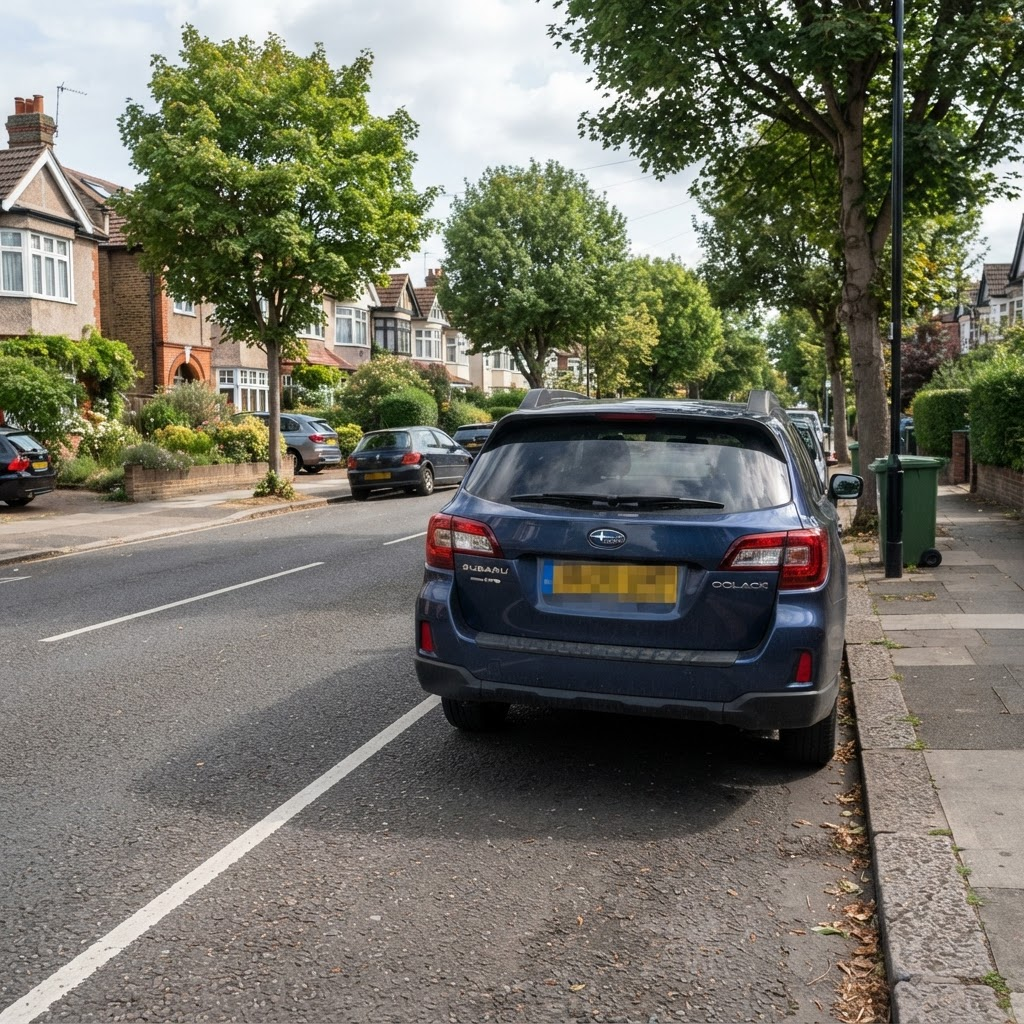
Licence plate blurring is the automatic detection and irreversible obscuring of vehicle registration plates in images or video, so a vehicle and its keeper can no longer be identified. Each plate is located, tracked across frames, and blurred into the output pixels rather than masked with a removable overlay.
What it covers
The cases a naive pass misses.
Recall is decided by the hard detections, not the easy ones — profiles, reflections, small and moving subjects. Those are what the tracking and the human review exist for.
At scale
Built to run continuously, not one file at a time.
Throughput scales with the GPU you allocate, so the pass keeps up with a standing feed instead of a person watching clips.
- Volume
- Built for automotive-scale feeds: continuous dashcam and mapping ingest, or one-off archives.
- Recall target
- Set the acceptable miss rate; we report achieved recall on a labelled sample.
- Combine with faces
- Run plate redaction alone, or together with face blurring in a single pass to save a round trip.
- Resolution & rate
- SD through 4K, any frame rate; blur strength scales with plate size.
- Turnaround
- Delivery date quoted per batch; standing pipelines run continuously.
How it works
Detect, track, redact, review, certify.
Detection returns a box and a confidence per region; tracking keeps it covered across frames; the blur is irreversible; a human signs off; and the certificate records it per file.
- 1 · Detect
- A vision model runs on every frame, returning a bounding box and a confidence score for each face, head, licence plate, and legible screen or document it finds.
- 2 · Track
- Boxes are linked across frames into stable tracks, so a subject that turns away, blurs in motion, or leaves and re-enters is covered for the entire time they are on screen — not just the frames they face the camera.
- 3 · Redact
- Each tracked region is irreversibly blurred into the pixel data of the output. There is no separate mask layer, no metadata toggle, and no key that restores the original region.
- 4 · Review
- A human reviewer scrubs the output and confirms no un-consented person or identifier survives in any frame. If a region is uncertain, the clip is held or dropped rather than shipped.
- 5 · Certify
- The detector version, pass timestamp, reviewer ID, and per-file settings are recorded against the clip, so the anonymization claim is checkable per file rather than asserted in a brochure.
See the detection-to-blur pipeline in full on the automatic anonymization page, and the step-by-step method in how to blur faces in video automatically.
What you get back
The output, plus proof it was done.
- Output
- The anonymized footage in your format, with an optional sidecar of plate detections and confidences per frame.
- Certificate
- Per file: detector version, pass timestamp, reviewer ID, and measured plate recall on the sample.
- Source handling
- Anonymized output only with the source deleted, or both returned and nothing retained — recorded in writing.
- Review
- Human confirmation by default; sampled review for very high-volume standing pipelines by agreement.
The guarantees
Irreversible, fails closed, auditable.
Automatic blurring is common. These are the commitments that make the result something your counsel can rely on.
- Irreversible by construction
- Blur is baked into the delivered pixels. No un-redacted master is shipped alongside, and there is no reversible mask or key.
- Fails closed
- When a reviewer is unsure a region is fully covered, the clip is held or discarded — never downgraded and shipped to hit a deadline.
- Consented subjects preserved
- Anyone who signed a release — your operator, your talent — can stay in frame. The pass targets un-consented third parties, not your usable signal.
- Auditable per file
- Every output carries the detector version, timestamp, reviewer sign-off, and redaction settings, so a batch can be spot-checked against its own record.
- You keep the source, or we destroy it
- Your choice, in writing: we return only the anonymized output and securely delete the source, or return both to you and retain nothing.
Where teams use it
Common jobs this service is sent.
- Street-level mapping and 360° capture cleared for public release
- Dashcam and fleet-telematics footage shared with insurers or vendors
- Car-park and forecourt CCTV prepared for analytics
- Automotive perception datasets de-identified for training
- Traffic-study and municipal video disclosed under records law
FAQ
Licence plate blurring — questions teams ask first.
- Are licence plates personal data?
- In many jurisdictions, yes — a plate can be linked to a registered keeper, so it is treated as personal data under regimes like GDPR. That is why mapping, dashcam, and CCTV footage is routinely plate-redacted before it is shared or published. Your counsel makes the call; we give you the auditable redaction record to support it.
- Can you blur plates and faces in the same pass?
- Yes. Plate detection and face detection run together in one pass, so a street or automotive clip comes back with both covered without a second round trip. You choose the classes in the spec.
- Does it handle plates from different countries?
- Yes. The detector is trained across regional plate styles rather than a single national format, and we measure recall per feed so you know it holds for the plates your footage actually contains.
- Is the plate blur reversible?
- No. It is baked into the delivered pixels with no reversible mask or key, exactly like the face pass. If you need the un-redacted source destroyed as well, we do that and record it.
Send a sample for licence plate blurring.
We anonymize a sample, you confirm the classes and recall meet your bar, and then we run the rest to spec with a delivery date. Standing feeds run continuously.