Capture methodology
The method is the product. So here it is, in full.
- Sync ceiling
- 2.0 ms, hardware-triggered
- Median error
- 1.12 ms measured
- Calibration
- Opening and closing solve, every session
- Active operators
- 287 vetted
How we capture
One clock domain, or it isn't a dataset.
Ten streams recorded on separate sensors are ten separate videos until something forces them onto the same timebase. We hardware-trigger every sensor from a single PTP grandmaster, and we publish the resulting error distribution.
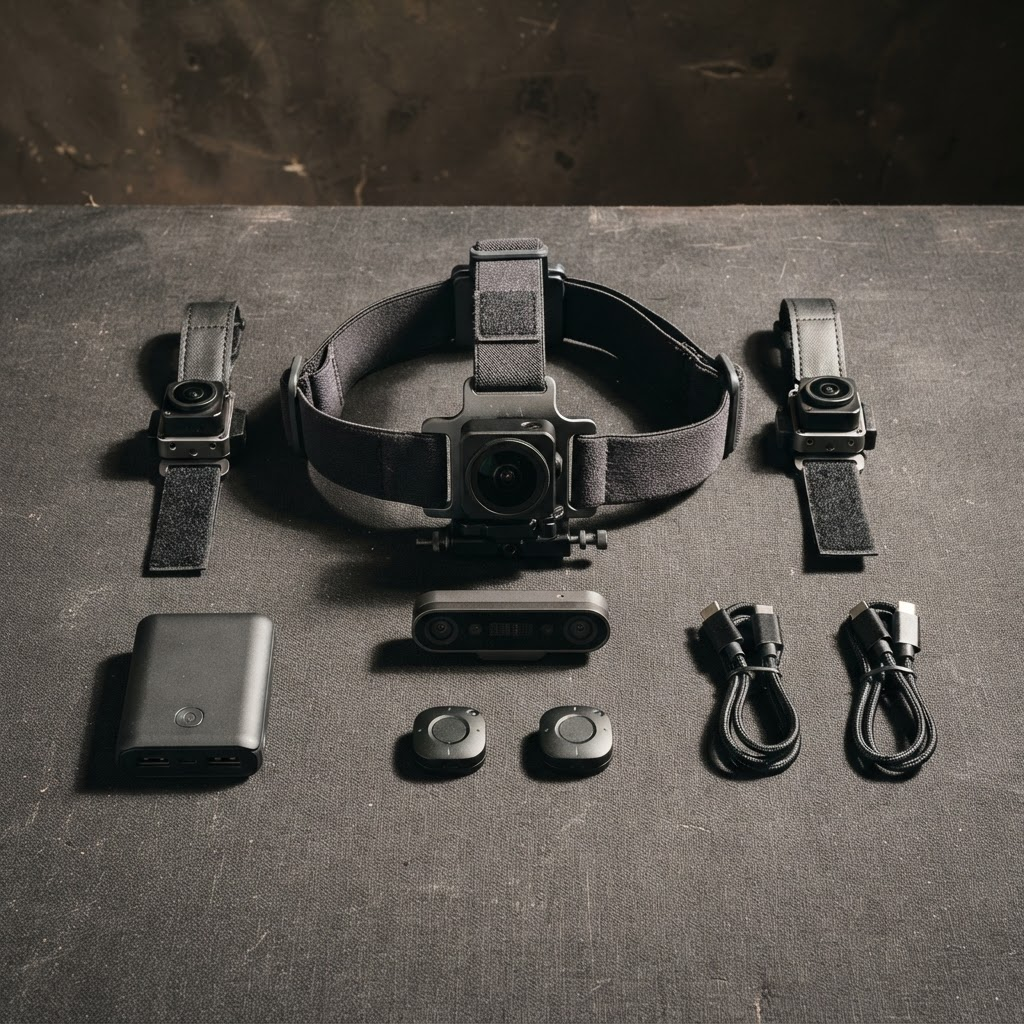
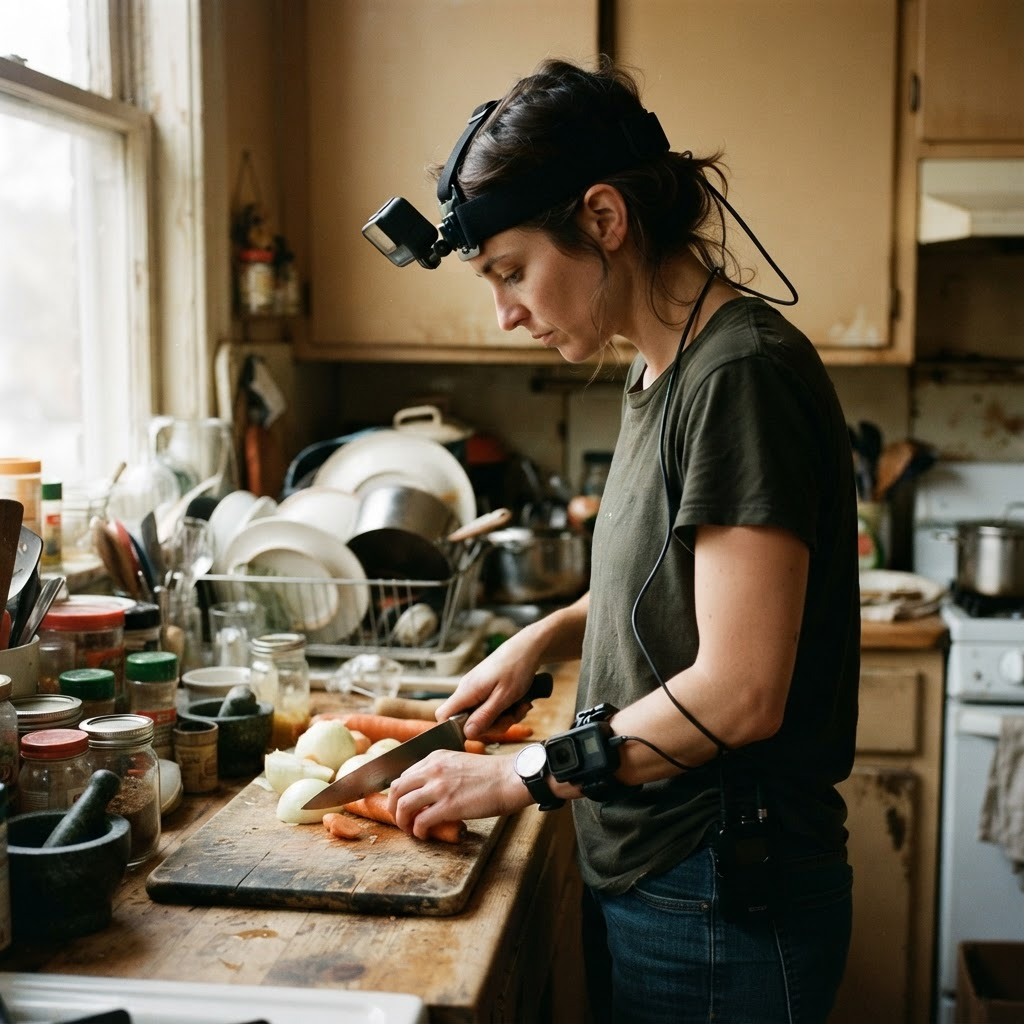
| Head camera | Sony IMX585 global shutter · 120° M12 | Carbon headband, 42 g |
| Wrist cameras | IMX290 ×2 · 100° M12 | Velcro cuff, rigid plate |
| Depth | Intel RealSense D435if | Forehead, 18 mm below head cam |
| IMU | Bosch BMI088 ×3 · 200 Hz | Head, both wrists |
| Clock | PTP grandmaster + hardware trigger | Belt pack, 190 g |
| Storage | 2 TB NVMe · 6 h continuous | Belt pack |
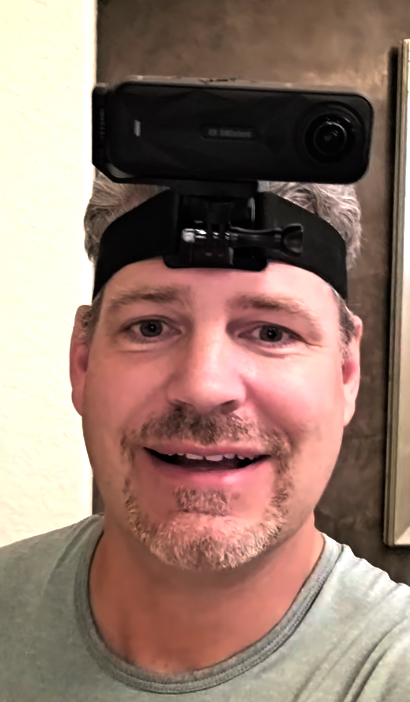
Two capture tiers
The bill of materials above describes our instrumented rig — the tier that carries wrist cameras, depth and a hardware-triggered clock, and the only tier the sync figure below applies to. FIG 2 shows the other tier: a contributor-worn 360 camera on a head strap. It gives up depth, wrist views and sub-millisecond sync, and in exchange it goes anywhere a person is willing to wear it, which is how coverage reaches every country on the map.
The three sample clips published on this site come from the 360 tier, which is why each one is a circular fisheye image circle rather than the rectilinear frame the head camera in the table produces. Read every multi-stream claim on this page — extrinsics, depth validity, the 2.0 ms ceiling — as scoped to the instrumented rig. Single-stream RGB from the 360 tier is labelled as such in the episode metadata, so you can filter on tier rather than infer it.
Rig architecture
Four device groups, one trigger, one episode file. The clock node is the only part of this diagram that is hard.
Measured sync error
Absolute timestamp offset between the head camera and every other stream, sampled across randomly selected frames from shipped episodes.
Method, tooling and the raw CSV behind this plot are in the sync measurement guide. Nobody else in this category publishes this number, which is exactly why we do.
Sync measurement
Reproduce our sync number from the data you were sent.
We publish the method, not just the figure. Every delivered episode carries per-stream int64 nanosecond timestamps in the PTP domain, so you can recompute the error distribution yourself and check our claim.
# reproduce our sync figure from any delivered episode
import numpy as np, h5py

with h5py.File("EP_0117_KITCHEN_A.h5") as f:
    head = f["streams/head_rgb/timestamp_ns"][:]      # int64, PTP domain
    others = {k: f[f"streams/{k}/timestamp_ns"][:]
              for k in ("wrist_l", "wrist_r", "depth", "imu_head")}

for name, ts in others.items():
    # nearest-neighbour match each head frame to this stream
    idx = np.searchsorted(ts, head).clip(1, len(ts) - 1)
    err = np.minimum(abs(ts[idx] - head), abs(ts[idx - 1] - head)) / 1e6
print(f"{name:10s} median {np.median(err):.3f} ms p99 {np.percentile(err, 99):.3f} ms")- Frames measured
- 12,480
- Median offset
- 1.12 ms
- p99 offset
- 1.94 ms
- Spec ceiling
- 2.0 ms
- Clock source
- PTP grandmaster in the belt pack, hardware trigger line to every sensor
- Sampling
- Randomly selected frames from shipped episodes, not a best-case reel
If your own recomputation disagrees with these numbers on a delivered batch, that is a defect and we will recapture it.
Calibration procedure
Calibrated twice per session, so drift is measured.
A single opening calibration lets you assume nothing moved. Solving again at the end of the session turns that assumption into a number you can filter on.
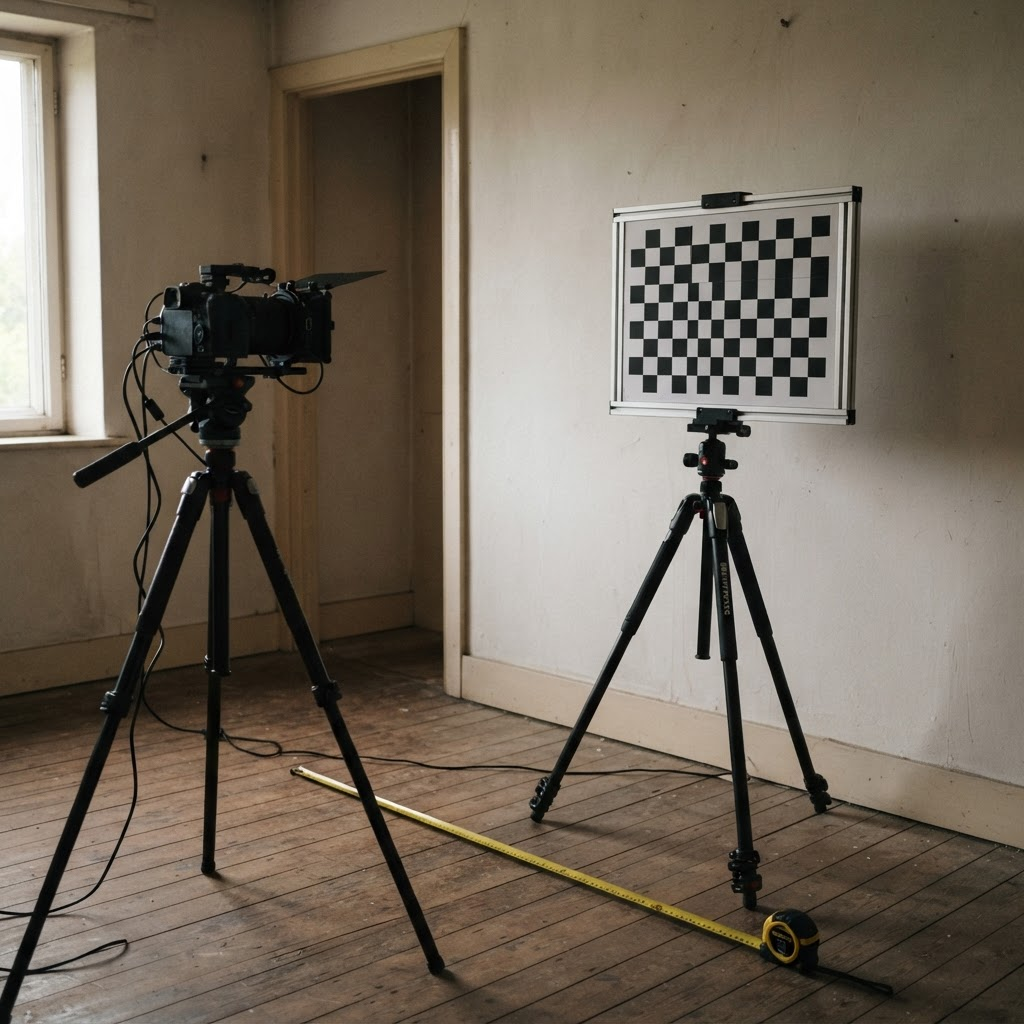
- 1 · Target solve
- Checkerboard, 9×6, 30 mm squares, 40 poses spanning the full frustum of every camera.
- 2 · Intrinsics
- Per-camera focal, principal point and distortion solved independently; RMS reprojection error must land under 0.28 px or the session does not start.
- 3 · Extrinsics
- Head↔wrist↔depth transforms solved against the shared target, expressed in the head-camera frame.
- 4 · IMU alignment
- Gyro bias and accelerometer scale estimated from a 60 s static hold plus a figure-eight excitation.
- 5 · Closing solve
- The entire procedure repeats at the end of the session. Drift between opening and closing solve is written into episode metadata.
Rejection thresholds are applied automatically at ingest — no human decides whether a drifted session is “probably fine”.
Validation and QA
You get the reject log with the batch.
Every episode is machine-checked, then reviewed by a human against the skill spec it was captured for. Rejected episodes are recaptured at our cost, and the reasons ship with the delivery.
- Sync breach
- Any stream exceeding the 2.0 ms ceiling for more than 3 consecutive frames
- Calibration drift
- Closing solve differs from opening solve beyond tolerance
- Occlusion
- Manipulated object out of frame for more than 15 percent of the episode
- Depth invalid
- More than 35 percent invalid depth pixels in the manipulation region
- Consent gap
- Any bystander present who cannot be de-identified
- Spec miss
- Episode does not match the named skill it was captured against
Reject reasons are enumerated, counted per batch, and included in the coverage report.
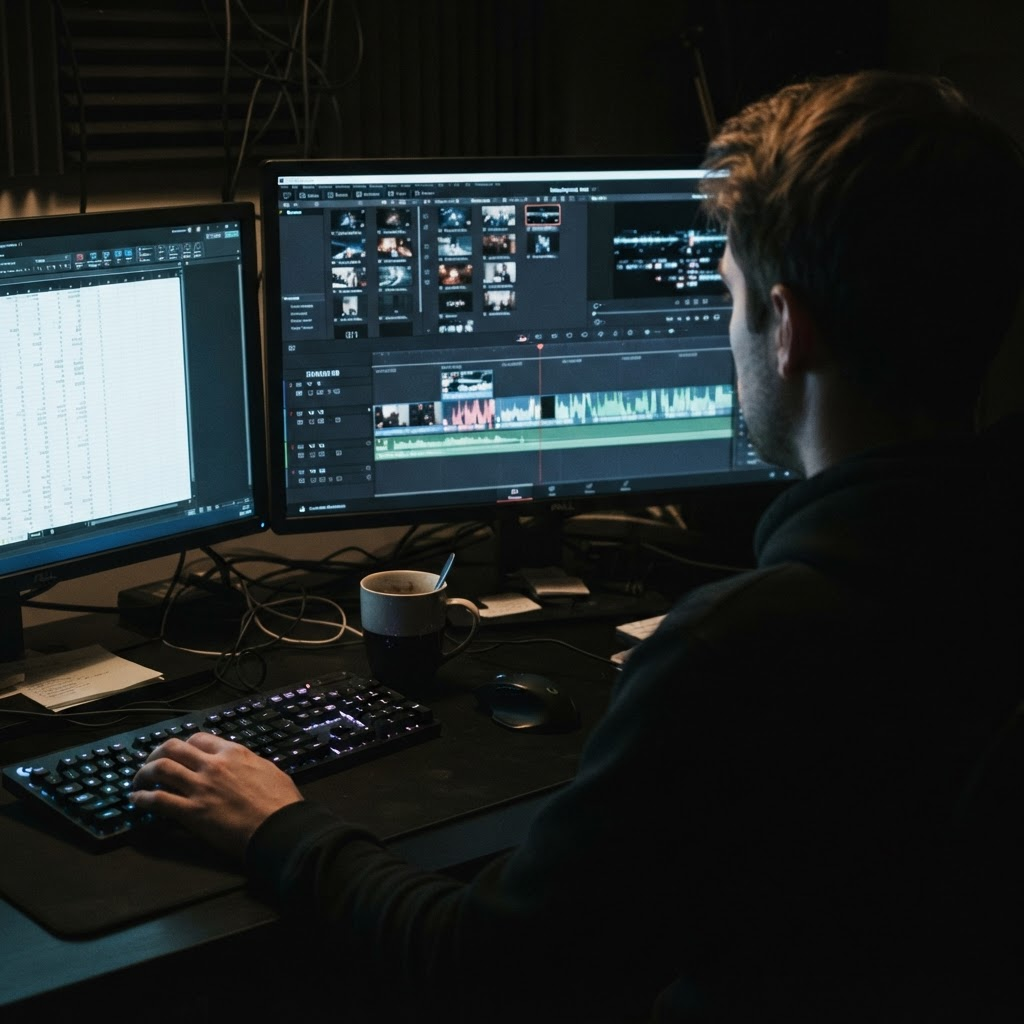
Operators
Vetted, trained, and paid by the hour.
A per-task bounty produces fast, rushed, unusable footage. We pay for time — including setup, calibration and breaks — because the incentive has to point at quality rather than throughput.
- Applied
- 4,180
- Passed screening call
- 1,340
- Completed rig training
- 710
- Passed a calibrated trial session
- 412
- Currently active
- 287
Cumulative since programme start. Roughly 7 percent of applicants reach active status; the calibrated trial session is where most attrition happens.
We recruit for the trade first and teach the rig second. Someone who already knows how to break down a carton or torque a wheel to spec produces footage a policy can learn from; someone learning both the task and the rig produces hesitation. Collector standards and pay.
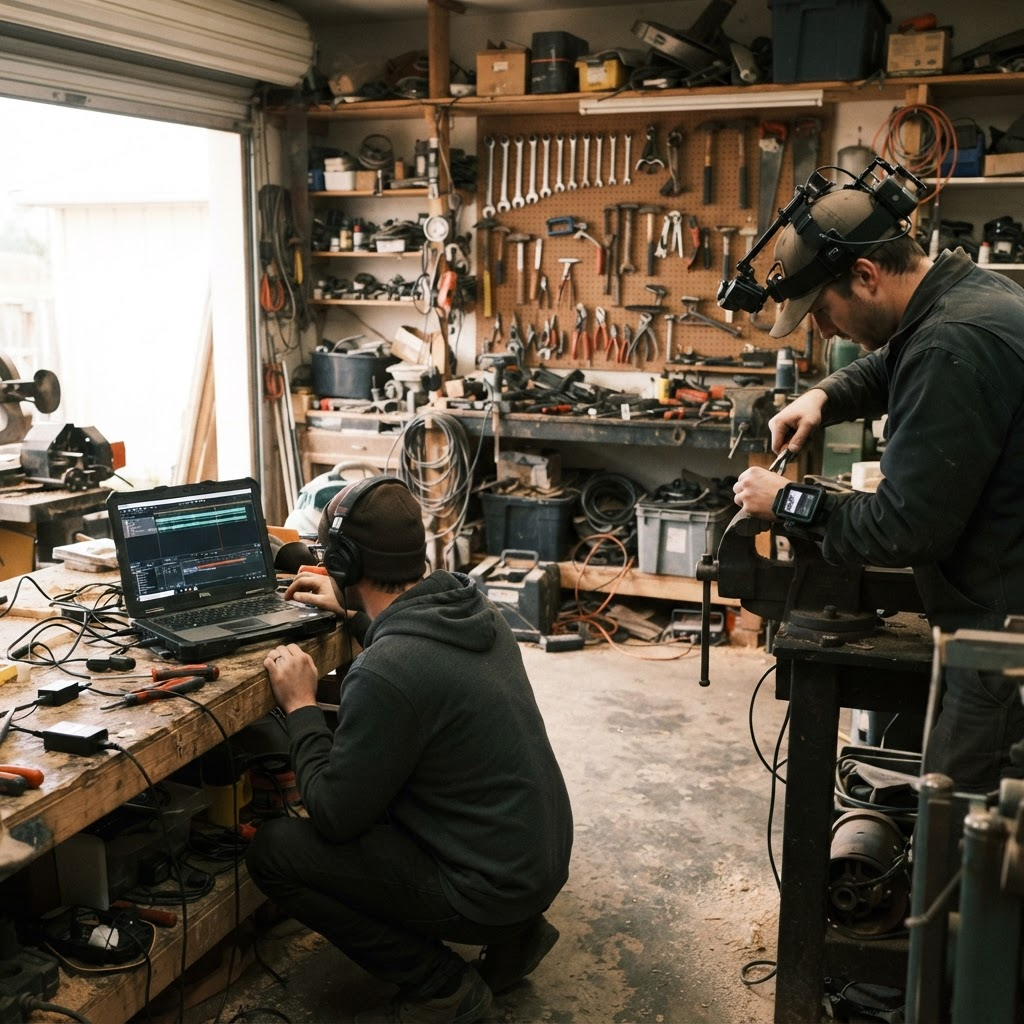
Capture environments
Real rooms, recorded as found.
We do not build sets. A staged kitchen teaches a policy that counters are empty and objects are conveniently separated, which is the opposite of the distribution you need at deployment.
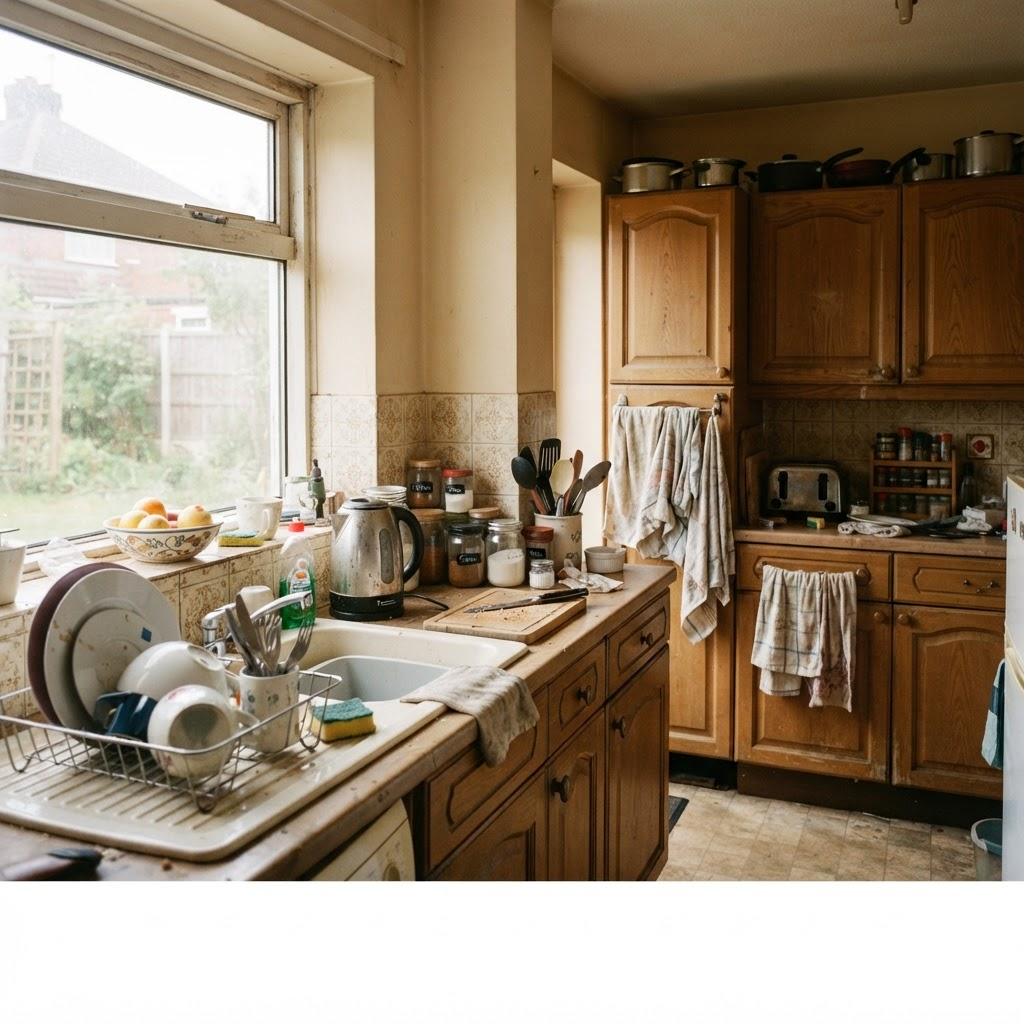
Home kitchen
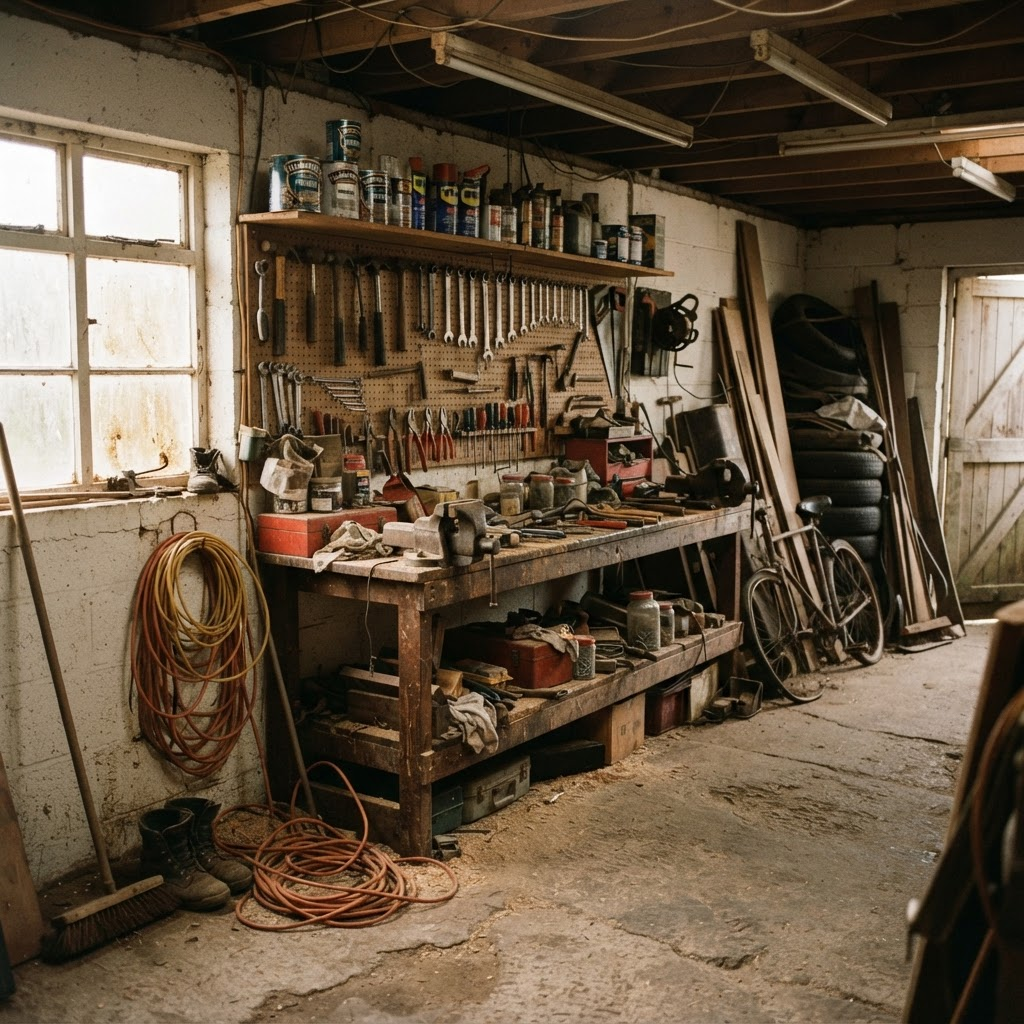
Garage workshop
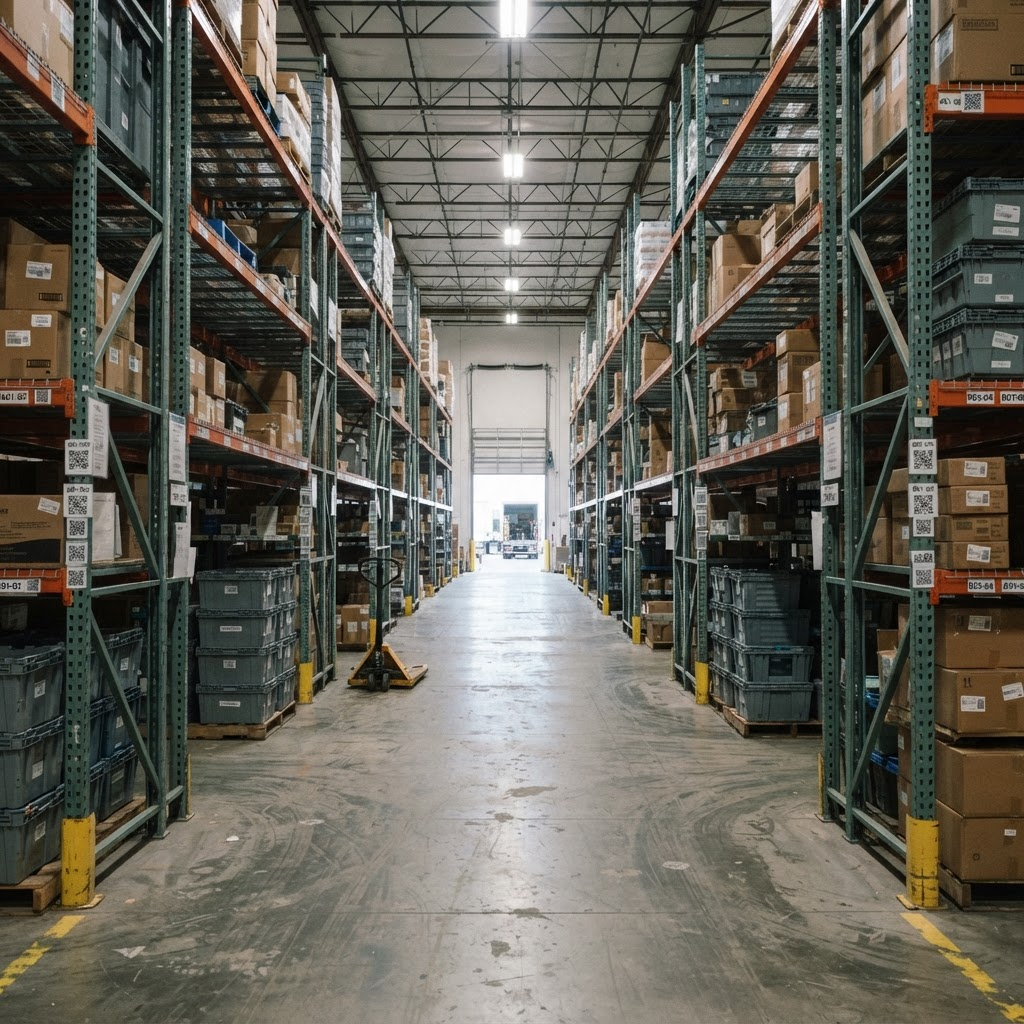
Warehouse aisle
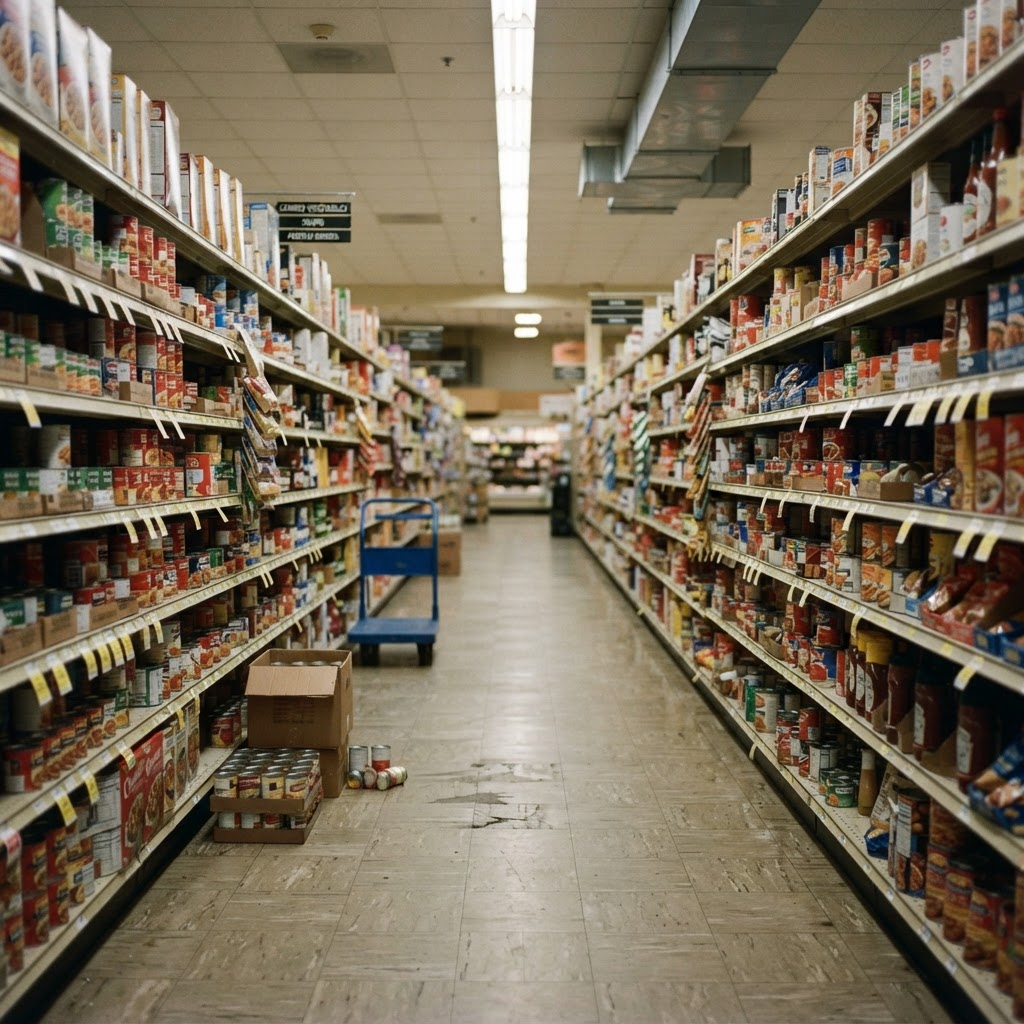
Retail shelf aisle
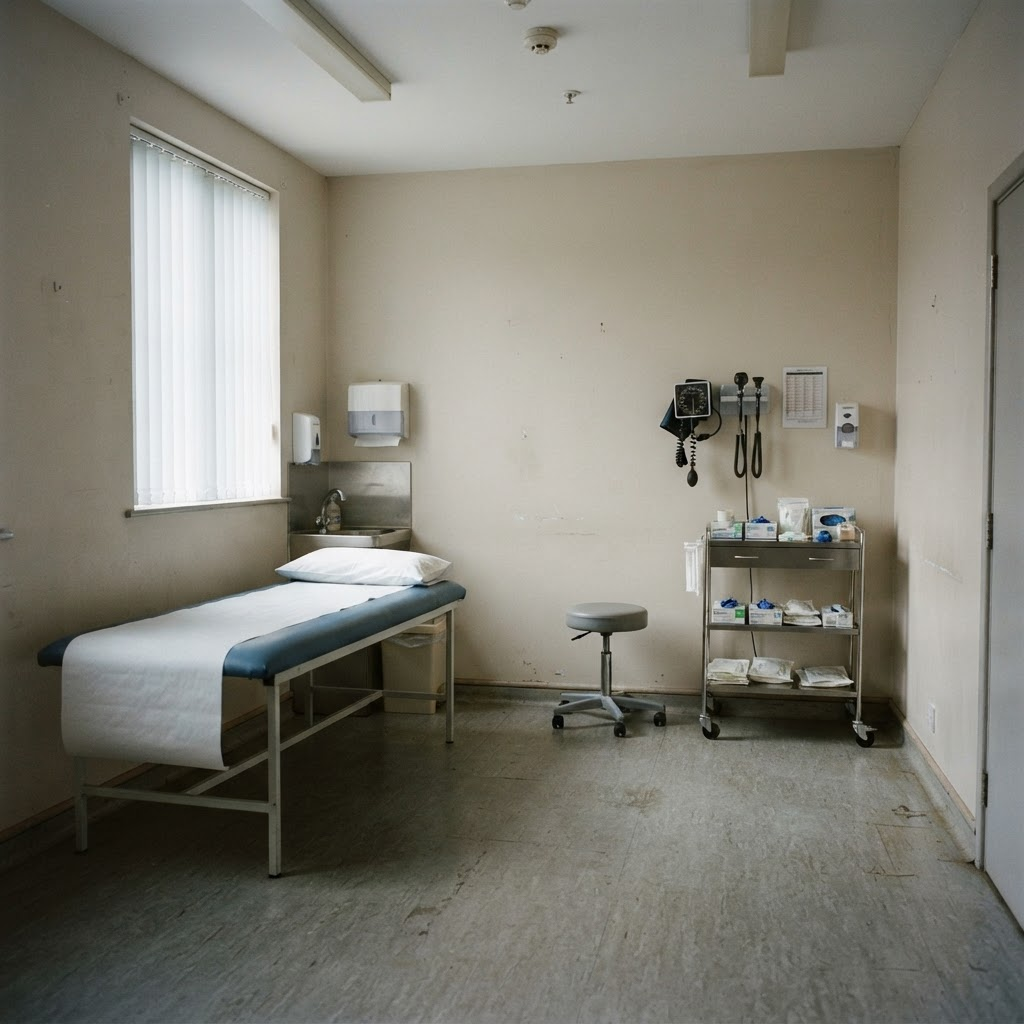
Clinical training room
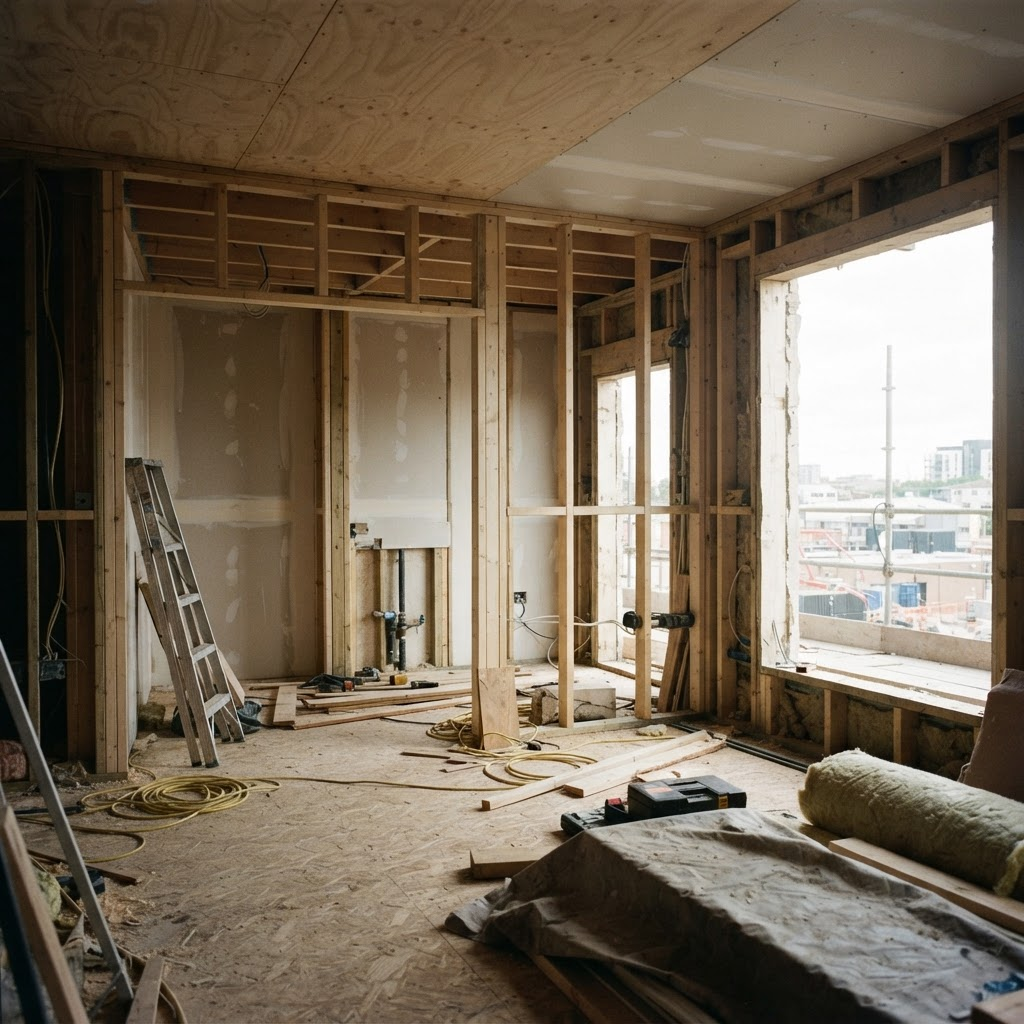
Construction interior
Every episode carries a site identifier, so you can hold out an entire location rather than accidentally training and evaluating in the same kitchen.
Pipeline
Five steps. Spec to delivery.
Step 03 is the one most vendors leave out, and it is the reason you are not paying for footage you will throw away.
- 01SPECNamed skill list, coverage targets, accept/reject criteria
- 02CAPTURECalibrated rigs, vetted and trained operators, real environments
- 03VALIDATESync check, QA pass, reject and recapture — you see the reject log
- 04ENRICHDepth, body pose, hand pose, action segments, instance masks
- 05DELIVERRLDS, LeRobot, WebDataset, HDF5 — plus the data card
Want the sync CSV and a calibration bundle?
Both ship inside the free sample pack, alongside the episodes. No form before the files.