Furniture assembly

Egocentric Furniture Assembly Video Data

Lay out the parts, align a panel, drive a fastener, check the fit and move on: furniture assembly is a long chain of small two-handed steps. We collect custom egocentric video of furniture assembly on demand, to a written skill spec, with synchronized streams, 3D hand pose, contact events, action segments, anonymization and a buyer-owned license.
Tasks
Flat-pack, furniture frames and commercial furniture units, as the catalog lists them
Streams
Ten, synced under 2 ms
First batch
Median 48 h in deep-coverage settings
License
Perpetual, buyer-owned
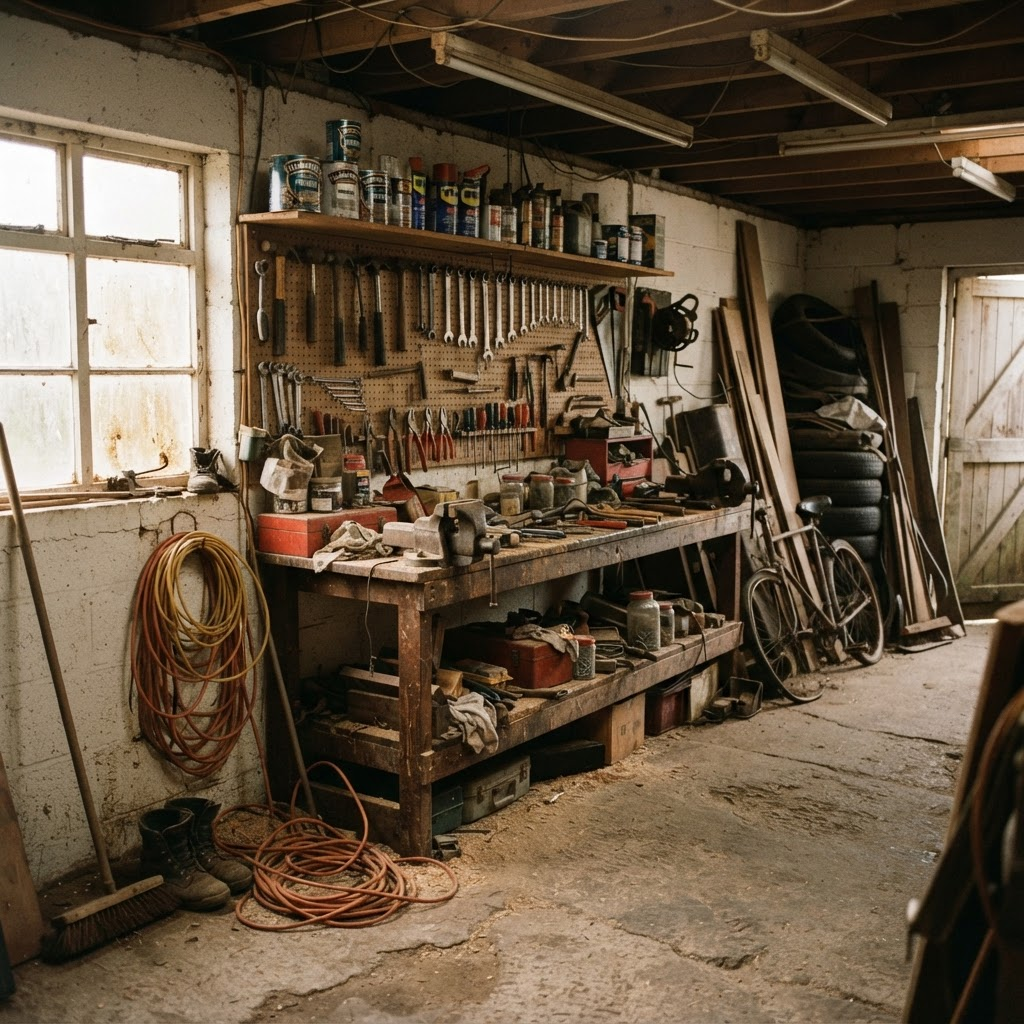
A workshop bench with a vise, hand tools hung on a pegboard, a shelf of supplies and timber boards leaning against the wall.
A workshop bench setting with hand tools in reach. The catalog lists a trades workshop bench and a joinery and furniture workshop. Head-worn capture keeps the hands, the part and the fastener in view.

Requirements

What does furniture assembly need that a generic assembly clip does not?

01

Both hands, the part and the fastener in view

One hand steadies a panel while the other drives a fastener. First-person capture keeps both hands and the part in frame, and the two wrist cameras add a closer view of the hands. 3D hand pose carries a per-joint visibility flag, so a finger hidden behind a panel is flagged rather than guessed.

02

A spec that names the step and the part

The site documents a verb and noun action taxonomy, with start and end to the frame. A furniture spec names the step and the part, such as align a panel, seat a cam lock or screw a frame joint, so each step becomes its own labeled segment rather than one long clip.

03

Order and sequence, not a single fastening

The catalog describes furniture rows as sequences: glue and clamp frame joints, drill pilot holes and screw the frame together; assemble commercial furniture units from components; assemble a panel unit with cam locks. The value is in the order of the steps.

04

Rights you can ship on

A perpetual, buyer-owned commercial license, backed by a written release from every contributor and a data card. Exclusivity is available as a separate term.

Definition

What is egocentric furniture assembly video data?

It is first-person video of a person putting furniture together, recorded from the contributor’s own point of view with synchronized sensor streams alongside. The frame shows what the person sees: the parts on the bench, the panel in one hand, the driver or drill in the other and the joint being closed.

The key word is assembly: turning components into a finished unit. In the catalog that means joining frames with glue, clamps and screws, assembling commercial furniture units from components, and assembling a flat-pack panel unit with cam locks.

Firsthand captures humans, not robots. Episodes carry human hand pose and human action labels. The site states no robot actions, robot joint data or teleoperation data for this task family, so using the episodes for a specific robot still needs your own retargeting step.

Task coverage

Which furniture assembly tasks can be captured?

The task catalog names three rows that are explicitly about assembling furniture. Two sit in the carpentry and furniture workshop, a joinery setting with saws, sanders and finishing stations: "Assemble and join furniture frames using wood glue, clamps, and a drill" and "Commercial Furniture Assembly". Both are medium skill level, on a head-mounted phone or multiview rig, with the status Active collection.

The third, "Assemble flat-pack", sits in the trades workshop bench, a bench with hand and power tools: wrenches, drivers, drill, saw, clamps and fasteners. It is described as "Assemble a panel unit with cam locks", at medium skill level, on a multiview rig with handheld grippers, with the status Available on request.

Active collection and Available on request are different statuses and the catalog does not define either further, so ask which applies to your row when you request the quote. The second table lists neighbouring rows, such as fitting cabinet hardware, that are not assembly rows themselves.

Settings and rigs

Where is furniture assembly data captured, and on what rig?

The catalog ties furniture assembly to two ordinary workshop settings, not a showroom or a customer building, and the site does not state capture at a customer’s own facility. Capture is run to your skill spec by paid, consented contributors performing the real task while wearing the rig.

The site does not say which rig produces which streams in a given episode, and it does not state furniture types, brands, part counts or the tools used for any row, so those details are agreed in the spec. The capture setup table lists the hardware as the site states it.

Episode contents

What does each furniture assembly episode contain?

An episode is one contributor performing one task from the skill spec, recorded with ten hardware-synchronized streams that line up within 2 ms. The site documents a canonical episode schema, and every delivery format is a view of it. The fields that matter most for assembly are listed in the episode fields table.

Hand pose is stored as 21 joints per hand in metres in the head frame, with a visibility flag for each joint. Contact events record when a hand meets an object. The site does not say whether a panel, a cam lock or a fastener counts as the object, so settle what a contact event means for your task in the spec.

Action segments carry a start, an end, a verb and a noun from a taxonomy the site states as 97 verbs and 512 nouns, human-reviewed. For furniture, a segment can be one step as written in the spec. Every episode links to its contributor’s signed release by a consent artefact ID, and each batch ships with a data card.

Labeling

How is assembly data labeled?

The unit of labeling is the action segment, which is why the way you write the spec decides how useful the data is. A spec that says "assemble the unit" gives you one long segment. A spec that names the steps gives you a sequence you can train on and slice by step.

Every episode is machine-checked, then reviewed by a human against the skill spec it was captured for. Rejected episodes are recaptured at our cost, and the reasons ship with the delivery.

The site states no label for furniture type, part count, fastener type, joint fit, assembly completion or task success, and no force, torque or tactile reading. If your objective needs a success or defect label, say so at the start so it can be scoped in the spec.

Stated limits

What does the site state about the hard parts of recording assembly?

Fingers disappear behind panels and tools, which is why 3D hand pose carries a per-joint visibility flag. Small fasteners can fall below a depth sensor’s reliable floor: hand pose stays valid at that range, and metric depth on sub-centimetre parts is flagged rather than interpolated. Whether a cam lock or a screw head counts as such a part is not stated.

A validated hour is 60 minutes of footage that passed QA against your spec: sync within the 2 ms ceiling, calibration solved and within drift tolerance, coverage cells filled and consent documented. Footage that cannot be de-identified is rejected rather than shipped.

Delivery

How is furniture assembly data delivered, and who owns it?

Data is delivered in RLDS, LeRobot, WebDataset, HDF5, zarr or Rerun .rrd, or as raw streams with metadata, with the episode schema as the canonical layout. QA runs once, against the canonical episode, before any format is cut. The formats table sets the site’s delivery next to each maintainer’s own documentation, linked under Sources.

The license is perpetual, irrevocable and worldwide, buyer-owned and non-exclusive by default, with exclusivity available as a separate term and the executed order form governing.

Speed

How fast can a custom furniture assembly dataset be collected?

The site states one published timeline: from a signed spec to a first validated batch, a median of 48 hours where coverage is already deep, and typically three to four weeks where it is thin because operators have to be staffed. The site does not say which applies to the furniture rows and promises nothing faster, so ask when you request the quote.

Collection is on demand, so a focused brief, such as one named unit assembled start to finish, is a normal starting point. Billing is per validated hour, so off-spec footage is not something you pay for.

Getting started

How do you start a pilot?

Start with the free sample pack to check the loader and label quality, then move to a Spec Pilot: a small, fast first batch against the written spec that proves the fill rate and reject rate on your conditions before you scale, so a gap in the spec shows up on a handful of episodes.

A good furniture brief names the unit and its steps, how each step starts and ends, and what counts as a reject. The site’s skill-spec guide walks through that structure. Then request a custom dataset and we will quote reach, timeline and price against the spec.

Capture setup

What is the capture setup for a furniture assembly collection?

The capture setup as stated on this site, applied to furniture assembly. Counts of contributors and hours are set in the skill spec.
PartAs stated on this site
Head cameraGlobal-shutter 4K at 60 fps with a 120 degree lens
Wrist camerasTwo wrist-mounted cameras at 1080p and 60 fps
DepthDepth sensor at 848×480 and 30 fps, with per-frame confidence maps
IMU6-DoF at 200 Hz
SyncTen streams, hardware-triggered onto one PTP clock domain and aligned under 2 ms
CalibrationRe-solved with a checkerboard target at the start and end of every session; accepted only under the 0.28 px RMS reprojection gate
Catalog capture setupHead-mounted phone or multiview rig for the furniture workshop rows; multiview rig with handheld grippers for the flat-pack row
Furniture types, brands, part counts, toolsNot stated

Every collection runs through the same seven-stage end-to-end custom collection pipeline.

Task catalog

Which furniture assembly rows does the catalog name?

The three catalog rows that are explicitly about assembling furniture, reproduced as the catalog states them.
Task (as listed)Description (as listed)EnvironmentSkill levelCapture setupStatus
Assemble and join furniture frames using wood glue, clamps, and a drillGlue and clamp frame joints, drill pilot holes and screw the furniture frame together.Carpentry & Furniture WorkshopMediumPhone (head-mounted) / multiview rigActive collection
Commercial Furniture AssemblyAssembling commercial furniture units from components using hand and power tools.Carpentry & Furniture WorkshopMediumPhone (head-mounted) / multiview rigActive collection
Assemble flat-packAssemble a panel unit with cam locks.Trades Workshop BenchMediumMultiview rig + handheld grippersAvailable on request

Neighbouring rows

Which catalog rows sit next to furniture assembly?

Rows about steps around assembly, reproduced as the catalog states them. They are listed for context and are not furniture assembly rows.
Task (as listed)Description (as listed)EnvironmentStatus
Hardware InstallationMark, drill and fit hinges, handles and slides onto cabinets and furniture.Carpentry & Furniture WorkshopReady to deploy
Furniture craftingCut, join and finish timber components into furniture pieces at the bench.Woodcraft & Carving StudioAvailable on request
Furniture restorationStrip old finish, repair joints and veneer, sand and refinish the piece.Repair Shop (appliance, bicycle, shoe, watch, furniture)Available on request
Plastic Chair ManufacturingUnload molded chair shells, trim flash, fit legs and hardware and stack finished chairs.Plastic & Light-Assembly ManufacturerReady to deploy

Episode fields

What fields does a furniture assembly episode carry?

Episode fields as documented in the site’s episode schema, and what each is useful for in an assembly task.
FieldAs documentedUse for assembly
hand_joints21 joints per hand, in metres, head frameHow each hand grips a panel, a driver or a clamp
hand_visibleBoolean visibility flag per jointWhich fingers are hidden behind a part
contact_eventsTimestamp, hand, object ID and kindWhen a hand meets a part or tool
instance_masksTracked object IDs per frame at 848×480Which part is which across frames
action_segmentsstart_ns, end_ns, verb, nounOne labeled span per assembly step
depth_mm and depth_confMetric depth with a per-pixel confidence mapWhere depth can be trusted near the part
Part type, part count, fastener type, completion label, force or tactileNot statedNot stated

Delivery formats

Which formats are delivered, and what does each format’s own documentation say?

The delivery formats the site lists. The third column is taken only from the official pages linked under Sources.
FormatDelivered by FirsthandMaintainer documentation
RLDSTFDS-compatible tfrecord shards, one skill line per directoryStores episodic data; a dataset is a tf.data.Dataset of episodes, each containing a dataset of steps
LeRobotParquet plus an mp4 per camera, in the Hugging Face datasets layoutSynchronized MP4 videos or images for vision, plus Parquet files
WebDatasetListed as a delivery formatTar files in which files sharing a basename make up one training sample
HDF5, zarr and Rerun .rrdListed as delivery formatsNot described on this page

Not stated

What does the site not state about furniture assembly?

Details a buyer may ask about and where the answer lives.
TopicOn this siteWhere it is settled
Furniture types, brands and part countsNot statedWritten skill spec
Tool specifications and torqueNot statedWritten skill spec
Force, tactile or torque dataNot statedNot offered as a stated stream
Task-completion or success labelsNot statedScoped in the spec
Throughput, and which timeline applies to the furniture rowsNot statedQuote
Robot actions or teleoperation dataNot stated; Firsthand captures humans, not robotsYour own retargeting step

FAQ

Egocentric furniture assembly video data, answered.

What is egocentric furniture assembly video data?
Custom first-person video of people assembling furniture, captured by paid, consented contributors to a written skill spec, with synchronized streams, 3D hand pose, contact events and action segments.
Which furniture assembly tasks does Firsthand list?
Three catalog rows: "Assemble and join furniture frames using wood glue, clamps, and a drill", "Commercial Furniture Assembly" (both Active collection) and "Assemble flat-pack", described as assembling a panel unit with cam locks (Available on request).
What streams and labels come with an assembly episode?
Ten hardware-synchronized streams aligned under 2 ms, 3D hand pose for both hands, contact events and action segments with a start, an end, a verb and a noun. No furniture type, part count, completion label, force or tactile reading is stated.
How fast can a custom furniture assembly dataset be collected?
From a signed spec to a first validated batch, a median of 48 hours where coverage is deep and three to four weeks where it is thin. The site does not say which applies to the furniture rows, so ask when you request the quote.
Do you capture robot or teleoperation data for assembly?
No. Firsthand captures humans, not robots. Episodes carry human hand pose and human action labels, so using them for a specific robot means your own retargeting step.
Is the footage consented and anonymized, and who owns it?
Every contributor signs a written release, and faces, plates and screens are blurred irreversibly. The license is perpetual, irrevocable and worldwide, buyer-owned and non-exclusive by default, with exclusivity as a separate term.
Sources

Where are the delivery formats on this page documented?

Request a custom furniture assembly dataset.

Tell us the unit, the steps and the settings your model needs to see. We will quote reach, timeline and price against a written spec, with a first validated batch in a median of 48 hours where coverage is deep.