Manufacturing & workshop

Egocentric Tool Use Data Collection

First-person video of hand-tool use and tool-mediated manipulation — driver and bit selection, clamp-and-align, measuring, fastening, and tool hand-off — captured against a written spec.
Streams
Ten, synced under 2 ms
First batch
Median 48 h
Billing
Per validated hour
License
Buyer-owned
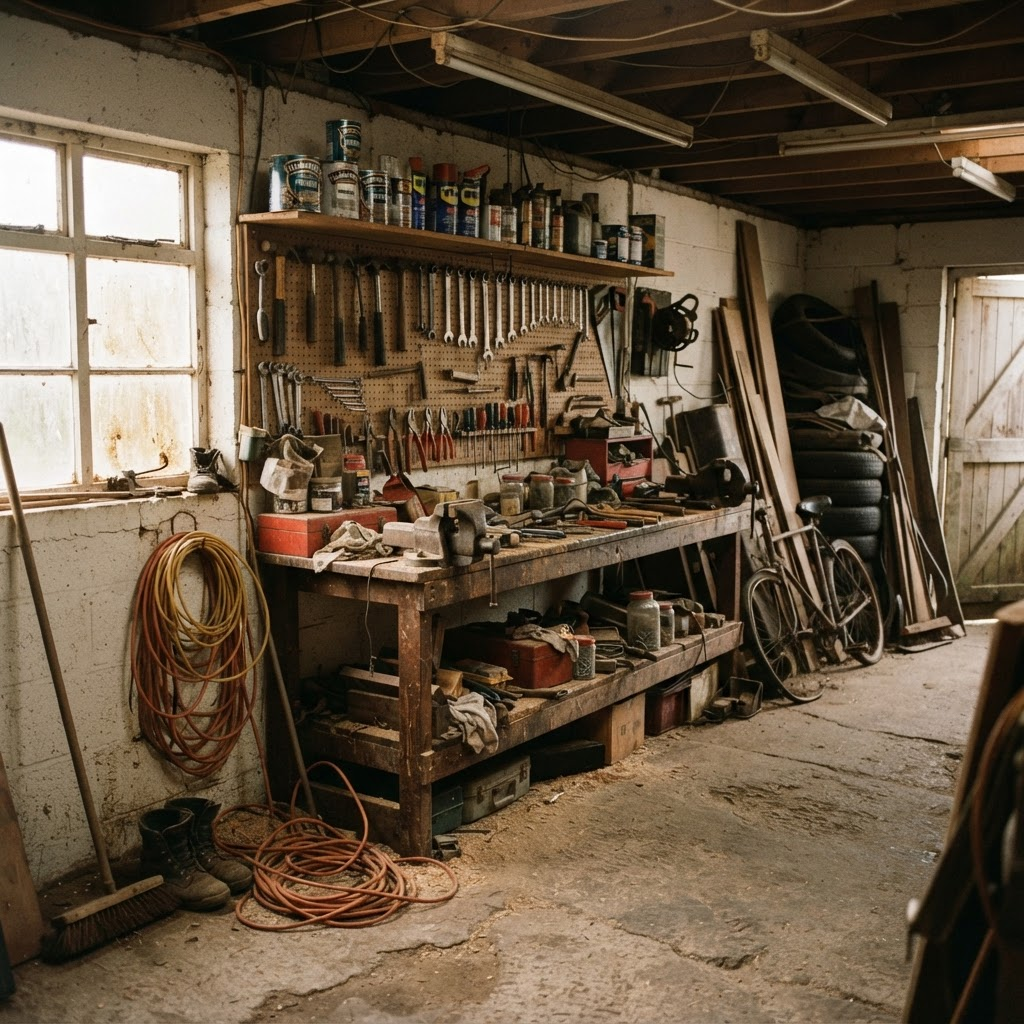
A garage workshop bench with a vise, hand tools on a pegboard and real clutter
Tool use is captured bench-side, where the operator controls lighting, clutter, and tool layout rather than relying on incidental footage.

Requirements

What does egocentric tool use data need?

01

Hand-level precision on the tool, not just the task

Driver and bit selection, grip changes, and tool hand-off between hands live in finger-level detail that RGB video alone cannot resolve. Each needs 3D hand pose tracked through reach, grasp, and tool manipulation.

02

A named tool use skill list

Driver and bit selection, clamp-and-align, measuring and marking to tolerance, fastening, and tool hand-off each need their own coverage, not one generic "tool use" label.

03

Depth with known limits on small tools and parts

Small tools, bits, and fasteners can fall below a depth sensor’s reliable floor. Hand pose stays valid at that range, but metric depth on sub-centimetre parts is flagged rather than interpolated, so you know exactly where the depth stream stops being trustworthy.

04

Failure and recovery coverage

Cross-threads, dropped tools, slipped grips, and misalignment are captured and labeled alongside clean takes, so a policy trained on the data has seen recovery as well as success.

05

Rights you can ship on

A perpetual, buyer-owned commercial license backed by a documented consent chain, so a policy trained on the data can go into a product.

Why it matters

Why do robot models need first-person tool use video?

A policy that hands off between tools, selects the right bit, or recovers from a slipped grip needs to have seen that motion from the viewpoint it will act from. Public benchmark datasets for bimanual precision, such as EgoDex, have genuinely strong hand pose, but their licenses forbid commercial training use and forbid derivatives, so they cannot legally reach production weights.

Bench tool use is also the cleanest environment to run this kind of capture in, because the operator controls the whole scene: lighting, clutter, and tool layout can be varied deliberately rather than relying on incidental footage that was never captured against a named skill list.

Setting

What tool use tasks can be captured?

Tool use and assembly coverage on this site spans home workshop, maker bench, and small production cell environments, with a named skill list: driver and bit selection and drive-to-seat, clamp, align, and fasten a joint, measure and mark to tolerance, press-fit and interference assembly, wire strip, crimp, and terminate, and tool hand-off between hands.

A custom tool use spec is scoped from that same task vocabulary — you describe the tools and tasks your policy needs, and the spec is written to cover them rather than a generic "tool use" category.

Capture setup

How is tool use captured egocentrically?

A head-mounted camera keeps the tool-handling motion in frame from the viewpoint a manipulation policy will actually see from. Depth, 3D hand pose, contact events, and action segments are aligned to video on one hardware clock, synced under 2 ms.

Small tools and fasteners below the depth sensor floor are flagged rather than interpolated, while hand pose remains valid at that range, so the delivered data states exactly where metric depth stops being trustworthy.

Labels

Which labels come with egocentric tool use data?

Episodes carry 3D hand pose tracked through reach, grasp, and tool manipulation with per-joint visibility flags, contact and grasp events at the point of tool engagement, and frame-accurate action segments marking task boundaries such as pick-up, engage, and release.

Each episode is structured with the same episode schema used across Firsthand custom collections, so tool use labels line up with the same fields a buyer’s loader already expects from other Firsthand datasets.

Failure cases

How are failure and recovery cases handled?

Cross-threads, dropped fasteners or tools, slipped grips, and misalignment are captured and action-segmented alongside clean takes rather than discarded, because a policy that only sees successful tool use has no model of recovery.

Failure and recovery episodes are labeled against the same accept criteria as clean takes, so they count toward validated hours rather than being treated as waste.

The spec

How does a custom tool use spec work?

You describe the tool use tasks your policy needs. We turn it into a written spec covering tasks, environments, capture tier, annotation depth, and accept criteria, then quote reach, timeline, and price against that document before any capture begins.

The collection runs through the same seven-stage end-to-end custom collection pipeline as every Firsthand program: contributor recruiting, capture, per-batch QA, anonymization, and licensed delivery. Rejected items are recaptured at our cost.

Fast · on demand

How fast does a first batch ship?

Where coverage is already deep, the first validated batch lands in a median of 48 hours from signed spec. Thin environments typically take three to four weeks, because vetting operators there is the bottleneck, and we quote that timeline up front.

On-demand top-ups run against the same spec and accept criteria after each training run, so new tool use data stays consistent with what you already hold. A Spec Pilot — a small, fast first batch — can prove the spec before you scale volume.

Rights

How is tool use data licensed, consented, and delivered?

Every custom collection ships under a perpetual, buyer-owned commercial license, and exclusivity is available so the data is never resold. Each episode links to a signed contributor release through a documented consent chain.

Faces, plates, and screens are detected and irreversibly blurred at ingest, and a reviewer confirms the result before anything ships. Delivery formats are RLDS, LeRobot, and WebDataset, plus HDF5, zarr, and Rerun .rrd, with the anonymization record included.

At a glance

What you get.

Every collection runs through the same seven-stage end-to-end custom collection pipeline. End-to-end custom data collection is a managed service that takes an AI data need from problem to owned dataset in a single accountable pipeline.

Tool use elements vs delivery

What does a tool use policy get, element by element?

Tool handling and tool-mediated manipulation elements and the label or stream Firsthand delivers for each, with the delivery formats that carry them.
Tool use elementLabel or stream capturedDelivery formats
Tool selection and grip3D hand pose tracked through reach, grasp, and tool manipulationRLDS, LeRobot, WebDataset
Tool engagementContact and grasp events at the point of tool engagementRLDS, LeRobot, WebDataset, HDF5, zarr
Task structureFrame-accurate action segments marking task boundariesRLDS, LeRobot, WebDataset
Depth on small tools and partsSynchronized depth stream, sub-centimetre parts flagged rather than interpolatedHDF5, zarr
Full-fidelity reviewMulti-stream synchronized playbackRerun .rrd
Failure and recoveryAction-segmented cross-threads, drops, slips, and misalignmentRLDS, LeRobot, WebDataset
QualityMeasured against signed accept criteria; billed per validated hour; reject log with every batchAll formats

Related manipulation datasets

Tool use data vs. assembly, dexterous manipulation, and hand-object data on this site

Four related custom collection pages on this site and how their focus and labels differ.
PageFocusPrimary labels
Egocentric tool use data (this page)Hand-tool handling and tool-mediated manipulation3D hand pose, contact events, action segments, depth
Custom assembly task dataFastening, measuring, press-fit, and wire work as a full task cycle3D hand pose, contact events, depth, action segments
Dexterous manipulation dataFine finger-level manipulation broadly, not limited to tools3D hand pose, contact events
Hand-object interaction dataGeneral hand-object contact across any object, not tool-specific3D hand pose, contact events, depth

FAQ

Egocentric tool use data, answered.

What is egocentric tool use data?
It is real-world, first-person video of a person handling and operating hand tools — driver and bit selection, clamp-and-align, measuring, fastening, and tool hand-off — captured against a written spec with depth, 3D hand pose, contact events, and action segments. Firsthand handles contributors, capture, QA, consent, and delivery.
How is this different from assembly task data?
Assembly task data covers the full fastening, measuring, press-fit, and wire-termination task cycle. Egocentric tool use data focuses specifically on the hand-tool handling and manipulation inside those tasks — driver selection, grip, and tool hand-off — and shares the same label set and formats.
How is this different from a public dataset like EgoDex?
EgoDex has strong hand pose but its CC BY-NC-ND license forbids commercial use and forbids derivatives, so it cannot legally reach production weights. Custom egocentric tool use data is buyer-owned and perpetual, captured against your own named tool use skill list.
Can depth be trusted on small tools and fasteners?
Hand pose remains valid at close range, but metric depth on sub-centimetre tools and parts falls below the depth sensor’s reliable floor and is flagged rather than interpolated, so you know exactly where to stop trusting that stream.
Are failure cases like dropped tools or slipped grips included?
Yes. Cross-threads, dropped fasteners or tools, slipped grips, and misalignment are captured and action-segmented alongside clean takes, and they count toward validated hours like any other accepted footage.
How is custom tool use data billed?
Per validated hour, quoted against the written spec before any capture. You pay only for data that clears the accept criteria, and rejected items are recaptured at our cost.
Which delivery formats are supported?
RLDS, LeRobot, and WebDataset, plus HDF5, zarr, and Rerun .rrd. Converter source is readable, so you can retarget the schema to your own loader.
Can we start with a small pilot?
Yes. A Spec Pilot is a small, fast first batch that proves the spec and accept criteria before you scale volume on demand.
Sources

Where are the delivery formats documented?

Request a custom dataset.

Tell us the tool use tasks your policy needs to perform. We will quote reach, timeline, and price against a written spec, with a first validated batch in a median of 48 hours where coverage is deep.