Task family

Egocentric Truck Loading and Unloading Video Data

Staging pallets and parcels at the dock, loading them into the trailer in sequence and unloading inbound goods from the truck, captured first-person against a spec you write, for truck unloading robot training and trailer loading video datasets.
Streams
Ten, synced under 2 ms
First batch
Median 48 h
Billing
Per validated hour
License
Buyer-owned
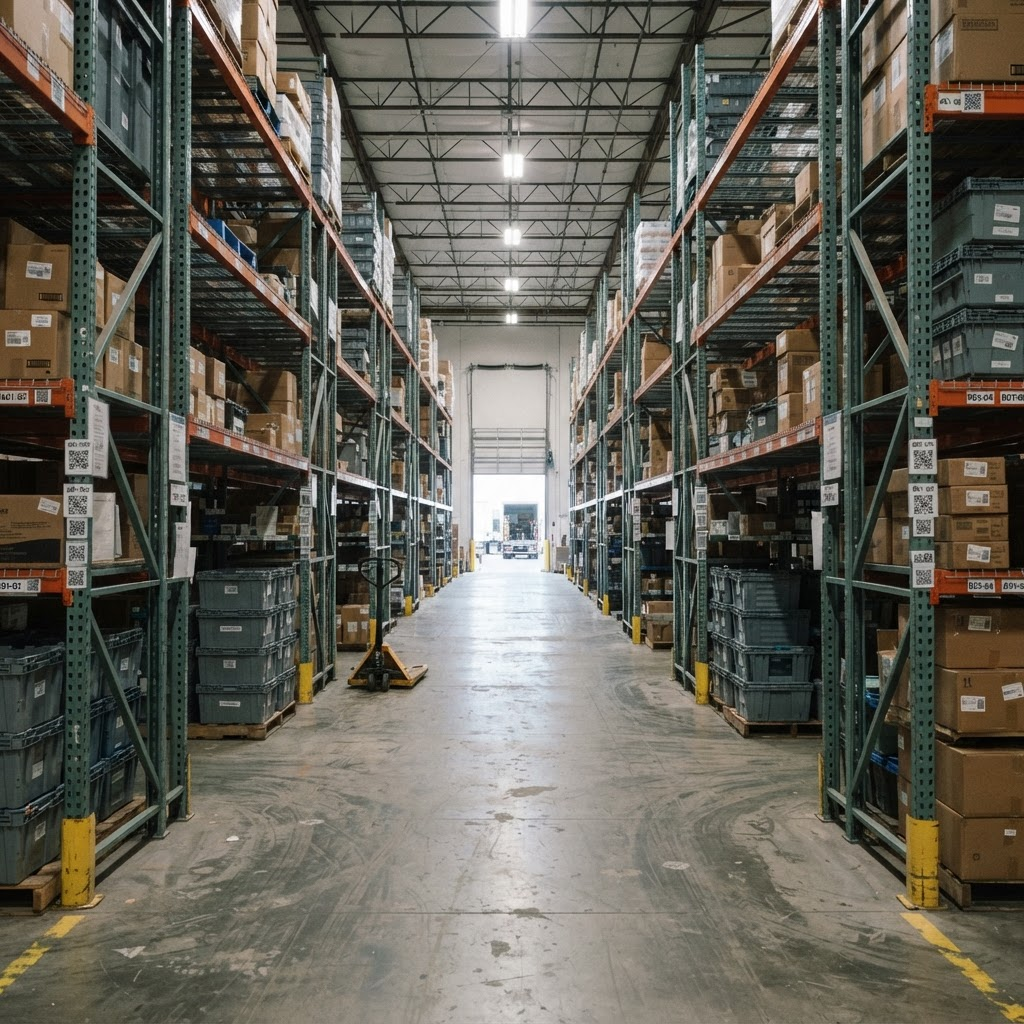
A warehouse pick aisle with steel racking, cartons and plastic totes
A warehouse interior shown only to illustrate the first-person view of racking, cartons and totes. The catalog lists its truck rows in a Warehouse and Distribution Center, and the site does not state that any collection runs in this room.

Requirements

What does truck loading and unloading data need?

01

A named loading and unloading task list

Staging at the dock, loading a trailer in sequence, unloading inbound goods and checking them against the paperwork are different motions. A spec names each one rather than relying on one generic loading label.

02

Both hands and the load in frame

Dock work is mostly two-handed and moves a load from one place to another. A head-mounted view keeps both hands, the pallet or parcel and the destination visible through the whole task.

03

Hand pose through every grip change

3D hand pose with a visibility flag per joint carries the finger detail of taking a parcel, re-gripping it and placing it, which RGB video alone cannot resolve.

04

Step boundaries on the same clock

Frame-accurate action segments mark where staging ends and loading begins, aligned to video and depth on one hardware clock, so a policy can learn the order of a loading or unloading sequence.

05

Rights you can ship on

A perpetual, buyer-owned commercial license backed by a documented consent chain, so a policy trained on the data can go into a product.

Why it matters

What is egocentric truck loading and unloading video data, and why does it need its own page?

Egocentric truck loading and unloading data is real-world, first-person video of a person moving goods between a dock and a vehicle. In the site task catalog that means staging pallets and parcels at the dock and loading them into the trailer in sequence, and unloading inbound goods from the truck, checking quantities against the paperwork and moving them to storage. It is recorded from the operator viewpoint, with depth, 3D hand pose, contact events and frame-accurate action segments aligned on one hardware clock.

The boundary between dock and vehicle is where a lot of manipulation happens. A load has to be carried to an edge, placed into a bounded space and, on the way in, taken out of one and moved on. A first-person view keeps the load, both hands and the destination in the same frame, which is the viewpoint a robot arm with a head or wrist camera would act from.

The box and parcel page covers the handled object, the pallet page covers pallets and the package delivery page covers the last mile. Here the focus is the loading and unloading sequence.

Setting

Which loading and unloading tasks can be captured?

The task catalog lists three rows that name the dock and the truck or trailer directly, and a fourth that unloads inbound pallets without naming a vehicle. All four sit in the Warehouse and Distribution Center environment, are rated Medium and are Ready to deploy. Loading Outbound Trucks stages pallets and parcels at the dock and loads them into the trailer in sequence. Receiving and Unloading unloads inbound goods from the truck, checks quantities against the paperwork and moves them to storage.

Two more rows sit beside them. One moves pallets and boxes to the dock with a hand truck and stacks and stretch-wraps the load, which is the step before a load goes onto a vehicle. The other breaks down inbound pallets with a pallet jack, checks the contents against the manifest and shelves them, which is the step after goods come off one. The first table below lists each row with its description, environment, skill rating and status exactly as the catalog states them.

A custom spec is scoped from that same vocabulary. You describe the docks, loads and sequence your policy needs, and the written spec covers them, with the catalog tasks as a starting point rather than a fixed menu. Nearby rows that load a vehicle or mention a dock without naming a truck or trailer, such as the courier rows, are kept out of the first table and listed in the second, with the reason for each.

Environments

Where are loading and unloading tasks captured?

The four truck, dock and pallet rows are listed under the Warehouse and Distribution Center environment, which the catalog describes with examples of an e-commerce fulfillment hub, a distribution center, a cold storage facility and a freight warehouse. A retail back of house environment also lists a receiving dock in its examples, but its task rows are about stocking, so they are not counted here.

The site defines the statuses plainly. Ready to deploy means contributors and site access are set up and capture starts once a spec is signed. Active collection means recording is running now, so a spec can join an existing capture stream. Available on request means the work is scoped and recruited to spec when a buyer asks for it. All four truck, dock and pallet rows are Ready to deploy.

The catalog describes this as a working environment captured on site, not a staged set. The site does not state which specific sites a collection runs at, and it does not state capture at a buyer own dock or fleet, so the environment, access and schedule are agreed in the written spec.

Capture setup

How is truck loading captured from a first-person view?

Every truck, dock and pallet row names the same capture mode: a head-mounted phone records the first-person view of real work on site, and a multiview rig adds synchronized third-person angles when the spec asks for them. The site does not list a handheld-gripper variant for these rows.

A head-mounted camera keeps the carry, place and unload motion in frame from the viewpoint a manipulation policy will see from, with a wrist-mounted camera available alongside it for close-range detail. Depth, 3D hand pose, contact events and action segments are aligned to video on one hardware clock, synced under 2 ms. Distance-invalid pixels beyond the depth sensor reliable range are flagged rather than interpolated.

The site does not state a camera count, resolution or frame rate specific to loading, and it does not state a dock height or trailer dimension, so those are agreed in the written spec rather than assumed.

Streams and labels

What does each truck loading and unloading episode contain?

Each episode follows the same episode schema used across Firsthand custom collections: ten streams synced under 2 ms, with head and wrist RGB, depth, 3D hand pose with per-joint visibility, contact and grasp events, and frame-accurate action segments. Warehouse collections also state instance segmentation alongside action segments and grasp and contact events.

For loading and unloading, hand pose tracks the operator through the grip, carry and place, contact events mark when the fingers make and break contact with a pallet, parcel or carton, and action segments mark the start and end of each step in the sequence. Because the labels share one clock with the video and depth, a step boundary lines up with the exact frame where it happens.

Object labels use the terms your spec sets, decided before capture.

Robots

Why does truck loading and unloading data matter for logistics robots and humanoids?

A loading task is a sequence of manipulations that ends at a bounded space, and a policy has to learn both the individual moves and the order. First-person data gives the hand and object detail for each move, and the action segments give the order. That combination is what the site describes for every task family it collects.

The view also matters. A robot with a head camera and a wrist camera acts from a viewpoint close to the one a head-mounted capture records, which is why the site records both a head and a wrist stream. A humanoid or a mobile manipulator working a dock has the same need to see the load, its hands and the destination together.

The site states no robot results for truck loading and makes no claim that any model was trained on this data. This page describes what is collected and how it is delivered, not what a policy trained on it will do.

Delivery

How is truck loading data labeled and delivered?

Delivery formats are RLDS, LeRobot and WebDataset, plus HDF5, zarr and Rerun .rrd. The first three are the training-loader formats; HDF5 and zarr carry arrays for custom pipelines, and Rerun .rrd gives a multi-stream synchronized playback file for review. The format table below sets each against what its official documentation states.

Converter source is readable, so you can retarget the schema to your own loader, and the episode schema page lists the fields. Loading episodes use the same schema as every other Firsthand collection, so a loader that already reads another Firsthand dataset reads this one without changes.

Every batch is validated against signed accept criteria before it ships, with a reject log, and delivery is rolling, per validated batch.

Privacy

How is worker privacy handled?

Every episode links to a signed contributor release through a documented consent chain, and the consent record is part of the delivery. Contributors are the people who perform the loading and unloading tasks, so their release covers the footage captured of their hands and workspace.

Faces, plates and screens are detected and irreversibly blurred at ingest, and a reviewer confirms the result before anything ships. The anonymization record is delivered with the data.

Paperwork text, manifest text and labels on parcels are not listed as blur categories on the site, so this page does not claim they are blurred. If text on a document or parcel matters for your use, raise it in the spec so the handling is agreed before capture.

Fast · on demand

How fast can a custom truck loading dataset be collected?

Where coverage is already deep, the first validated batch lands in a median of 48 hours from signed spec. Thin environments typically take three to four weeks, because vetting operators there is the bottleneck, and we quote that timeline up front. The catalog status on each task row tells you which case you are in.

On-demand top-ups run against the same spec and accept criteria after each training run, so new loading and unloading data stays consistent with what you already hold. The site does not state a batch size or a later-batch turnaround, so those are quoted against your spec.

The spec

How do you start a pilot?

You describe the docks, loads and sequence your policy needs. We turn that into a written spec covering tasks, environments, capture tier, annotation depth and accept criteria, then quote reach, timeline and price against that document before any capture begins.

A Spec Pilot, a small and fast first batch, can prove the spec and the accept criteria before you scale volume. The collection runs through the same seven-stage end-to-end custom collection pipeline as every Firsthand program: contributor recruiting, capture, per-batch QA, anonymization and licensed delivery. Billing is per validated hour, a reject log ships with every batch, and rejected items are recaptured at our cost.

At a glance

What you get.

Every collection runs through the same seven-stage end-to-end custom collection pipeline. End-to-end custom data collection is a managed service that takes an AI data need from problem to owned dataset in a single accountable pipeline.

Truck and dock tasks

Which truck, trailer and dock tasks are in the catalog?

Loading, unloading and dock rows from the task catalog in the Warehouse and Distribution Center environment, with the catalog description, skill rating, capture mode and status as listed.
Catalog taskCatalog descriptionSkillCaptureStatus
Loading Outbound TrucksStage pallets and parcels at the dock and load them into the trailer in sequence.MediumPhone (head-mounted) / multiview rigReady to deploy
Receiving & UnloadingUnload inbound goods from the truck, check quantities against the paperwork and move them to storage.MediumPhone (head-mounted) / multiview rigReady to deploy
Load and secure outbound freight using a hand truck and stretch wrapMove pallets and boxes to the dock with a hand truck, stack and stretch-wrap the load.MediumPhone (head-mounted) / multiview rigReady to deploy
Receive and unload inbound pallets using a manual pallet jackBreak down inbound pallets with a pallet jack, check contents against the manifest and shelve.MediumPhone (head-mounted) / multiview rigReady to deploy

Adjacent rows

Which nearby rows are not counted as truck or trailer rows?

Rows that mention loading, a vehicle or a dock without describing a truck or trailer task, and why this page leaves them to other pages.
Catalog taskEnvironmentWhy it is not a truck row
Courier pickup and drop-off: scan and collect parcels at pickup, load the vehicle and hand them over at drop-offLast-Mile Delivery & CourierLast-mile hand-over; covered on the package delivery page
Parcel delivery: sort parcels in the van, carry them to the door, scan and hand them to the recipientLast-Mile Delivery & CourierLast-mile delivery; covered on the package delivery page
Order Picking: picking, packing, sorting, loading and inventory handling in distribution facilitiesWarehouse & Distribution CenterGeneric distribution wording; no truck or trailer is named
Load conveyor: load items onto a moving conveyorWarehouse Zone (conveyor, racking, pallets, pack bench)Loads a conveyor, not a vehicle
Cross-dock re-label: strip and re-label for re-routeWarehouse Zone (conveyor, racking, pallets, pack bench)Labeling task; no vehicle loading is described

Streams and labels

What does each episode carry, and what is not stated?

Streams and labels the site states for Firsthand custom collections, and loading and unloading fields the site does not state.
ItemStatus on this siteWhy it matters for truck loading and unloading
Ten streams synced under 2 msStatedA step boundary lines up with the exact video and depth frames
Head and wrist RGBStatedKeeps both hands, the load and the destination in view
Depth, with distance-invalid pixels flaggedStatedShows load geometry; unreliable pixels are marked, not interpolated
3D hand pose with per-joint visibilityStatedCarries the finger detail of gripping, re-gripping and placing a load
Contact and grasp eventsStatedMarks when the hands take and release a pallet, parcel or carton
Frame-accurate action segmentsStatedMarks the start and end of each stage, load or unload step
Instance segmentationStated for warehouse collectionsSeparates pallets, parcels and tools in frame
Vehicle or trailer typeNot statedDefined in the spec if needed
Load weight, pallet or parcel countsNot statedDefined in the spec if needed
Loading or unloading time, throughputNot statedDefined in the spec if needed
Manifest or paperwork valuesNot statedDefined in the spec if needed
Force or tactile dataNot statedDefined in the spec if needed
Load-stability or task-completion labelNot statedDefined in the spec if needed
Compliance or certificationNot statedNo claim is made

Formats

Which formats carry truck loading and unloading data?

Delivery formats stated on the site, set against what each format official documentation states where the documentation was read.
FormatWhat the official documentation statesUsed for here
RLDSA dataset is retrieved as episodes, and each episode holds a dataset of steps (RLDS repository README)Episode-based training loaders
LeRobotLeRobotDataset v3.0 is a standardized format for robot learning data, including multi-camera video, with many episodes stored per Parquet or MP4 file (LeRobot documentation)LeRobot dataset format and tooling
WebDatasetTar files in which files that belong together share a basename, split into numbered shards (WebDataset README)Sharded streaming for large training runs
HDF5 and zarrStated by Firsthand onlyArray storage for custom pipelines
Rerun .rrdStated by Firsthand onlyMulti-stream synchronized playback for review

FAQ

Truck unloading robot training data, answered.

What is egocentric truck loading and unloading video data?
It is real-world, first-person video of a person staging pallets and parcels at a dock, loading a trailer in sequence and unloading inbound goods from a truck, captured against a written spec with 3D hand pose, depth and action segments. Firsthand handles contributors, capture, QA, consent, and delivery.
Which truck and trailer tasks are in the catalog?
Loading Outbound Trucks stages pallets and parcels at the dock and loads them into the trailer in sequence. Receiving and Unloading unloads inbound goods from the truck, checks quantities against the paperwork and moves them to storage. Two dock rows cover moving a load to the dock and unloading inbound pallets. All four are Ready to deploy.
Is this a real warehouse or a staged set?
The catalog lists these rows in a Warehouse and Distribution Center environment captured with a head-mounted phone on real work on site. The site does not state which sites a collection runs at, so the environment and access are agreed in the written spec.
Are trailer types, load weights or paperwork values included?
Not stated. The site states hand pose, depth, contact events, action segments and, for warehouse collections, instance segmentation. Vehicle or trailer type, load weight, counts, timing and manifest values are defined in the written spec if your policy needs them.
How is this different from box and parcel handling data?
Box and parcel handling data treats the box or parcel as the handled object. This page is about the dock and the vehicle: staging, loading a trailer in sequence and unloading inbound goods from a truck, with the same streams, labels and formats.
Does the data include forklift or vehicle operation?
No. The site names a hand truck and a manual pallet jack in two row titles and states no forklift or other vehicle operation, so none is claimed. The truck and trailer rows describe loading and unloading goods at the dock.
How fast can a custom truck loading dataset be collected?
Where coverage is deep, the first validated batch lands in a median of 48 hours from signed spec. Thin environments typically take three to four weeks. The catalog status on each row shows which case applies.
How do you start a pilot?
Describe the docks, loads and sequence you need. We write a spec, quote reach, timeline and price against it, and a Spec Pilot proves the accept criteria before you scale. Billing is per validated hour under a perpetual, buyer-owned license.
Sources

Where are the delivery formats documented?

Request a custom dataset.

Tell us the docks, loads and sequence your policy needs to handle. We will quote reach, timeline, and price against a written spec, with a first validated batch in a median of 48 hours where coverage is deep.