Pricing

How Much Does Custom Robotics Training Data Cost?

There is no list price for custom training data, because the cost is set by what you specify, not a catalog. This page explains the drivers that actually move the number, so you can scope a spec that fits a budget instead of guessing at one.
Billing
Per validated hour
Reject cost
Borne by us, recaptured
First batch
Median 48 h
License
Buyer-owned
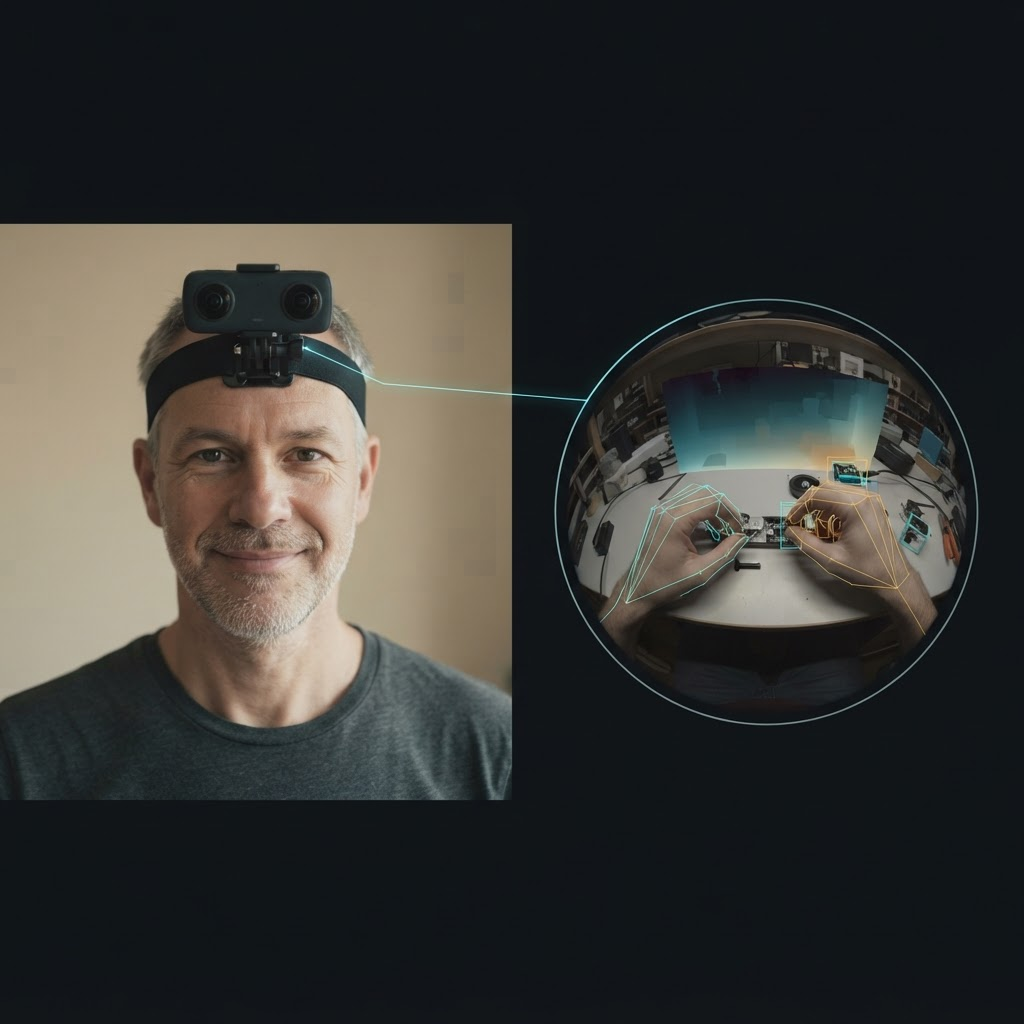
A contributor wearing a head-mounted camera beside a graphic of the first-person feed and annotation layers it produces.
Every hour billed is a validated hour: raw takes that fail the spec are rejected and recaptured at no cost to the buyer.

Cost drivers

What actually moves the price?

01

Stream count per episode

A single RGB clip costs less to capture and QA than an episode syncing ten streams — 4K video, depth, IMU, 3D hand and body pose, segmentation, and action labels — under 2 ms. More streams means more equipment, more QA passes, and more storage per hour.

02

Validated hours, not raw hours

You are billed for hours that clear the accept criteria in your spec, not hours submitted. A tighter spec with a higher reject rate on unfamiliar tasks means more raw capture per validated hour — which is a timeline and recruiting cost we absorb, not one passed to you as a line item.

03

How thin or deep coverage already is

Environments, tasks, and geographies we already have active contributor coverage for move faster and cheaper. A spec that asks for a condition, region, or task combination we have little standing coverage for takes longer to recruit and scope, which shows up in timeline more than unit price.

04

Turnaround you need

A median of 48 hours from signed spec to first validated batch where coverage is deep; three to four weeks where it is thin. Compressing that timeline where coverage is already thin usually means recruiting in parallel across more regions, which is a scope decision made explicit before you sign.

Why no price list

Why doesn’t Firsthand publish a price list?

A price list implies a fixed unit of work, and custom training data rarely is one. Ten synchronized streams at 4K with hand and body pose is a materially different job from a single RGB clip; a task with deep existing coverage is a different job from one that needs recruitment in a new region. Publishing one number would either overcharge the simple case or undercharge the hard one.

Instead, every project starts from a written spec with explicit accept and reject criteria. The spec is what gets quoted — reach, stream count, validated hours, and timeline — before any capture begins, so the price maps to the actual work rather than a rate card.

Billing model

What am I actually billed for?

Validated hours: footage that has been captured, reviewed, and passed the accept criteria written into your spec. A take that fails QA is not billed — it is rejected and recaptured, at our cost, until it clears the bar or the spec is revisited.

That is the deliberate trade: you carry the risk of defining the spec correctly up front, and we carry the risk of executing it. It also means the reject rate you see on the program velocity chart is our cost to manage, not yours to absorb.

Scoping a budget

How do I scope a spec to fit a budget?

Start with a Spec Pilot: a small, fast first batch that proves the spec and accept criteria at low volume before you commit to scale. It surfaces where the reject rate is high, where coverage is thin, and whether the stream count you asked for is actually necessary for the model you are training.

From there, the levers to pull are the ones above: drop a stream you do not strictly need, widen the tolerance on an edge case, or phase geography instead of launching every region at once. Each of those moves cost and timeline together, and you see the trade-off before you approve it.

What moves cost

Cost driver vs. what it changes

The same four levers apply whether the spec is a single modality or ten synchronized streams.
DriverWhat it changes
Stream count per episodeEquipment, QA passes, and storage cost per hour
Validated hours neededTotal billed hours; raw capture volume required to reach them
Coverage depth for your specRecruiting time and cost, more than unit price
Turnaround requiredParallel recruiting across regions when coverage is thin
Reject rate on the specOur recapture cost, not yours — billed hours stay validated-only

Every collection runs through the same seven-stage end-to-end custom collection pipeline.

FAQ

How much does custom robotics training data cost?, answered.

Does Firsthand have a fixed price per hour of data?
No. Price is quoted against your written spec because stream count, validated-hour volume, coverage depth, and turnaround all move it independently. A Spec Pilot gives you a real, small-scale number before you commit to volume.
Am I billed for footage that fails QA?
No. Billing is per validated hour — footage that has passed the accept criteria in your spec. Rejected takes are recaptured at our cost, not yours.
Does more streams per episode cost more?
Generally, yes. An episode syncing ten streams — video, depth, IMU, 3D hand and body pose, segmentation, and action labels — under 2 ms needs more equipment and QA than a single RGB clip, and that shows up in the quote.
Why does turnaround affect price?
Where coverage is already deep for your task and environment, a first validated batch ships in a median of 48 hours. Where it is thin, reaching the same volume needs recruiting in a new region or condition, which is a timeline and scope decision, not a markup.
Can I start small before committing to a full program?
Yes. A Spec Pilot is a small, fast first batch that proves the spec and accept criteria before you scale volume on demand, so you see real numbers before a larger commitment.
Who owns the license once I pay?
You do. Delivered data carries a perpetual, buyer-owned commercial license backed by a documented consent chain, so a model trained on it can ship in a product.
Sources

Where are the delivery formats documented?

Request a quote against your spec.

Tell us the streams, volume, and timeline your model needs. We will scope a written spec and quote reach, turnaround, and price before any capture begins — starting with a Spec Pilot if you want proof first.