Robotics video data

Video data collection for robotics.

Robot policies need video captured from the viewpoint and task structure they will actually operate in, not generic footage. We collect it first-person, hardware-synchronized with depth, hand pose, and action labels, matched to the capture setup your program needs.
Views
Egocentric · stereo · wrist
Sync
Single hardware clock
Labels
Hand pose · actions · contacts
Formats
RLDS · LeRobot · WebDataset
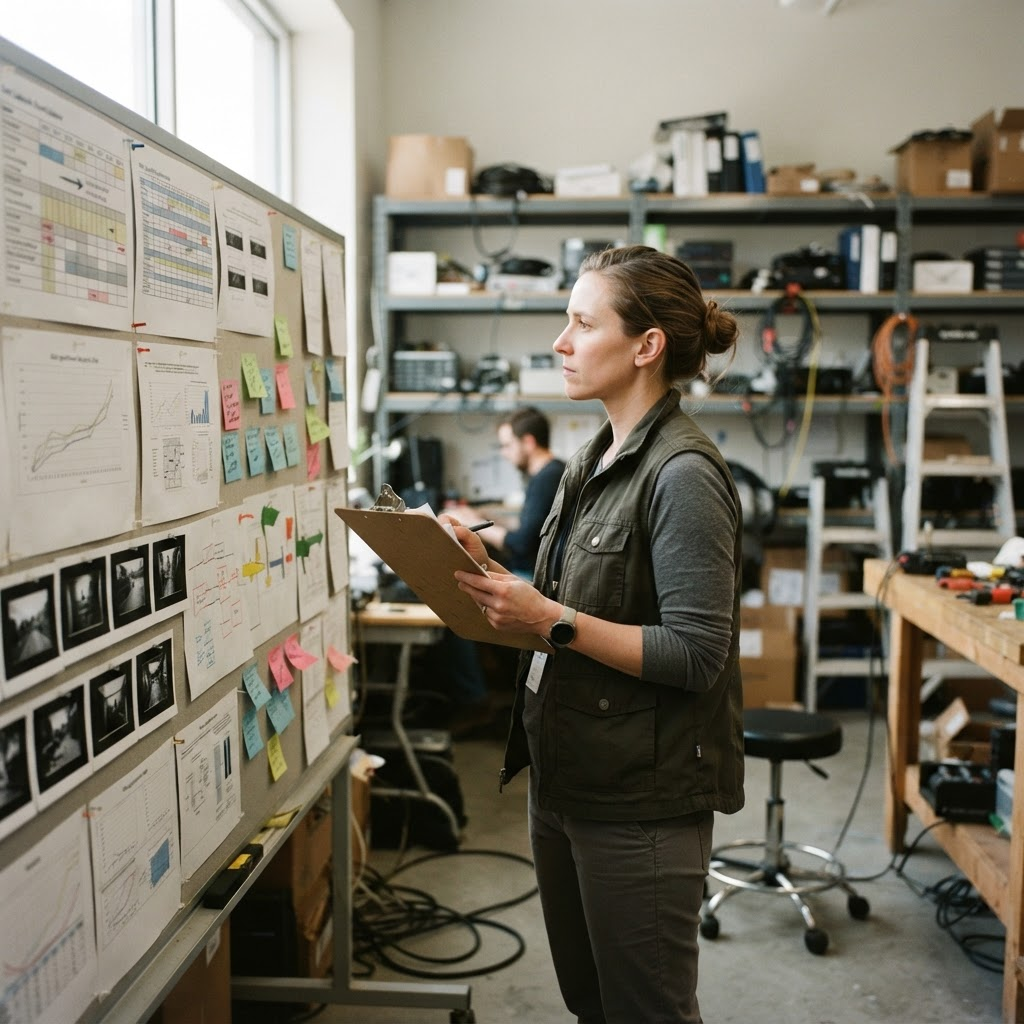
A contributor wearing a head-mounted capture rig performs a manual task, beside a graphic of synchronized hand-pose, depth, and action-segment annotation layers.
Robotics video data starts with matching the capture setup to the policy, not filming generic footage.

Definition

What is video data collection for robotics?

Video data collection for robotics is recording task video from the viewpoint and sensors a robot policy will actually use, rather than generic third-person footage. Depending on the program this means egocentric (first-person) video, calibrated stereo pairs, or wrist-mounted views, hardware-synchronized with depth, IMU, and hand pose so the video is directly trainable.

How it works

Choosing the right capture setup for robotics video.

01

Egocentric, when the task is human-demonstrated

A head-mounted first-person view captures the same viewpoint and hand-object interaction a robot camera would see, useful for teaching manipulation and navigation from human demonstration.

02

Stereoscopic, when depth has to be exact

Calibrated left/right pairs at a human eye baseline give dense, pixel-aligned depth for 3D perception and manipulation policies that need to judge distance precisely.

03

Bimanual and wrist views, when two hands matter

Wrist-mounted cameras alongside a head view capture close-in hand-object contact for two-handed manipulation tasks that a single overhead camera would miss.

04

All of it on one clock

Whichever cameras a program uses, they hardware-trigger together with depth, IMU, and audio, so every stream lines up to the frame with no drift to correct after the fact.

At a glance

What you get.

Capture
Egocentric · stereo · wrist-mounted
Sensors
RGB · depth · IMU · audio
Labels
Hand pose · action segments · contact
Spec to first batch
a median of 48 hours (deep coverage)
Delivery
RLDS · LeRobot · WebDataset · HDF5

Every collection runs through the same seven-stage end-to-end custom collection pipeline. End-to-end custom data collection is a managed service that takes an AI data need from problem to owned dataset in a single accountable pipeline.

FAQ

Video data collection for robotics, answered.

What kind of video does robot training actually need?
It depends on the policy. Manipulation and navigation policies typically train on egocentric first-person video; depth-sensitive tasks add calibrated stereo; two-handed tasks add wrist cameras. All of it is hardware-synchronized rather than filmed on separate clocks.
Can you match an existing capture setup?
Yes. A spec sets the camera positions, sensors, and task list, and capture is built to match. Programs commonly combine head-mounted, stereo, and wrist views in the same episode.
How is robotics video data labeled?
With 3D hand pose, action-segment boundaries, and contact events annotated against the captured geometry, not guessed from a single frame, so the video is directly usable for policy training.
How is robotics video data priced and delivered?
Per validated hour or accepted item, quoted against your spec before capture. Delivery is in the format your training stack already reads — RLDS, LeRobot, WebDataset, or HDF5 — under a perpetual, buyer-owned license.
How fast can a robotics video dataset ship?
A median of a median of 48 hours from signed spec to first validated batch where coverage is deep, and three to four weeks where it is thin and contributors need to be recruited first.

Brief the gap. Get data back fast.

Tell us what your model is missing. We will quote reach, timeline, and price against a written spec, with a first validated batch in a median of 48 hours where coverage is deep.