Painting and coating

Egocentric Painting and Coating Video Data

Masking an edge, rolling primer, loading a brush to cut in along trim, wiping on stain and sanding between coats: painting is a sequence of small, ordered moves with a loaded tool. We collect custom egocentric video of painting and coating tasks on demand, to a written skill spec, with synchronized streams, action segments, anonymization and a buyer-owned license.
Tasks
Prime, paint, stain and finish, as the catalog lists them
Streams
Ten, synced under 2 ms
First batch
Median 48 h in deep-coverage settings
License
Perpetual, buyer-owned
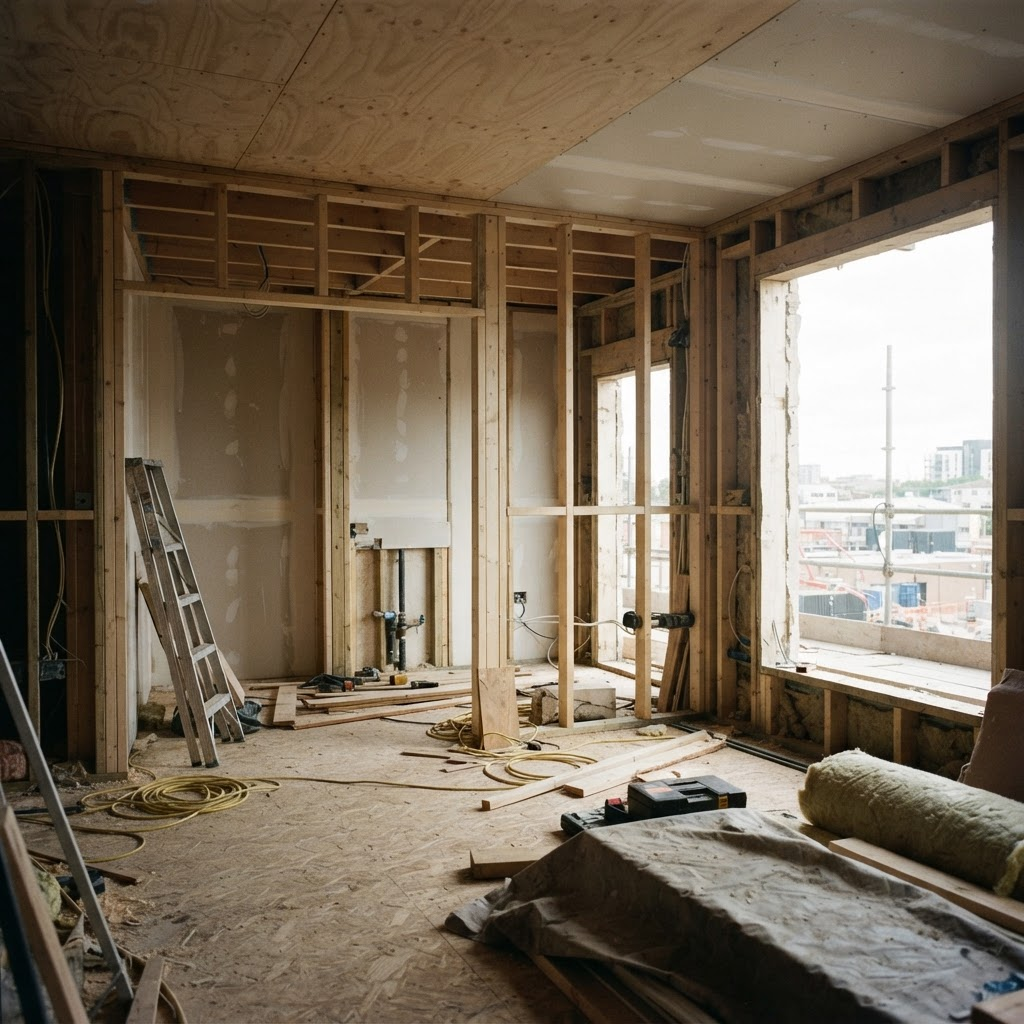
A room under construction with exposed timber framing, drywall panels between the studs, a ladder, coiled cable, a roll of insulation and a large window.
The active construction site is the setting where the catalog lists its wall priming and painting rows. Head-worn capture keeps the hands, the tool and the wall ahead in view from the contributor’s own point of view.

Requirements

What does painting need that a generic tool-use clip does not?

01

The hands, the tool and the surface in view together

A brush, a roller and a stain rag are all worked from the hand, with the business end pressed against the surface ahead. First-person capture keeps the hands and the surface being worked in frame, and the two wrist cameras add a closer view of the hands than the head camera alone. 3D hand pose carries a per-joint visibility flag, so a finger hidden behind a handle is flagged rather than guessed.

02

A spec that names the step and the surface, not just "painting"

The site’s skill-spec guide says to name the verb and the noun rather than a broad activity. A spec for this family names the step and the item, such as mask an edge, roll primer onto a wall, or cut in along trim, and where one completed step starts and ends, so each can become its own labeled segment.

03

Order and sequence, not a single stroke

The catalog describes painting rows as sequences: mask, roll primer, roll paint, cut in. A policy has to see the order, the tool changes between a roller and a brush, and the repeat passes. The episode has to carry the whole sequence, not one stroke.

04

Reject rules written before capture, not after

An item is rejected when the manipulated object is out of frame for too much of the episode, when depth is invalid over too much of the manipulation region, or when an undocumented bystander appears. The thresholds are agreed in the spec, so the batch is judged against terms you signed.

Definition

What is egocentric painting and coating video data?

Egocentric painting and coating video data is first-person video of a person applying paint, primer, stain or another finish to a surface, recorded from the contributor’s own point of view with synchronized sensor streams alongside. The camera sits on the head, close to what a robot’s onboard camera would see while it works a wall, a panel or a canvas, so the frames show the roller or brush, the surface in front of it, the hands on the handle and the edge being cut in, rather than a distant view of someone decorating a room. On this site it is a custom collection: you name the task, the tool, the surface and the setting, and capture is run to a written skill spec.

The data is human capture. A paid, consented contributor wears the rig and does the task. It is not robot or teleoperation data, and it is not a fixed corpus you download. This page is a different subject from egocentric tool use data, which centres on hand tools such as drivers, clamps and measuring tools, and from wiping and surface cleaning data, which centres on cleaning a surface by hand. The subject here is applying a material to a surface with a brush, a roller or a rag, and the prep work that sits beside it. It covers what the site states about capturing, labeling and checking those tasks.

People reach this topic through close cousins: painting robot training data, an egocentric painting video dataset, brush and roller task data, or custom painting data collection. They describe one request from different angles, and the work is the same: write down the task, collect it on demand, and receive validated episodes. Nothing on this page states that the video carries a paint-type label, a coverage map or a film-thickness measurement.

Why it matters

Why do robots need first-person video of painting?

A published robot foundation model paper, GR00T N1, linked in the sources below, describes a data pyramid with web data and human video at the base, synthetic data in the middle and real robot trajectories at the top. First-person human video of painting sits in that base layer. Human capture does not replace robot data, and this page does not claim that it does.

A painting task is a sequence of small, ordered moves with a tool loaded with material. The catalog describes one row as masking edges, rolling primer and paint onto walls and cutting in corners with a brush, and another as rolling primer, then paint, and brushing cut-in at edges and trim. The order matters, and so do the hands: the site’s tool use page says that grip changes live in finger-level detail that RGB video alone cannot resolve. A clip that shows a roller somewhere near a wall does not carry what a policy needs. The hands, the tool and the surface have to be present in the episode, and the episode has to say where one step ends and the next begins.

Breadth matters as much as volume. A published model write-up, GEN-0, also linked in the sources, puts it this way: "data quality and diversity matters more than sheer volume." For painting that points at the spread of tools, surfaces and steps. A custom collection lets you aim at the step your model is missing, such as cutting in along trim or masking an edge, rather than hoping a broad collection happens to contain it. This page does not claim that any public corpus lacks painting data.

Painting tasks

Which painting tasks can be captured?

The first table below reproduces seven rows of the site’s commercial task catalog that name painting, priming, staining or finishing. Each is listed with an environment, a skill level, a capture setup and a status exactly as the catalog states them. It is a selection of the rows that apply a material to a surface, not the whole catalog.

Wall painting appears in two settings. The active construction site environment lists "Painting & Priming", which masks edges, rolls primer and paint onto walls and cuts in corners with a brush, and "Prime and paint interior walls using rollers and brushes", which rolls primer then paint and brushes cut-in at edges and trim. Both are medium skill with a head-mounted phone or multiview rig, marked ready to deploy and active collection respectively. That environment’s own description also lists painting among its trades. The trades workshop bench lists "Roll + cut-in paint", which rolls a panel and cuts in edges. It is an easy row captured with a multiview rig and handheld grippers, marked available on request.

Wood finishing appears in the carpentry and furniture workshop. "Staining & Finishing" applies stain, sealer or lacquer with rags, brushes or a spray gun and sands between coats, and a second row sands surfaces with an orbital sander through the grits and wipes on stain with rags. Both are medium skill, the first ready to deploy and the second active collection. The spray gun appears in that one row’s wording as a tool. The site states no spray booth, no industrial finishing line and no coating line anywhere, so this page makes no such claim.

Artistic painting appears in the art studio environment as "Canvas painting", which mixes paint on a palette and applies it to canvas with brushes and knives, and "Mural work", which sketches the outline on a wall and paints large areas and details with rollers and brushes. Both are medium skill and marked available on request. These are catalog listings, and the page does not claim more about them than the catalog does.

The second table lists neighbouring prep rows: sanding and surface prep, sanding and wiping a bench surface, caulking, and drywall taping and mudding. In a real job they sit before painting, but they are not painting rows, so they are kept apart. The nail treatments row is left out because painting nails is a beauty task, the car polishing rows are left out because polishing compound is not a paint or a coating, and the floor stripping and waxing rows are left out because they belong with floor care. The third table shows where else painting is named on the site, and where it is not. The site does not describe a paint type, a finish, a brand, a tool model or a surface size for any row, so none is stated here. A task outside these rows is settled in a Spec Pilot rather than assumed.

Episodes

What does each painting episode contain?

Each attempt is delivered as one episode, and a painting task needs a decision up front about what one attempt is: one wall, one panel, one coat, one cut-in pass along a stretch of trim, or one masking-and-rolling sequence. The site does not set that length, so the skill spec does. Inside the episode, the synchronized streams run from start to end, and action segments divide it into labeled spans.

A priming-and-painting episode might open with masking an edge and close with the last corner cut in, and a staining episode might run from the first wipe to the sanding between coats, as the catalog rows describe. These are illustrations of how a spec can cut an episode, not stated durations. Whether a coat is one episode or several, and whether sanding between coats sits inside the episode or is its own, are spec decisions.

The environments behind these rows are an active construction site, a trades workshop bench, a carpentry and furniture workshop with finishing stations, and an art studio. Which of those apply to your program is set in the spec, along with how many surfaces, tools and steps you want covered. The site lists capture at your own facility as not offered.

Capture setup

What capture setup and streams are used?

A painting collection uses the same capture stack as every Firsthand program. The instrumented tier is a head-mounted stereo rig that records first-person RGB, with a metric depth stream recovered from the calibrated stereo rig rather than from a standalone depth sensor, and 6-DoF IMU data at 200 Hz from head- and wrist-mounted sensors. The wider stack is ten streams: a 4K head camera, two wrist cameras, depth, IMU, 3D hand and body pose, instance segmentation and action labels, hardware-aligned under 2 ms. The two wrist cameras give a closer view of the hands than the head camera alone, which matters where a hand grips a brush or steadies a roller.

Every stream is hardware-triggered onto one PTP clock domain, so depth, motion and hand pose line up with the same video frame rather than being approximated afterwards. The rig is calibrated twice per session, before capture starts and after it ends, and an episode is accepted only if RMS reprojection stays under 0.28 px. The catalog lists the capture setup per task: a head-mounted phone or multiview rig for the construction, carpentry and art rows, and a multiview rig with handheld grippers for the trades workshop bench rows. The site does not explain the grippers further. Which tier applies to your program is set in the skill spec.

The site does not state a camera count, resolution or frame rate specific to painting. Force and tactile readings are not among the streams, no paint-type, wet-film or coverage sensing is among the ten, and no robot or teleoperation data is captured.

Labels

How is painting data labeled and delivered?

Inside each episode, action segments divide the recording into start- and end-timestamped spans, each carrying start_ns, end_ns, verb and noun. For this task family a segment can be one step as written in the skill spec, so the construction row becomes a run of labeled steps such as mask, roll and cut in rather than one long clip, and a staining row can separate wiping on stain from sanding between coats. The other standard fields are hand_joints and hand_visible for 3D hand pose, contact_events for the moment the hand meets an object, objects, and instance_masks, stored at the depth resolution of 848×480 so they line up with the depth stream.

Hand pose is delivered for both hands with a per-joint visibility flag for occluded fingers. That is the label that carries how the hand sits on a brush or roller handle and how it moves through a pass. The site describes contact events as the moment the hand meets an item, and it does not say whether a roller, a brush, a paint tin, a masked edge or the wall counts as the item, so the spec is the place to settle what a contact event means for your task.

The site does not list labels for the paint or the finish itself. There is no stated label for paint or finish type, a coverage or painted-area map, a coat count, a wet-film or coating thickness, a stroke direction, a surface-prep state, or a task-completion score, and no contact force or pressure reading. Catalog descriptions such as rolling primer then paint or sanding between coats describe the task the contributor performs, not a delivered measurement.

Stated limits

What does the site state about the hard parts of recording painting?

Several limits the site already states apply directly to painting capture, and several it leaves open. Each stated limit below appears elsewhere on the site rather than being introduced here.

Hand occlusion is the first. Fingers disappear behind objects in manipulation, which is why 3D hand pose carries a per-joint visibility flag. Depth is the second. The site says depth degrades on wet and reflective surfaces and handles that with per-frame confidence maps. Fresh paint, stain and lacquer leave wet, glossy surfaces, but the site does not say how depth behaves on one in particular. A related statement exists for under-vehicle capture, where the site says painted and oily surfaces absorb a depth projector pattern and those episodes carry a depth-quality flag. That statement is about under-vehicle work, and this page does not extend it to walls or panels or promise a figure.

The third is the set of machine-checked reject criteria. An episode is rejected for a sync breach beyond the ceiling for more than three consecutive frames, calibration drift beyond tolerance, the manipulated object out of frame for more than 15 percent of the episode, more than 35 percent invalid depth pixels in the manipulation region, an undocumented bystander, or a mismatch against the named skill spec. A human reviewer then checks each episode against the task spec. For a painting task, the spec decides what the manipulated object is: the tool, the patch of wall or the panel being worked.

The tool use page adds that metric depth on sub-centimetre parts is flagged rather than interpolated. Whether a thin cut-in line or a bristle tip counts as such a part is not stated. Also not stated: a mask accuracy figure for brushes, rollers, tape lines or painted edges, and any description of how masking tape, drop cloths or a wet edge are handled. If your policy depends on any of those, say so at the start.

QA, consent and safety

How do QA, consent, safety and anonymization apply?

Validation runs against signed accept criteria written into the spec before capture. Each batch goes through per-batch QA and a reject log ships with it. Only footage that clears the criteria is billed as a validated hour, and rejected items are recaptured at our cost. Many teams start with a Spec Pilot, a small, fast first batch that proves the spec and the accept criteria on real footage before volume scales.

Every contributor signs a written release before capture, and each delivered episode links to that record through consent artefact IDs in the batch data card. The consent chain has six checkpoints, from before capture to after delivery, and a break at any one discards the footage rather than shipping it at a lower grade. At ingest, automated detection finds faces, plates and screens and blurs them irreversibly, and speech is scrubbed of names, addresses and card numbers while ambient audio is kept. A human reviewer confirms that no un-consented person is identifiable in any frame, and footage that cannot be de-identified is discarded. The anonymization record is delivered with the data.

Construction sites and shared workshops can have other people nearby. The same rule applies to them as to any capture: an un-consented person who is identifiable in a frame means the footage is de-identified or discarded, so settle bystander handling in the spec for the setting you choose.

On safety and qualification, the site states no contributor safety protocol, no guidance on ventilation, fumes, solvents, personal protective equipment or paint chemistry, and no safety certification for any painting row, and this page does not describe one. The site lists capture at your own facility as not offered. If your program needs terms about who performs the work, the materials used or the conditions under which it is done, raise them when you scope it. None of this is legal advice, and the executed agreement controls.

Delivery and speed

How fast can a custom painting dataset be collected?

From signed spec to first validated batch, the timeline is a median of 48 hours where coverage is deep and three to four weeks where it is thin and contributors need to be recruited first. Speed comes from a warm pipeline, not from cutting consent, review or anonymization. The site does not say whether the painting settings count as deep or thin coverage, so ask which timeline applies to the setting you want when you request the quote. After the first batch, on-demand top-ups run against the same accept criteria, so you can add more surfaces, tools or steps without rewriting the spec. The site does not state a turnaround for those later batches, so plan them in your quote.

Delivery is in the format your stack already reads: RLDS, LeRobot, WebDataset, HDF5, zarr or Rerun .rrd, or raw streams with metadata. Readable converter source ships alongside the data so the schema can be retargeted to your own loader. Collections are billed per validated hour.

The license is perpetual, irrevocable and worldwide, with the data buyer-owned and non-exclusive by default. Training, evaluating, fine-tuning and deploying models, including commercial ones, is permitted, and exclusivity is available as a separate term. The executed agreement controls. The site does not publish a price list, a minimum order or a batch size for this task family, so those are set in your quote.

Not stated

What does a painting collection not include?

Where this site does not state something, this page says "not stated" rather than filling the gap. The table below separates what is delivered from what is not stated. There is no listed label for paint or finish type, coverage, coat count or thickness, no force or tactile stream, no paint, tool or surface specification, and no wall or panel size. There is no spray booth or industrial finishing claim, and nothing here claims a training outcome or a model improvement.

The tradeoff to plan for is the embodiment gap between a human holding a brush or roller and a robot platform working a surface, which retargeting or pairing with robot data has to close. Counts of contributors, hours and tasks are set in your skill spec.

Getting started

How do you start a painting pilot?

Describe the tools, the surfaces, the setting and the variation or failure cases your pipeline is missing. That becomes a written skill spec, quoted for reach, timeline and price before any capture begins, and most programs run a Spec Pilot first. The scoping checklist below maps the parts of a skill spec onto a painting request. A published sample recording is on the sample data outputs page if you want to see the streams before you write a spec.

Three choices matter most for this family. Name the step and the tool rather than a broad activity, because that is what lets each step become one action segment. Name the setting and the capture tier, since a construction site, a workshop bench and an art studio are listed with different capture setups for some rows. And name where the episode starts and stops: one coat, one wall, one cut-in pass or one full masking-to-finish sequence, since the site does not set an episode length.

Capture setup

What is the capture setup for a painting collection?

The capture setup as stated on this site, applied to painting work. Counts of contributors and hours are set in the skill spec.
PartAs stated on this site
Instrumented rigHead-mounted stereo rig worn by the contributor; first-person RGB
StreamsTen: 4K head camera, two wrist cameras, depth, IMU, 3D hand and body pose, instance segmentation, action labels
SyncHardware-triggered onto one PTP clock domain; aligned under 2 ms
DepthMetric depth recovered from the calibrated stereo rig; per-frame confidence maps are shipped; degrades on wet and reflective surfaces
IMU6-DoF at 200 Hz from head- and wrist-mounted sensors
CalibrationTwice per session; accepted only under the 0.28 px RMS reprojection gate
MasksPer-frame instance masks where the spec calls for them, stored at 848×480
Catalog capture setupHead-mounted phone or multiview rig for the construction, carpentry and art rows; multiview rig with handheld grippers for the trades workshop bench rows

Every collection runs through the same seven-stage end-to-end custom collection pipeline.

Task variations

Which painting and coating tasks does the catalog name, and what is captured?

Seven catalog rows that name painting, priming, staining or finishing, reproduced as the catalog states them. The selection is not the whole catalog.
Task (as listed)Description (as listed)EnvironmentSkill levelCapture setupStatus
Painting & PrimingMask edges, roll primer and paint onto walls and cut in corners with a brush.Active Construction SiteMediumPhone (head-mounted) / multiview rigReady to deploy
Prime and paint interior walls using rollers and brushesRoll primer then paint on interior walls and brush cut-in at edges and trim.Active Construction SiteMediumPhone (head-mounted) / multiview rigActive collection
Roll + cut-in paintRoll a panel and cut-in edges.Trades Workshop BenchEasyMultiview rig + handheld grippersAvailable on request
Staining & FinishingApply stain, sealer or lacquer with rags, brushes or spray gun and sand between coats.Carpentry & Furniture WorkshopMediumPhone (head-mounted) / multiview rigReady to deploy
Sand and finish wood surfaces using an orbital sander and stain ragsSand surfaces with an orbital sander through the grits and wipe on stain with rags.Carpentry & Furniture WorkshopMediumPhone (head-mounted) / multiview rigActive collection
Canvas paintingMix paint on a palette and apply it to canvas with brushes and knives.Art Studio (painting, sculpture, printmaking)MediumPhone (head-mounted) / multiview rigAvailable on request
Mural workSketch the outline on the wall and paint large areas and details with rollers and brushes.Art Studio (painting, sculpture, printmaking)MediumPhone (head-mounted) / multiview rigAvailable on request

Neighbouring prep rows

Which prep rows sit next to painting in the catalog?

Four catalog rows for work that comes before or beside painting, reproduced as the catalog states them. They are not painting rows.
Task (as listed)Description (as listed)EnvironmentSkill levelCapture setupStatus
Sanding & Surface PrepSand panels smooth by machine and hand, fill defects and wipe off dust before finishing.Carpentry & Furniture WorkshopMediumPhone (head-mounted) / multiview rigReady to deploy
Sand + wipe surfaceSand a surface and wipe clean.Trades Workshop BenchEasyMultiview rig + handheld grippersAvailable on request
Apply + tool caulkRun a caulk bead and tool it smooth.Trades Workshop BenchMediumMultiview rig + handheld grippersAvailable on request
Drywall Hanging, Taping & MuddingLift and screw drywall panels to studs, tape joints and apply joint compound.Active Construction SiteMediumPhone (head-mounted) / multiview rigReady to deploy

Where painting is named

Where does the site name painting, and in what words?

Each statement is quoted or closely paraphrased from a page on this site. Several rows record what is not stated.
WhereWording on the siteWhat it tells you
Commercial task catalog: construction site"Painting & Priming" and "Prime and paint interior walls using rollers and brushes"; the environment lists painting among its tradesWall priming and painting with rollers and a brush
Commercial task catalog: trades workshop bench"Roll + cut-in paint": "Roll a panel and cut-in edges."A bench-scale roll and cut-in row, available on request
Commercial task catalog: carpentry workshop"Staining & Finishing" and a sand-and-finish row; the environment lists finishing stationsStain, sealer and lacquer with rags, brushes or a spray gun
Commercial task catalog: art studio"Canvas painting" and "Mural work"Brush, knife and roller work on canvas and walls
Egocentric tool use data pageDriver and bit selection, clamp-and-align, measuring, fastening and tool hand-offThe neighbour; applying paint is not named there
Under-vehicle capture notesPainted and oily surfaces absorb a depth projector pattern; those episodes carry a depth-quality flagStated for under-vehicle work only, not extended to walls
Dataset pagesNo painting skill is listedPainting is a custom-collection request, not a stated dataset skill
Paint or finish type, spray booth, industrial finishingNot statedSettled in the skill spec; not claimed here

Streams and labels

Which streams and labels are delivered for painting work, and which are not stated?

Delivered items are stated elsewhere on this site. Items marked not stated are not promised on this page.
Stream or labelWhat it gives a painting episodeStatus
Head and wrist camerasFirst-person view of the task plus a closer view of the handsDelivered
Depth with confidence mapsSurface geometry, with a confidence map to mask low-confidence regionsDelivered
6-DoF IMU at 200 HzHead and wrist motion aligned to the video frameDelivered
3D hand and body pose, with per-joint visibility flags for the handsBoth hands across the step and the body’s movement; occluded fingers flaggedDelivered
Contact eventsThe moment the hand meets an itemDelivered
Action segments (start_ns, end_ns, verb, noun)One labeled span per stepDelivered
Per-frame instance masks (848×480)Masks where the spec calls for themDelivered where specified
Consent artefact IDs and anonymization recordProvenance per episodeDelivered
Paint or finish typeNot listedNot stated
Painted-area or coverage mapNot listedNot stated
Coat count, wet-film or coating thicknessNot listedNot stated
Contact force, pressure or tactile readingsNot among the listed streamsNot stated
Ventilation, chemical or safety certification dataNot among the listed streamsNot stated
Robot or teleoperation dataHuman first-person demonstrations onlyNot captured
Counts of contributors, hours and tasksSet per program in the skill specNot stated

Scoping checklist

What does a painting request put into each part of a skill spec?

The parts of a skill spec as the site’s guide describes them, applied to a painting request. The catalog wording is quoted where it helps; your own fields and numbers are agreed with you.
Skill-spec partWhat to name for a painting requestDrawn from what the site states
Named skillThe verb and the noun: roll primer onto a wall, cut in along trim or wipe on stain, not "painting"Catalog wording such as "Roll primer then paint on interior walls and brush cut-in at edges and trim."
Geometry that must be visibleWhat must be in frame and for how long: both hands, the tool, the surface being workedSet in the skill spec
Condition budget in hoursHours per condition cell, including surfaces, tools and failure casesSet per program in the skill spec
Reject ruleThe conditions that fail an item, written firstObject out of frame for more than 15 percent of the episode; more than 35 percent invalid depth pixels in the manipulation region; an undocumented bystander
Acceptance testOne test that decides whether an attempt counts as completeYour acceptance test is agreed in the spec
Setting and capture tierConstruction site, workshop bench, carpentry workshop or art studio, and phone or multiview rigThe catalog lists a capture setup per row
Episode boundaryOne wall, one panel, one coat, one cut-in pass or one masking-to-finish sequenceSet in the skill spec; the site does not state an episode length
Participants and lightingHandedness, technique and pace; daylight or low lightSet per program in the skill spec

FAQ

Egocentric painting and coating video data, answered.

What is egocentric painting and coating video data?
Custom first-person video of people applying paint, primer, stain or another finish with brushes, rollers and rags, captured by paid, consented contributors wearing a capture rig and doing the tasks in a written skill spec, with synchronized streams, hand pose, contact events and action segments.
Does Firsthand capture painting and priming tasks?
The task catalog lists "Painting & Priming" and "Prime and paint interior walls using rollers and brushes" at an active construction site, "Roll + cut-in paint" at a trades workshop bench, "Staining & Finishing" at a carpentry workshop, and "Canvas painting" and "Mural work" in an art studio. Statuses range from ready to deploy to available on request.
Is spray painting or industrial finishing covered?
Not as a stated capability. One catalog row, "Staining & Finishing", names a spray gun among its tools, but the site states no spray booth, industrial finishing line or coating line, so those are settled in the skill spec and a Spec Pilot.
What streams and labels come with a painting episode?
Ten hardware-synchronized streams, including head and wrist cameras, depth with confidence maps, IMU, 3D hand and body pose and instance segmentation, plus action segments with start_ns, end_ns, verb and noun, and contact events. There is no stated paint type, coverage, coat count or thickness label.
How fast can a custom painting dataset be collected?
From signed spec to first validated batch, a median of 48 hours where coverage is deep and three to four weeks where it is thin. The site does not say which timeline applies to painting settings, so ask when you request the quote.
Can you capture at our own facility?
The site lists capture at your own facility as not offered. Capture is run to your skill spec using the settings and contributors Firsthand arranges.
Is the footage anonymized and consented?
Every contributor signs a written release, and each episode links to it by consent artefact ID. Faces, plates and screens are blurred irreversibly, speech is scrubbed of names, addresses and card numbers, and footage that cannot be de-identified is discarded.
Which formats are delivered, and who owns the data?
RLDS, LeRobot, WebDataset, HDF5, zarr or Rerun .rrd, or raw streams with metadata. The license is perpetual, irrevocable and worldwide, buyer-owned and non-exclusive by default, with exclusivity available as a separate term.
Sources

Where are these painting capture claims documented?

Request a custom painting dataset.

Tell us the tools, the surfaces and the settings your model needs to see. We will quote reach, timeline and price against a written spec, with a first validated batch in a median of 48 hours where coverage is deep.