By industry

Egocentric Data Collection by Industry

The capture, labels, and consent process behind a custom egocentric collection are the same wherever it runs. What changes by industry is the setting, the tasks, and the constraints a crew works inside — a warehouse aisle, a retail floor, a service bay, a bench, a kitchen, or a home. This page is the index: pick your industry, see what it typically needs, and go to the dedicated page for that setting.
Industries covered
Warehouse & logistics, retail, automotive service, assembly, kitchen, household
Starting point
Written skill spec per industry setting
Privacy
Bystander faces and plates blurred at ingest
License
Perpetual, buyer-owned
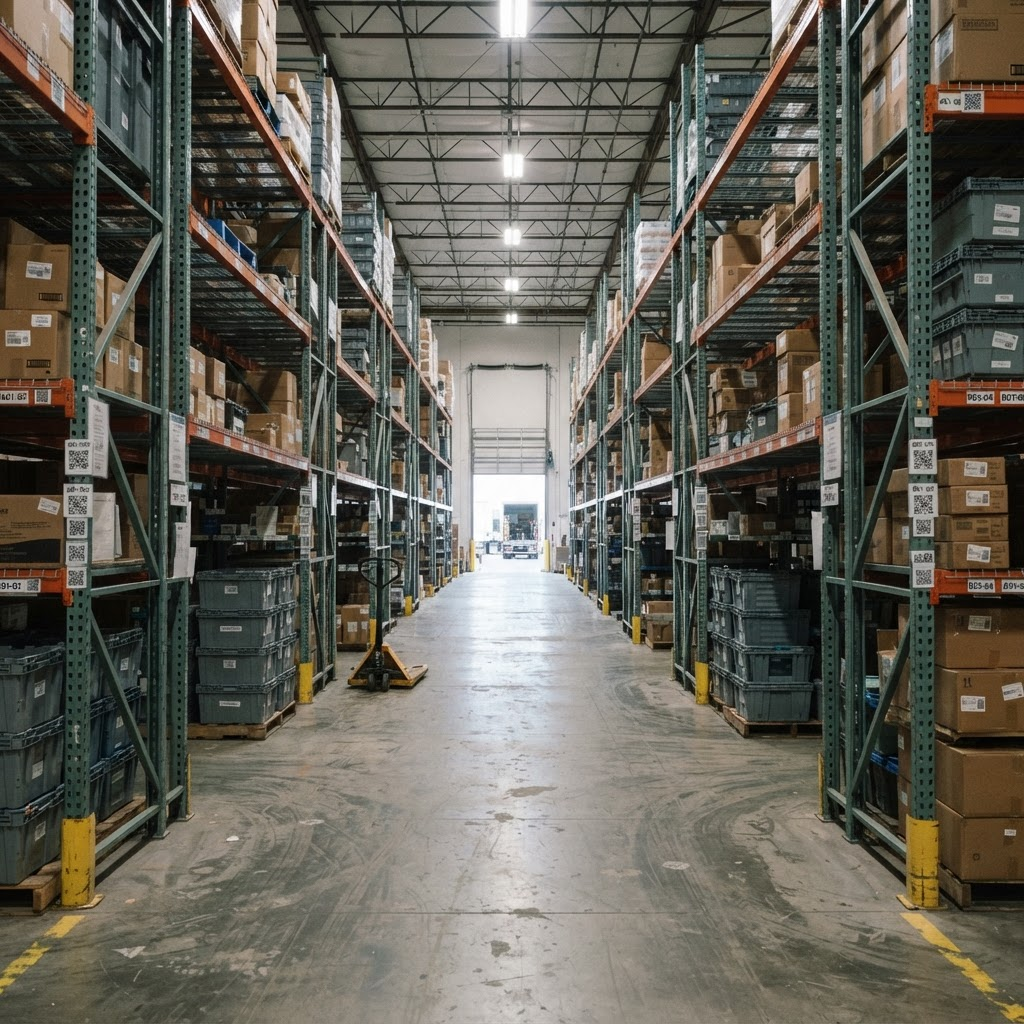
A first-person view of a warehouse pick aisle, one of several industry settings covered by custom egocentric data collection
Every industry setting runs the same written-spec, capture, QA, and licensed-delivery process — only the tasks and environment change.

Why industry matters

What changes by industry, and what stays the same.

01

The setting and tasks change; the process does not

A warehouse pick-and-pack task and a kitchen food-prep task are specified, captured, QA’d, and licensed the same way — only the environment, objects, and task list in the written spec change. That consistency is what lets a buyer combine settings in one order rather than negotiating a separate process per industry.

02

Constraints differ by setting

A warehouse has multi-person activity and long sight-lines; a retail floor has customers in frame throughout; an automotive bay has plates and VINs to blur and tool occlusion; a kitchen has wet, reflective surfaces; a household has whole-home navigation and deformable objects. Each dedicated industry page details the constraints specific to that setting.

03

Privacy and consent apply everywhere, not just some settings

Any setting with bystanders — coworkers, customers, passersby — gets the same anonymization treatment: faces, plates, and screens blurred at ingest, with undeidentifiable clips discarded rather than shipped with a caveat. That is not an industry-specific feature; it is the baseline for every custom collection on this site.

04

One place to start regardless of industry

Whichever industry a buyer needs, the starting point is the same: a written skill spec, proved on a Spec Pilot before scaling. The industry only changes what goes into that spec, not how the engagement begins.

Overview

Which industries use custom egocentric data?

This site currently covers six industry settings for custom egocentric data collection: warehouse and logistics, retail and shelf operations, automotive service, tool use and assembly, kitchen and food preparation, and household chores. Each has its own dedicated custom-collection page describing the tasks it covers, and its own catalog dataset page showing example footage and dataset detail already captured in that environment.

This page is an index, not a replacement for those pages. If you already know your industry, the fastest path is its dedicated page; use this page to compare settings, see which page fits a task that spans more than one industry, or decide where to start if your use case does not map neatly onto a single setting.

This differs from the /solutions pages, which organize by data modality (audio, image, video, text, multimodal) rather than by industry setting, and from the general egocentric-video-data-collection and enterprise pages, which describe the capture process and program structure rather than enumerate specific industries.

Warehouse & logistics

What egocentric data do warehouse and logistics teams need?

Warehouse and logistics collection covers tasks inside working fulfilment space — pick aisles, pack benches, pallet building, and returns desks — rather than a mock aisle built for the camera. Typical tasks include single-item picking from bin to tote, barcode scanning, carton break-down, pallet stacking and shrink-wrap, label application, and two-person long-item carries.

The setting runs multi-person activity more than most other industries, since pickers, packers, and equipment share the same aisles, and sight-lines are often longer than other settings, which affects how depth is captured and flagged. The dedicated page covers the setting in full and links to the catalog dataset for example footage. For buyers who need the full receiving-to-loading flow rather than pick-and-pack alone, the logistics and fulfillment page covers receiving, putaway, picking, packing, sortation, and loading as one spec.

Retail & shelf ops

What egocentric data do retail teams need?

Retail and shelf-operations collection covers facing and front-stocking to a planogram, case-cutting and shelf-loading, price and label swaps, chilled-case rotation, and fixture resets on live retail floors — not a staged aisle. Customers are present throughout a live retail floor, which makes this one of the settings where bystander de-identification matters most: every bystander is blurred at ingest, and a clip is discarded rather than shipped if a bystander cannot be de-identified.

Because de-identification discards rather than downgrades, episode yield in retail settings tends to run lower than in a private setting like a kitchen — a tradeoff this site states plainly rather than smoothing over. The dedicated page and catalog dataset page cover the setting and example footage in detail.

Automotive service

What egocentric data do automotive service teams need?

Automotive service collection covers diagnostic, wheel, fluid, and trim work in working service bays — torque-wrench work to spec, fluid drain and fill, trim and clip removal, diagnostic connector seating, and filter swaps in constrained cavities. The setting is heavy on tool use, constrained reach, and frequent occlusion by the vehicle itself, and license plates and VIN plates are blurred at ingest without exception.

This is a setting with little public reference footage to compare against, so a written spec matters more here than almost anywhere else: the tasks, tool list, and bay layout a model needs to learn have to be described rather than assumed from an existing corpus. The dedicated page covers the setting and process in detail.

Tool use & assembly

What egocentric data do tool use and assembly teams need?

Tool use and assembly collection covers bench assembly, fastening, measuring, and fitting — driver and bit selection, clamp-align-fasten sequences, measuring and marking to tolerance, press-fit assembly, wire stripping and crimping, and tool hand-offs between hands. Because the operator controls the whole bench, this setting tends to give the cleanest capture for bimanual precision of any industry on this site.

Small fasteners and fine parts push below the practical resolution of some depth sensors, so hand pose carries more of the signal than metric depth on the smallest parts — a limitation this site states rather than papering over with uncalibrated depth. The dedicated assembly task data page covers a single named skill in detail; for a full multi-step production procedure captured as one sequenced workflow, with task decomposition and failure/recovery coverage across the whole run, see the manufacturing workflow data page.

Kitchen & food prep

What egocentric data do kitchen and food-prep teams need?

Kitchen and food-prep collection covers two-handed food preparation in real domestic kitchens — knife work, pouring and decanting, opening jars and sealed packaging, loading and unloading a dishwasher, stovetop transfers, and bimanual dough handling. This is among the densest manipulation environments captured, with more contact events per minute than most other settings, which is why it is a common starting point for teams building manipulation-heavy pretraining data.

Wet and reflective surfaces degrade some depth-sensing approaches, so per-frame confidence information travels with the data rather than leaving a buyer to guess which frames are reliable. The dedicated kitchen page and the catalog dataset page cover the setting and example footage. For a commercial kitchen or restaurant operation specifically — prep lines, cooking stations, plating, and dish pits running at service pace — the dedicated food service page covers that narrower, faster-paced setting.

Household chores

What egocentric data do household robotics teams need?

Household collection covers laundry, tidying, cleaning, and surface reset across whole homes — folding and sorting laundry, loading and unloading a washer, wiping and resetting surfaces, vacuuming with obstacle negotiation, bed-making, and bin changes. Episodes here run longer-horizon and lower-precision than a bench task, with more whole-home navigation between rooms than any other setting on this site.

Deformable objects — laundry, bedding, bags — dominate this setting, so instance masks are shipped per frame rather than propagated from a sparser set of keyframes, which is part of why annotation cost per hour runs higher here than in most other settings. The dedicated household page covers the setting and example tasks.

Construction & skilled trades

What egocentric data do construction and skilled trades teams need?

Construction and skilled trades is a thinner-coverage setting on this site than warehouse, retail, or kitchen capture, since site access and operator vetting take longer to arrange. The dedicated construction and trades page covers what a written spec for this setting names and how the capture, labeling, and privacy process applies to jobsite and trades work.

Because this is a thinner environment, first-batch timelines here typically run three to four weeks rather than the faster turnaround available in deeper-coverage settings — a timeline this site states up front rather than quoting the same number across every industry.

Healthcare & hospitals

What egocentric data do healthcare and hospital teams need?

Clinical and care is one of the thinner-coverage settings on this site, and capture here is deliberately narrow: training environments with simulated patients only, never real patient footage. Within that boundary, the dedicated healthcare and hospital page covers non-clinical hospital-adjacent tasks — equipment handling, supply and cart handling, room turnover, and simulated patient-adjacent logistics — captured, labeled, and licensed the same way as any other custom collection.

Because this is a thin environment, first-batch timelines here typically run three to four weeks rather than the faster turnaround available in deeper-coverage settings, the same pattern as construction, agriculture, and hospitality.

Hospitality & housekeeping

What egocentric data do hospitality and housekeeping teams need?

Hospitality is one of the site's thinner-coverage settings, and it splits into two different kinds of capture: guest-facing, front-of-house work such as reception and concierge interactions, and back-of-house work such as cleaning and room-turnover tasks, which falls under the site's broader "cleaning & housekeeping" activity category. Front-of-house capture is bystander-dense, so yield after de-identification runs lower there than in less populated settings.

Because hospitality is a thin environment, first-batch timelines here typically run three to four weeks rather than the faster turnaround available in deeper-coverage settings, the same pattern as construction, clinical, and agriculture.

Comparing settings

How do capture setups differ by industry?

The stream set available — head/wrist RGB, depth, IMU, hand pose, and action segments — is the same menu across every industry; what differs is which streams a given task actually needs and how reliably each stream performs in that setting. A bench task benefits most from hand pose and depth at close range; a warehouse task benefits more from action segments and wider-range depth; a household task leans on navigation-friendly IMU and long-horizon action segmentation.

Privacy handling also differs by exposure, not by policy: every setting uses the same blur-at-ingest and discard-rather-than-downgrade approach to bystanders, but a retail floor or warehouse aisle has far more bystander exposure than a private kitchen or home workshop, so yield and the proportion of discarded clips vary by setting rather than by any difference in the privacy process itself.

Getting started

How do you start a collection for your industry?

Start with a written skill spec naming your industry setting — one or several — along with the tasks, scenes, objects, streams, and labels your training pipeline needs. That is the same intake format used for any custom collection on this site, whether the setting is a warehouse aisle or a kitchen counter.

From there, a Spec Pilot — a small, fast first batch captured against that spec — proves coverage, stream quality, and reject rate before you commit to full volume. Buyers that need more than one industry in a program, such as warehouse picking alongside bench assembly, write both settings into the same spec rather than running two separate engagements.

At a glance

What you get.

Starting point
Written skill spec naming the industry setting, tasks, and objects
Industries available
Warehouse & logistics, retail, automotive service, tool use & assembly, kitchen, household
Streams
RGB (head/wrist) • depth • IMU • hand pose • action segments, as specced per setting
Privacy
Faces, plates, and screens blurred at ingest; undeidentifiable clips discarded
QA
Calibration, sync, and label review before delivery, same bar across every setting
License
Perpetual, non-exclusive, buyer-owned by default
Formats
RLDS, LeRobot, WebDataset, HDF5/zarr, Rerun RRD

Every collection runs through the same seven-stage end-to-end custom collection pipeline. End-to-end custom data collection is a managed service that takes an AI data need from problem to owned dataset in a single accountable pipeline.

By industry

Industry × typical tasks × capture setup × where to go deeper

Industry setting, typical tasks captured, the capture setup and labels that fit, and the related page.
IndustryTypical tasksCapture setup & labelsRelated page
Warehouse & logisticsPick, scan, pack, pallet-buildHead/wrist RGB, depth, hand pose, action segments/custom-collection/warehouse-robotics-training-data
Logistics & fulfillmentReceiving, putaway, picking, packing, sortation, loadingHead/wrist RGB, depth, hand pose, action segments/custom-collection/logistics-fulfillment-egocentric-data
Retail & shelf opsFacing, restocking, price changes, planogram resetsHead/wrist RGB, depth, hand pose; bystanders blurred/custom-collection/retail-robotics-training-data
Automotive serviceDiagnostic, wheel, fluid, trim workHead/wrist RGB, depth, hand pose; plates/VINs blurred/custom-collection/automotive-robotics-training-data
Tool use & assemblyBench assembly, fastening, measuring, fittingHead/wrist RGB, hand pose, contact events, action segments/custom-collection/assembly-task-data
Kitchen & food prepTwo-handed food preparation in real domestic kitchensHead/wrist RGB, depth with confidence maps, hand pose/custom-collection/kitchen-robot-pretraining-data
Food service & restaurantsPrep, cutting, assembly, plating, cooking-line, dishwashingHead/wrist RGB, depth, hand pose, action segments/custom-collection/food-service-egocentric-data
Household choresLaundry, tidying, cleaning, surface resetHead/wrist RGB, IMU, hand pose, per-frame instance masks/custom-collection/household-robot-pretraining-data
Construction & skilled tradesJobsite and trade-specific tasks to a written specHead/wrist RGB, hand pose, action segments, as specced/custom-collection/construction-trades-egocentric-data
Healthcare & hospitalsEquipment handling, supply/cart handling, room turnover (simulated patients only)Head/wrist RGB, depth, hand pose, action segments/custom-collection/healthcare-egocentric-data
Hospitality & housekeepingGuest-facing reception/concierge interactions, cleaning and room-turnover passesHead/wrist RGB, depth, hand pose, action segments; bystanders blurred/custom-collection/hospitality-egocentric-data

By constraint

Industry × setting constraints × how the process handles it

Industry setting, its main capture constraints, and how the written-spec, QA, and privacy process addresses them.
IndustrySetting constraintsHow the process handles it
Warehouse & logisticsMulti-person activity, long sight-lines, hi-vis PPE affecting rig fitPer-session recalibration; distance-invalid depth pixels flagged, not interpolated
Logistics & fulfillmentMulti-station flow, moving material-handling equipment, mixed shift lightingCapture scoped by station with action segments marking boundaries; captured on shift across lighting conditions
Retail & shelf opsCustomers present throughout; time-boxed chilled-case accessBystanders blurred at ingest; undeidentifiable clips discarded rather than shipped
Automotive serviceTool occlusion, under-vehicle IR-hostile surfaces, plates/VINs in frameDepth-quality flags on affected episodes; plates and VINs blurred without exception
Tool use & assemblySmall fasteners below practical depth-sensor resolutionHand pose carries the signal on sub-10 mm parts; depth flagged as unreliable there
Kitchen & food prepWet, reflective surfaces; steam eventsPer-frame depth confidence maps shipped; steam flagged at the episode level
Food service & restaurantsCustomers/staff in frame, fast repeated motion, worker-to-worker variationBystanders blurred at ingest; hand pose tracked at speed; multiple contributors captured per task
Household choresDeformable objects; whole-home navigation; bathroom privacyPer-frame instance masks for deformables; bathroom episodes exclude non-consenting bystanders
Construction & skilled tradesSite access and operator vetting is the bottleneck, not demandThinner-coverage environment; first batch typically takes three to four weeks
Healthcare & hospitalsReal patient involvement must be excluded entirely; operator vetting for a sensitive settingCapture restricted to simulated-patient training environments only; thinner-coverage, typically three to four weeks
Hospitality & housekeepingFront-of-house is bystander-dense; operator vetting across guest-facing and back-of-house rolesDe-identification applied at ingest, with lower yield in bystander-dense areas; thinner-coverage, typically three to four weeks

FAQ

Egocentric data by industry, answered.

Which industries does this site cover for custom egocentric data?
Warehouse and logistics, retail and shelf operations, automotive service, tool use and assembly, kitchen and food prep, household chores, construction and skilled trades, and healthcare and hospitals (simulated-patient settings only), each with its own dedicated custom-collection page.
Does the capture and QA process differ by industry?
No. Every industry runs the same written-spec, capture, QA, and licensed-delivery process. What changes is the setting, tasks, and the specific constraints of that environment — not the process itself.
Can a custom order combine more than one industry?
Yes. Because every setting is specified the same way, a buyer can write multiple industries — for example warehouse picking alongside bench assembly — into one spec rather than running separate engagements.
How is privacy handled across different industries?
The same way everywhere: bystander faces, plates, and screens are blurred at ingest, and any clip where a bystander cannot be de-identified is discarded rather than shipped with a caveat. Exposure, and therefore yield, varies by setting — the policy does not.
What if my use case does not fit one of the listed industries?
The written skill spec format is not limited to the six settings listed here; it describes whatever setting, tasks, and objects your model needs. Start with a spec describing your setting and we will scope it the same way.
Which formats does industry data ship in?
RLDS, LeRobot, WebDataset, HDF5/zarr, or Rerun RRD, or raw streams with metadata — the same set of formats available for any custom collection, chosen to match your training pipeline.
Who owns data collected for a specific industry?
The buyer. Delivered data carries a perpetual, buyer-owned, non-exclusive commercial license by default, the same as any other custom collection on this site.
How do I start a collection for a specific industry?
Write a skill spec naming your industry setting, tasks, scenes, streams, and labels, then run it through a Spec Pilot — a small, fast first batch — before scaling to full volume.

Sources

Where are the delivery formats documented?

Need egocentric data for your industry?

Tell us the industry setting and tasks your training pipeline needs. We will turn them into a written spec and run a Spec Pilot before scaling to full volume.