Pretraining data

Kitchen Task Pretraining Data for Robots

Kitchens pack more contact events, object types, and two-handed coordination per minute than almost any other environment we capture, which makes them a dense, high-value domain for robot pretraining. We collect that egocentric kitchen data on demand, to a written spec, aligned across synchronized streams, and licensed for commercial training.
Streams
Ten, synced under 2 ms
First batch
Median 48 h
Billing
Per validated hour
License
Buyer-owned
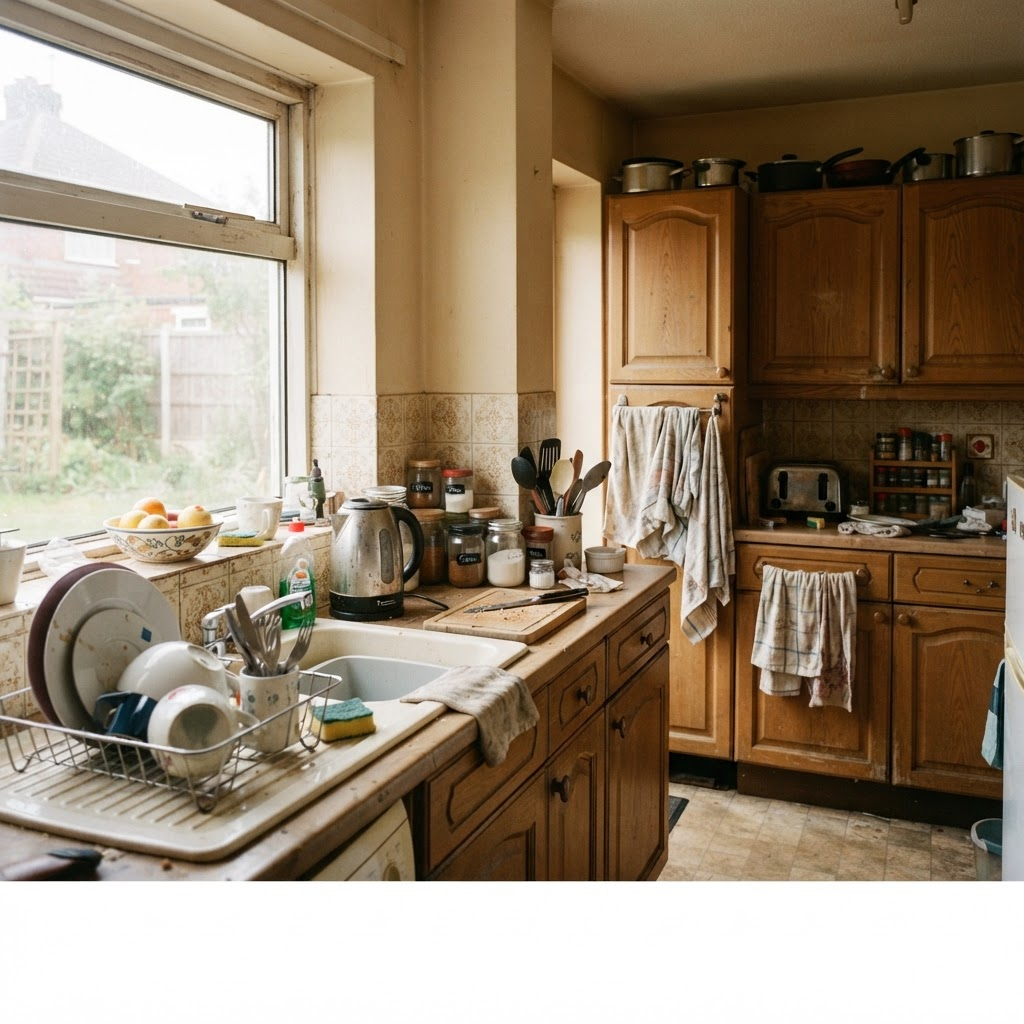
A real lived-in domestic kitchen with everyday clutter on the countertops, captured from a first-person viewpoint during food preparation.
Kitchen pretraining data has to span many kitchens, tasks, and contributors, not one recorded counter, to give a foundation model a general prior it can act on anywhere.

Requirements

What does kitchen pretraining data need that a single fine-tuning batch does not?

01

Density of contact events, not just hours

A kitchen packs more grasps, tool changes, and object handoffs per minute than most environments we capture. Pretraining scale in a kitchen is about breadth of tasks and contact types across many counters, not just accumulated hours in one.

02

Two-handed coordination as the default, not the exception

Chopping, pouring, and transferring a loaded pan are bimanual by default in a kitchen, so a pretraining spec has to name bimanual coordination explicitly rather than treat it as a rare case captured incidentally.

03

Deformable and reflective-surface handling

Dough, produce, and wet or reflective cookware do not track well with masks propagated frame-to-frame the way a rigid tabletop object does, so kitchen pretraining episodes need per-frame instance masks and depth confidence maps rather than the cheaper propagated masking that works elsewhere in the catalog.

04

Rights that clear a commercial run, captured in real kitchens

Kitchen capture happens in real homes or shared prep spaces, which raises the bar on consent and anonymization above what a controlled workshop capture needs, on top of the licensing terms a commercial pretraining program requires.

Definition

What is kitchen task pretraining data?

Kitchen task pretraining data sits at the same base layer NVIDIA’s GR00T N1 describes in its data pyramid: web data and human video at the base because they are the most abundant, synthetic data in the middle, and real robot trajectories at the top because they are the scarcest and most expensive to collect. For a robot that will manipulate objects in a kitchen, that base layer is egocentric human video of food prep, cleaning, and loading and unloading tasks, captured from a viewpoint close to what a robot’s onboard camera would see over a counter.

That pyramid framing is why kitchen pretraining leans on human capture rather than robot teleoperation logged in real kitchens: a person wearing a capture rig can move through far more kitchens, tasks, and contact events per hour than a teleoperated robot arm can, and doing it with a person avoids the safety and access problems of running an early-stage robot near knives, hot surfaces, and hot liquids before it is ready.

Why kitchens

Why are kitchens a strong domain for robot pretraining?

A kitchen concentrates more manipulation variety per square foot than almost any other environment we capture: knife work, pouring and decanting, opening jars and packaging, loading and unloading a dishwasher, stovetop transfers, and wiping down a surface, often within a single episode. That density of contact events and object handoffs makes kitchen data efficient to capture relative to the manipulation variety it yields, compared with environments where the same few actions repeat with less variation.

EgoScale documents the general shape of the recipe that kitchen pretraining data feeds into: broad human pretraining first, establishing a log-linear scaling law between the amount of human pretraining data and validation loss, followed by a smaller, aligned mid-training stage matched to the target embodiment, and then task-specific fine-tuning. On a 22-degree-of-freedom dexterous hand, EgoScale reports a 54% average improvement in success rate over training with no human pretraining at all — evidence that the broad pretraining layer, not just the narrow fine-tuning stage, is doing real work. Kitchens, with their density of grasps and tool changes, are a natural place to build that broad pretraining layer for dexterous manipulation.

Generalist’s own framing from GEN-0 reinforces the same point in different words: "data quality and diversity matters more than sheer volume." A kitchen pretraining corpus that repeats the same counter and the same three recipes a thousand times does not generalize any better than one that visits a hundred distinct kitchens once each — diversity of kitchen, task, and object is the variable that matters, not raw hour count alone.

Task and scene coverage

What kitchen tasks and scenes should a pretraining collection cover?

A kitchen pretraining corpus needs the same task families the egocentric kitchen video dataset already documents on this site — knife work, pouring and decanting, opening jars and packaging, dishwasher loading and unloading, stovetop transfers, surface reset, and bimanual dough handling — but captured across many distinct kitchens and contributors rather than concentrated in a small set of recorded sites.

Scene diversity matters alongside task diversity: domestic kitchens, shared-house kitchens, and small commercial prep lines each present different counter layouts, lighting, and clutter patterns, and a spec that only covers one of them leaves a gap a model will hit the first time it sees a different kitchen type.

Streams and labels

What does each kitchen episode include (streams, labels, formats)?

The same ten-stream capture stack used across every Firsthand collection applies to kitchen pretraining: 4K head camera, two wrist cameras, depth, IMU, 3D hand and body pose, instance segmentation, and action labels, hardware-aligned under 2 ms. Because video alone under-specifies what happened in a task, hand pose, contact events, and action segments turn raw kitchen footage into a signal a policy can actually learn a prior from.

Wet and reflective surfaces — a rinsed pan, a wet countertop, a steel sink — degrade active-stereo depth, so kitchen captures ship per-frame depth confidence maps alongside the depth stream, letting you mask low-confidence regions rather than guess. Steam events are labelled as an episode-level flag, since they can disrupt depth for several seconds at a time. Deformable objects such as dough or produce ship per-frame instance masks rather than the cheaper propagated masking that works for rigid tabletop objects. Data ships in RLDS, LeRobot, and WebDataset, plus HDF5, zarr, and Rerun .rrd, so a kitchen pretraining corpus loads directly into the same pipelines used for mid-training and fine-tuning data.

Diversity planning

How do you plan diversity across kitchens, objects, and contributors?

Diversity planning for a kitchen pretraining corpus works the same way it does for any Firsthand collection: a written spec names the task list, the kitchen and scene types it needs to span, and the participant and lighting mix, rather than leaving coverage to whatever kitchens happen to be convenient. That spec should name scene types explicitly — domestic kitchen, shared-house kitchen, and small commercial prep line at minimum — since each presents a different counter layout and clutter pattern.

Object diversity matters as much as scene diversity. A pretraining corpus concentrated in kitchens with similar cookware, similar produce, and similar clutter will generalize about as narrowly as one concentrated in a single kitchen. Lighting conditions matter too: daylight coverage fills in fastest, while low-light, evening capture tends to be the harder cell to fill, and a spec that does not name it explicitly risks shipping a corpus biased toward daytime cooking.

Participant diversity closes the loop: capturing the same tasks performed by different people, at different paces and with different habits — left- and right-handed knife work, different chopping styles, different pours — keeps a model from overfitting to one person’s particular technique. None of these three — kitchens, objects, people — substitutes for the other two; a spec that only varies one of them still leaves a gap the model will hit on its next unseen kitchen.

Consent and privacy

How is consent and privacy handled when capturing in real homes?

Kitchen capture happens inside real, lived-in spaces, which raises the bar above what a controlled workshop capture needs. Every custom collection ships under a documented consent chain, with each episode linked to a signed contributor release, and faces, plates, and screens are detected and irreversibly blurred at ingest, with a reviewer confirming the result before anything ships.

The anonymization record is delivered with the data, so a kitchen pretraining program has a clear paper trail from contributor consent through anonymization to the license terms governing commercial training on the finished corpus.

How it works

How does a custom kitchen collection go from spec to pilot to scale?

You describe the kitchen types, tasks, and objects your pretraining corpus is missing. That becomes a written spec covering the task list, the scene types it needs to span, the participant and lighting mix, capture tier, annotation depth, and accept criteria, quoted for reach, timeline, and price before any capture begins. Many programs start with a Spec Pilot, a small, fast first batch that proves the spec and accept criteria before scaling volume.

From there the collection runs through the same seven-stage end-to-end pipeline as every Firsthand program: contributor recruiting, capture across the specified kitchens, per-batch QA, anonymization, and licensed delivery, with rejected items recaptured at our cost and on-demand top-ups running against the same accept criteria afterward. A median 48-hour turnaround on a first batch means a kitchen pretraining program can validate its spec — scene coverage, object diversity, mask quality — quickly, before scaling the same pipeline to the volume the model needs.

Licensing and delivery

How is kitchen pretraining data licensed and delivered?

Every custom collection is billed per validated hour and delivered under a perpetual, buyer-owned commercial license, so a kitchen pretraining corpus can be trained on and productized without the research-only or unstated licensing terms that most public egocentric video corpora carry.

Delivery happens in RLDS, LeRobot, and WebDataset, plus HDF5, zarr, and Rerun .rrd, with readable converter source so you can retarget the schema to your own loader rather than being locked into one format.

Task coverage

What kitchen task categories should a pretraining set cover, and what does each exercise?

Kitchen task categories and what each one exercises, as captured in the egocentric kitchen video dataset on this site.
Task categoryWhat it exercises
Knife work — dice, julienne, chiffonadeFine bimanual dexterity, tool grip and control
Pour and decant between vesselsControlled release, liquid-object contact
Open jars, bottles, vacuum-sealed packagingForce estimation, two-handed leverage
Load and unload dishwasherSequenced grasps amid clutter, spatial planning
Stovetop transfer with a loaded panWeight-shifted bimanual coordination, heat-adjacent care
Wipe and reset a work surfaceSurface-contact manipulation, clutter clearing
Bimanual dough handlingDeformable-object manipulation, two-handed coordination

Every collection runs through the same seven-stage end-to-end custom collection pipeline.

Reported scale

Public pretraining corpora vs a custom kitchen collection

Reported scale, capture setup, and licensing for named public pretraining corpora compared with a custom Firsthand kitchen collection.
CorpusHours (as reported)Capture setupLicense
EgoScale20,854 hours, action-labeled egocentric human videoLabels from off-the-shelf SLAM and hand-pose estimationNot stated in the paper
GEN-0 (Generalist)270,000+ hours; 10,000+ new hours per weekReal-world manipulation data at scaleNot published
EgoVerseRoughly 1,362 hours across ~80,000 episodesEgocentric video corpusNot stated in the paper
Egocentric-10K10,000 hoursEgocentric video corpusApache 2.0
Custom Firsthand kitchen collectionScoped to your written spec, no fixed corpus sizeEgocentric, hardware-synced, ten streams; per-frame deformable-object masks and depth confidence mapsPerpetual, buyer-owned, commercial

Reference dataset

How does the egocentric kitchen video dataset on this site illustrate kitchen-scale capture?

Documented scale and coverage of the egocentric kitchen video dataset already shipping on this site, as a reference point for kitchen pretraining scope.
AttributeEgocentric kitchen video dataset
Validated hours2,840 hours
Episodes18,420
Participants214
Capture sites96
Environment typesDomestic kitchen, shared-house kitchen, small commercial prep line
AnnotationPer-frame instance masks, depth confidence maps, 3D hand pose, action segments

FAQ

Kitchen robot pretraining data, answered.

What is kitchen task pretraining data?
It is large-scale, general-purpose egocentric capture of food prep, cleaning, and loading and unloading tasks in real kitchens, used to train the general base layer of a robot foundation model before it is aligned to any one kitchen, task, or robot.
How is kitchen pretraining data different from the egocentric kitchen video dataset?
The egocentric kitchen video dataset is a fixed, shipping corpus of 2,840 validated hours across 96 sites. Kitchen pretraining data is a custom collection scoped by written spec to the specific kitchens, tasks, and objects your model is missing, with no fixed corpus size.
Why does kitchen pretraining need per-frame instance masks and depth confidence maps?
Dough, produce, and wet or reflective cookware do not track well with masks propagated frame-to-frame the way rigid tabletop objects do, and wet or reflective surfaces degrade active-stereo depth, so kitchen captures ship per-frame instance masks and per-frame depth confidence maps instead of the cheaper defaults used elsewhere.
Should kitchen pretraining data use egocentric human video or robot data?
Egocentric human video is the pretraining-scale layer, giving the same first-person viewpoint a robot will act from without needing a robot on hand in every kitchen. Robot data plays a smaller, aligned mid-training role afterward, as in EgoScale’s roughly 50-hour human plus 4-hour robot mid-training stage.
What kitchen types does a pretraining spec need to cover?
Domestic kitchen, shared-house kitchen, and small commercial prep line at minimum, since each presents a different counter layout, lighting, and clutter pattern that a single kitchen type cannot represent.
How is privacy handled when capturing in real kitchens?
Faces, plates, and screens are detected and irreversibly blurred at ingest with reviewer confirmation, and every episode links to a signed contributor consent release documenting who agreed to what.
Can kitchen pretraining data be combined with the egocentric kitchen video dataset?
Yes. The egocentric kitchen video dataset offers a fixed reference corpus, while a custom kitchen pretraining collection fills specific gaps in kitchen, task, or object diversity that a fixed dataset cannot cover on demand.
How do you request a custom kitchen pretraining dataset?
Describe the kitchen types, tasks, and objects your corpus is missing. That becomes a written spec quoted for reach, timeline, and price, typically starting with a Spec Pilot before scaling to full volume.
Sources

Where are these kitchen pretraining claims documented?

Request a custom kitchen pretraining dataset.

Tell us the kitchen types, tasks, and objects your foundation model needs to see. We will quote reach, timeline, and price against a written spec, with a first validated batch in a median of 48 hours.