Now recruiting capture teams worldwide. Get paid to record first-person video of real work.

Apply to capture

Task row

Stereo Screwdriving and Fastening Data

Driving screws with a power driver is close, two-handed work where the driver, the screw and the workpiece all sit near the camera and cover the exact spot being worked. This page covers the stereo and container side of screwdriving robot training data for the one catalog row that names this work: what a calibrated stereo pair adds to stereo power driver video, what MCAP is according to its own documentation, and what the site does not state. We run custom workshop data collection fast and on demand against a spec you write, as a handheld gripper fastening dataset when the spec names it, delivered as MCAP, as custom collection at scale through a network of thousands of capture providers, for a consistent, recurring data flow to labs.
Catalog row
"Drive screws with driver"; Medium; Available on request
Environment
Trades Workshop Bench (Construction & Trades)
Container
MCAP (.mcap), open source
License
Perpetual, buyer-owned
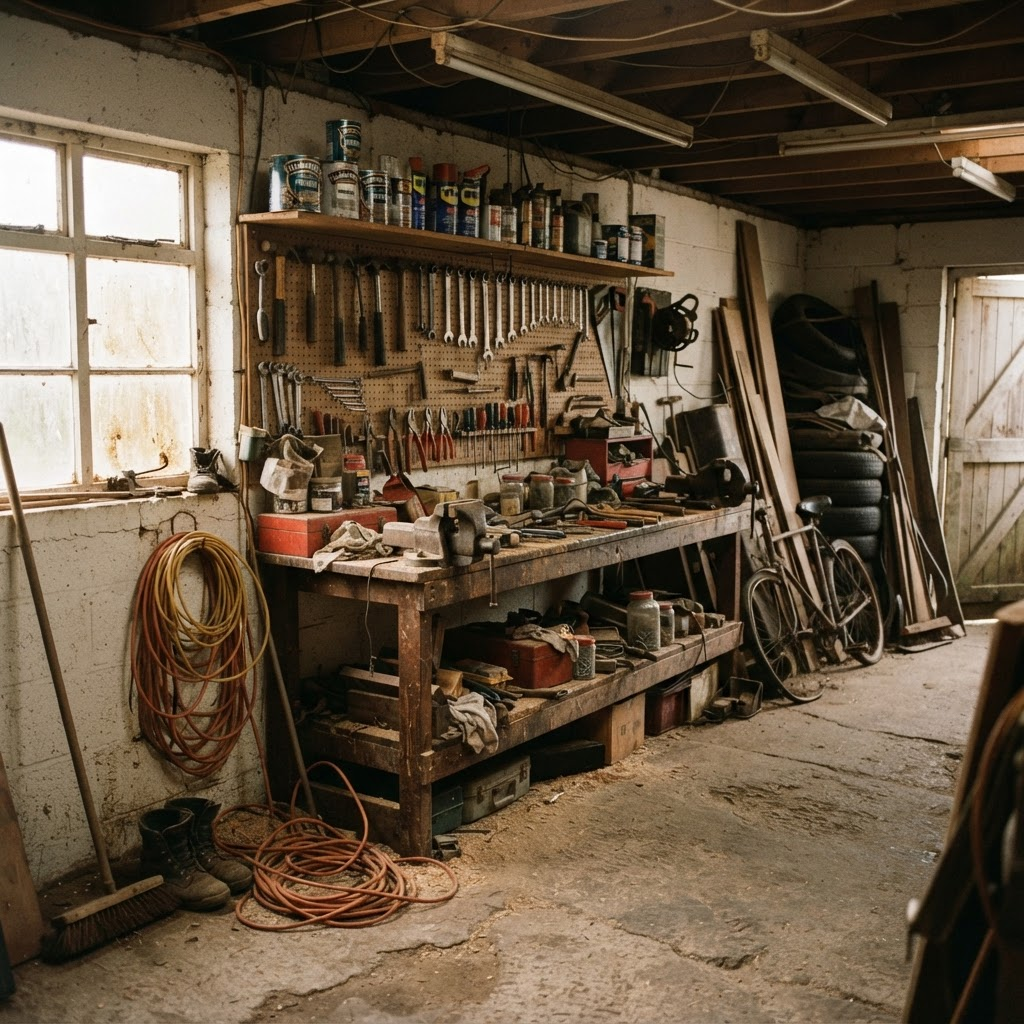
A garage workshop bench with a vise, hand tools on a pegboard and real clutter
A workshop bench setting. The catalog describes its trades workshop bench with hand and power tools, wrenches, drivers, a drill, a saw, clamps and fasteners. The image is a setting illustration, not a delivered clip of this task.

Why stereo and MCAP here

What do a stereo pair and an MCAP file add to power driver video?

01

Depth around the driver, the screw and the workpiece

The site states that a stereo pair at human-eye spacing makes depth recoverable from every frame pair, so the hands, the driver and the workpiece sit in one frame. The site gives no depth accuracy figure for this row and does not say how depth behaves on small fasteners.

02

Fingers behind a tool or a part, flagged not guessed

The site states that fingers disappear behind objects and that the hands occlude the work. 3D hand pose carries a per-joint visibility flag, so a finger hidden behind a driver or a part is marked as hidden rather than silently filled in.

03

One named row, worded as the catalog words it

The task is "Drive screws with driver", described as "Drive screws with a power driver." A spec names that row and says where a driving run starts and ends, rather than relying on a generic fastening label.

04

Several streams in one container

MCAP stores multiple channels of timestamped, pre-serialized data, so a stereo pair, hand pose and IMU can share one file on one log-time axis. Which streams go in the file is set in the skill spec.

Definition

What is stereo screwdriving and fastening data?

It is first-person video of a person driving screws with a power driver, recorded with two calibrated cameras, with hand pose and sensor streams alongside. People reach it through several phrasings: screwdriving robot training data, stereo power driver video, a handheld gripper fastening dataset, or custom workshop data collection at scale. They describe one request from different angles. Stereo describes the capture, and MCAP describes the container. They are separate choices.

The site does not state that stereo is already running on this row. The catalog lists a multiview rig with handheld grippers as the capture setup, so a stereo pair is a capture choice agreed in the skill spec through the site’s general stereo offer and confirmed on a Spec Pilot. The data is human capture by paid, consented contributors, not robot or teleoperation data, so using it for a specific robot still needs your own retargeting step. Firsthand is not affiliated with Foxglove or the MCAP maintainers.

Catalog row

Which catalog row does this page rely on, and what is its status?

One. "Drive screws with driver" sits in the Trades Workshop Bench environment of the Construction & Trades sector, which the catalog describes as a workshop bench with hand and power tools: wrenches, drivers, drill, saw, clamps and fasteners. Its description reads "Drive screws with a power driver." It is rated Medium, lists the capture setup "Multiview rig + handheld grippers", and its status is Available on request.

Available on request means the work is scoped and recruited to spec when a buyer asks. It is not a statement that footage of this task has been delivered, and the site states no delivered hours or stereo clips for it, so this page claims none. The first table below reproduces the row exactly as the catalog states it. The site does not describe a driver, a bit, a screw, a material or a workpiece for the row, so none is stated here.

The setting

What is the Trades Workshop Bench environment?

The catalog describes it with the examples above and lists several tasks in it, including caulking, flat-pack assembly, clamping and gluing a joint, drilling a pilot hole, hanging a fixture, measuring and cutting, bolt and socket work, painting and sanding, a valve and gauge check, and wiring an outlet. Every one of those rows lists the same capture mode, a multiview rig with handheld grippers, and the same status, Available on request.

The site describes this capture mode as a staged working set recorded by a multiview rig while the operator performs the task with handheld grippers, so demonstrations map onto a robot end effector. The site states that Firsthand does not capture at a customer’s own facility, so the bench is a capture setting arranged for the task, not your workshop. Whether a stereo pair would be worn, mounted or combined with the multiview rig the catalog names is not stated, and is settled in the spec.

Nearby rows

Which other catalog rows sit next to driving screws?

Several neighbouring rows in the same environment involve a fastener or a tool. "Tighten bolt with wrench" reads "Fit a wrench and tighten a bolt to snug." "Ratchet socket on nut" reads "Use a socket ratchet on nuts." "Hang a fixture" reads "Level, mark, and screw-mount a fixture." "Drill pilot + countersink" reads "Drill a pilot hole and countersink." "Assemble flat-pack" reads "Assemble a panel unit with cam locks." All of them are rated Medium, listed with Multiview rig + handheld grippers and Available on request.

These are separate rows, not steps of the screwdriving row. They are context only, and each is its own request. If your policy needs the drilling that comes before a screw, or the mounting of a fixture that follows it, that is a spec question for the neighbouring row, and the drilling and mounting page covers the two rows that name that work.

Difference

How is this different from the egocentric screwdriving, torque, drilling and clamp pages?

This page is the stereo and MCAP treatment of one trades-bench row, Drive screws with driver. The egocentric screwdriving and fastening page is the first-person page for the whole fastening family: it lists this row among rows across several environments, and stereo and MCAP are not its subject. It is a sibling, not an equivalent.

The stereo torque and bolt fastening page covers two Precision Assembly Bench rows, Torque to spec and Screw-fasten housing, which name a torque wrench and a driver to torque. The stereo drilling and mounting page covers Drill pilot + countersink and Hang a fixture. The stereo clamp and glue joint page covers one separate row, Clamp + glue joint. The second table below sets the pages side by side.

Capture setup

What capture setup does the row list, and where does stereo come in?

The catalog lists "Multiview rig + handheld grippers" for the row. The site does not state a stereo pair for it, and it does not describe this task as stereo capture. Stereo applies through the site’s general stereo offer: a stereo pair is a capture choice agreed in the skill spec and confirmed on a Spec Pilot. The site does not state a camera count for the row.

The site describes two stereo setups and does not say which one an order for this row uses. The hard-environments stack is a global-shutter 4K/60 head camera with a 120° lens, two 1080p/60 wrist cameras, a depth sensor at 848×480 and 30 fps, and 200 Hz 6-DoF IMUs. The off-the-shelf stereo head rig, dataset 06, is dual fisheye cameras at 1080p per eye, a 62 mm baseline, per-unit calibration, a 9-axis IMU and hand-tracking output. Whether either is used with the catalog’s multiview rig is not stated.

Handheld grippers

Why does a handheld gripper capture matter for a fastening dataset?

The catalog lists handheld grippers because the operator holds a gripper rather than a bare hand while performing the task, and the site says this lets demonstrations map onto a robot end effector. For a driving row that matters because the pose of the tool relative to the work is the thing a policy has to reproduce. A handheld gripper fastening dataset keeps the demonstration closer to the hardware a robot would use than a bare-hand clip does.

The site does not state which gripper is used, how it attaches or how it holds a power driver, and this page names none. It also does not claim that a model trained on this capture succeeds at the task. The embodiment mapping is a design choice agreed in the skill spec, and the site does not claim that human capture replaces robot data.

Why stereo

Why capture driving screws in stereo?

The task is about how a driver and two hands act on a fastener: where the tool meets the work, how it is held and how long a run lasts. A stereo pair recovers depth from the calibrated frame pair rather than from a standalone depth sensor, so the geometry sits in the same capture that shows the hands working. The site gives no depth accuracy figure for this row, so what a buyer does with that depth is their pipeline’s question.

A stereo pair adds depth, not a verdict. The site lists no seated, stripped, cross-threaded or fastener-state label for this row, and none is claimed. The egocentric fastening page already supplies the first-person framing; stereo is the addition for a buyer who wants the depth and the MCAP file.

Steps

Which steps of a driving run can a stereo spec label?

The row gives one action, driving screws, in the plural. A spec that says "do the fastening task" gives one long action segment. A spec that names the steps gives a sequence you can slice by step. The site’s skill-spec guide says to name the verb and the noun rather than a broad activity, so the row’s own verb and noun are the place to start.

Whether one screw is one segment, or a run of several is one segment, is a spec decision, not a default. The site does not set an episode length or state how many screws a run holds, so the spec says whether one episode is one screw, one run or a whole piece. Contact events can mark when a hand meets an item, where the spec asks for them, and the spec decides what counts as the item, including whether the driver, the screw or the workpiece qualifies.

Occlusion

What do the hands, the driver and a small fastener do to visibility?

A hand steadying a workpiece and a driver bearing down on a screw both put something between the lens and the work. The site states that the hands occlude the work and that fingers disappear behind objects. That is why each hand joint carries a visibility flag, why contact events mark when the hand meets the item, and why instance masks are recorded per frame. It also states that reach and grasp frames are where blur and occlusion show up, and the head camera in the hard-environments stack is global-shutter, which avoids rolling-shutter skew.

How depth behaves on small screw heads, recessed fasteners or reflective driver bits is not stated for this row. If your policy depends on those frames, say so in the spec and settle it on a Spec Pilot.

Surfaces and light

What does the site say about glare, lighting and reflective surfaces?

The site states that glare-heavy and low-texture scenes make single-frame depth worse, and that depth degrades on wet and reflective surfaces, with per-frame confidence maps masking low-confidence regions. A bench can have metal tools and surfaces, but the site does not say how depth behaves on one for this row, and a lighting setup for this row is not stated.

Where a program needs a specific bench layout, lighting or background, that goes into the spec and is checked on a Spec Pilot. An episode is rejected when more than 35 percent of depth pixels in the manipulation region are invalid, and for this job the spec decides what the manipulation region is at each step.

Safety and privacy

What does the site say about safety, compliance and privacy?

This page describes the hand work named in the catalog row, and nothing beyond it. It gives no power-tool safety, workshop safety or protective-equipment guidance and makes no certification claim. A contributor tool-handling protocol is not stated on this site, so this page does not describe one. The data carries no force, tactile or torque reading, and it is not robot or teleoperation data.

For every delivered episode the site states that faces and screens are blurred irreversibly, that a reviewer confirms no un-consented person is identifiable, and that footage that cannot be de-identified is discarded. The anonymization record ships with the data, an undocumented bystander is a stated reject criterion, and every episode links to a signed contributor release. Whether printed text on a package or a tool in view is blurred is not stated, so it is agreed in the spec. This is not legal advice, and the executed agreement controls.

MCAP

What is MCAP, per its own documentation?

MCAP is an open source container file format for multimodal log data, supporting multiple channels of timestamped pre-serialized data. It is serialization-agnostic, so messages can be Protobuf, DDS (CDR), ROS, JSON and more. Its design is row-oriented and append-only, it stores schemas alongside the data, and it offers an optional index plus optional LZ4 or Zstandard chunk compression.

Reader and writer libraries exist for C++, Go, Python, Rust, Swift and TypeScript, and the mcap CLI can inspect, merge and split files. The foxglove/mcap repository is MIT-licensed; that is the MCAP project licence, not the licence of a Firsthand delivery. The MCAP hub page and the glossary entry cover the format in full.

Streams

Which streams can ship in an MCAP delivery of screwdriving data?

Firsthand offers MCAP delivery, and dataset 06 is stated as shipping as MCAP. For this row the site states hand pose, a stereo-derived depth stream with confidence maps, IMU, contact events, action segments, per-frame instance masks and one task instruction per episode elsewhere. What it does not state is which of those are channels in an MCAP file, how they are named, what encoding they use or at what rate.

No topic name, message schema or rate is stated on this page, and none should be assumed. Name the streams that matter in the skill spec and confirm them on a Spec Pilot batch. The fourth table below sets each stream beside what the site states about it.

Failure modes

What goes wrong when you record driving work in stereo, and what does QA reject?

Hand occlusion by the driver and the workpiece is the first risk, under the visibility flag above. Weak depth on glare-heavy or reflective surfaces is the second. Calibration is measured at the start and end of every session under a 0.28 px RMS gate, and an episode is rejected for a sync breach beyond the ceiling for more than three consecutive frames, for the manipulated object out of frame for more than 15 percent of the episode, for an undocumented bystander or for a mismatch against the named skill spec.

A reject log ships with every batch, and rejected items are recaptured at the provider’s cost. For a driving task, the spec decides what the manipulated object is: the screw, the driver, the workpiece, or a pair of them.

Scale and speed

How fast can custom stereo screwdriving data be collected at scale?

The row is Available on request, so this is custom collection, not an off-the-shelf purchase. The off-the-shelf stereo and hand-tracking video can still show the format before you write a spec.

It is custom collection at scale through a network of thousands of capture providers, for a consistent, recurring data flow to labs. Where coverage is deep, the median time from signed spec to first validated batch is 48 hours; where it is thin, turnaround runs three to four weeks. The site does not say which applies to the trades workshop bench, so the timeline is quoted against your spec. Collections are billed per validated hour, and rejected episodes and recaptures are never billed.

Delivery and license

Which formats and license come with a stereo screwdriving order?

Delivery is MCAP, alone or beside the formats your stack already reads: RLDS, LeRobot, WebDataset, HDF5 or zarr, or raw streams with metadata. Readable converter source ships alongside the data so the schema can be retargeted to your own loader.

The license is perpetual, irrevocable and worldwide, with the data buyer-owned and non-exclusive by default. Training, evaluating, fine-tuning and deploying models, including commercial ones, is permitted, and exclusivity is available as a separate term. The executed agreement controls. The site does not publish a price list, a minimum order or a batch size for this task, so those are set in your quote.

Ordering

How do you order a stereo screwdriving dataset?

Describe the steps and where each starts and ends: driving screws. Say whether an episode covers one screw, one run or a whole piece, what counts as the object and what counts as a finished step, the privacy rule for the space, and name the variation your pipeline is missing. Then name the streams you want in the file, the topic naming and message encoding your reader expects, whether calibration ships inside the file or beside it, and whether MCAP is the only delivery or sits beside a training format.

Most programs begin with a Spec Pilot, a small first batch that proves the spec and accept criteria on real footage before you scale. The last table below shows what each spec element decides.

At a glance

What you get.

Catalog row: Drive screws with driver
"Drive screws with driver" (Trades Workshop Bench, Construction & Trades); Medium; Available on request
Catalog description
"Drive screws with a power driver."
Catalog capture setup
Multiview rig + handheld grippers. The site states no stereo pair for this row, so a stereo pair is agreed in the skill spec through the general stereo offer
Stereo head rig (06)
Dual fisheye, 1080p per eye, 62 mm baseline, per-unit calibration, 9-axis IMU, hand-tracking output; shipped as MCAP
Hand pose
21 joints per hand with a per-joint visibility flag
Sync
Hardware-triggered onto one clock; 2.0 ms cross-stream ceiling
Language data
One task instruction per episode
Driver, bit, screw or workpiece type, sizes, torque or clutch settings, task times, error rates
Not stated; agreed in the skill spec
Power-tool safety
Not stated; nothing here is safety guidance
MCAP topics, schemas, rates
Not stated on the site; agreed in the skill spec
License
Perpetual, irrevocable, buyer-owned, non-exclusive by default

Every collection runs through the same seven-stage end-to-end custom collection pipeline. End-to-end custom data collection is a managed service that takes an AI data need from problem to owned dataset in a single accountable pipeline.

Catalog row

Which catalog row covers driving screws, and what is its status?

The row exactly as the task catalog states it, followed by three neighbouring rows from the same environment, shown for context only. Items the catalog does not list are marked Not stated.
Task (as listed)Description (as listed)EnvironmentSkillCapture setupStatus
Drive screws with driverDrive screws with a power driver.Trades Workshop BenchMediumMultiview rig + handheld grippersAvailable on request
Tighten bolt with wrench (nearby, context only)Fit a wrench and tighten a bolt to snug.Trades Workshop BenchMediumMultiview rig + handheld grippersAvailable on request
Hang a fixture (nearby, context only)Level, mark, and screw-mount a fixture.Trades Workshop BenchMediumMultiview rig + handheld grippersAvailable on request
Drill pilot + countersink (nearby, context only)Drill a pilot hole and countersink.Trades Workshop BenchMediumMultiview rig + handheld grippersAvailable on request
Driver, bit, screw or workpiece type; sizes; torque or clutch settings; seated or stripped labelsNoneNot stated as rowsNot statedNot statedNot stated

Compared pages

How does this page differ from the egocentric screwdriving, torque, drilling and clamp pages?

Each page and the catalog rows it covers. Statuses are as the site lists them; none of these pages is claimed to hold delivered hours here.
PageWhat it coversRow status as listedRelation to this page
This page: stereo screwdriving and fastening dataDrive screws with driverMedium, Available on requestStereo pair and MCAP delivery for one trades-bench row
Egocentric screwdriving and fastening video dataThe fastening family, across several environments, including Drive screws with driverPer row; see the catalogThe first-person sibling; stereo and MCAP are not its subject
Stereo torque and bolt fastening dataTorque to spec and Screw-fasten housing, in the Precision Assembly BenchMedium, Available on requestDifferent rows and environment; torque wrench and driver to torque
Stereo drilling and mounting dataDrill pilot + countersink and Hang a fixtureMedium, Available on requestDifferent rows; drilling and mounting rather than driving screws
Stereo clamp and glue joint dataClamp + glue jointMedium, Available on requestDifferent task in the same environment
Egocentric stereo data in MCAPThe stereo and MCAP hub across tasksNot applicableGeneral stereo and MCAP treatment; not specific to fastening

Stated vs not stated

What the site states about stereo capture for driving screws

Left to right: the item, what the site states, and what that means for a screwdriving order. “Not stated” means the site does not say.
ItemWhat the site statesFor a screwdriving order
Catalog capture setupMultiview rig + handheld grippers on the rowNo stereo pair is stated for this row; a stereo pair is a spec choice through the general stereo offer
Stereo head rig (dataset 06)Dual fisheye, 1080p per eye, 62 mm baseline, per-unit calibration, 9-axis IMU, hand-tracking output; shipped as MCAPWhether an order uses it: Not stated
Hard-environments stack4K/60 head camera, 120° lens; two 1080p/60 wrist cameras; depth 848×480 at 30 fps; 200 Hz 6-DoF IMUWhether an order uses it: Not stated
Hands, contacts and masksPer-joint visibility flag on hand pose; contact events; per-frame instance masks stored at 848×480Stated; what counts as the object is set in the spec
Hand occlusionThe hands occlude the work and fingers disappear behind objects; visibility flags and instance masks address itStated; how often it occurs on this row is Not stated
Depth on reflective surfacesDepth degrades on wet and reflective surfaces; confidence maps mask low-confidence regionsStated; behaviour on small screw heads or reflective bits is Not stated
CalibrationMeasured every session and shipped with the episode; 0.28 px RMS reprojection gateStated
SynchronizationHardware-triggered onto one clock; 2.0 ms cross-stream ceilingStated
Row statusMedium, Available on requestNo volume, hours or delivered stereo footage is claimed on this page
Driver, bit, screw or workpiece; sizes; torque or clutch settingsNot statedNot claimed; set in the spec
Seated, stripped, cross-threaded or fastener-state labelNot stated; no such label is listed for the rowNot claimed; set in the spec
Power-tool safety, certificationNot statedNot claimed on this page
Cycle time, error rate, task durationNot statedNot claimed on this page
MCAP topics, schemas, ratesNot statedAgreed in the skill spec

Stream map

Streams for driving screws and what the site states about an MCAP file

Left to right: the stream or item, what the site states about it, and what the site states about it in MCAP. “Not stated” means the site does not say.
Stream or itemWhat the site statesIn an MCAP delivery, as the site states it
Stereo pairDual fisheye, 1080p per eye, 62 mm baseline (dataset 06)Dataset 06 is stated as shipped as MCAP; channel layout not stated
Depth with confidence mapsRecovered from the calibrated stereo pair; confidence map masks low-confidence regionsNot stated
Hand pose21 joints per hand with a per-joint visibility flagChannel layout and joint order not stated
IMU9-axis (dataset 06); 6-DoF at 200 Hz (hard-environments stack)Channel layout and rate not stated
Contact events, action segments, instance masksListed in the site episode schema; masks stored at 848×480Not stated
Task instructionOne per episodeNot stated
CalibrationMeasured every session and shipped with the episodePlacement in the file not stated
Topic names, schemas, encoding, ratesNot statedAgreed in the skill spec

Skill spec

What the skill spec fixes for a stereo screwdriving order

Spec element and where a buyer can see it in the delivery. “Set per program” means the site states no fixed value.
Spec elementWhat it decidesWhere it shows up
RowDrive screws with driver, worded as the catalog words itSet per program; Available on request as listed
Steps and orderWhat one step is: driving screwsEpisode boundaries and action segments; set per program
Episode scopeOne screw, one run or a whole pieceSet per program; the site does not state an episode length
Object definitionWhether the screw, the driver or the workpiece counts as the objectContact events and the out-of-frame reject rule; set per program
Rig and streamsStereo pair, multiview angles, wrist views, hand pose, IMU and any othersThe channels you can read; confirm on the Spec Pilot
Setting and lightingWhere capture runs and how the bench is litSet per program; the site states no lighting setup for this row
MCAP topics and encodingWhat your reader expectsSet per program
Delivery formatHow the data is packagedMCAP alone, or beside RLDS, LeRobot, WebDataset, HDF5 or zarr
Accept criteriaWhat passes QA, including what counts as a rejectReject log per batch
PrivacyHow people, screens and printed text in frame are handledFaces and screens blurred at ingest; other items agreed in the spec
LicenseWho owns the datasetPerpetual, irrevocable, buyer-owned, non-exclusive by default

Example footage

What does egocentric stereo capture look like?

One real clip already published on this site, shown as a format and rig example: a head-mounted stereo capture with hands in frame. It does not show screwdriving, a power driver or a workshop bench, and it is not an example of the multiview rig with handheld grippers this row lists.

egocentric_stereo_sample.mp4 · head-mounted stereo · hands in frame · 1920 × 1080 web preview · rig example, not a screwdriving clip

No screwdriving clip is published on the site, so this is labelled as a format and rig example. Request a sample to see delivered files. See stereo sample page, stereo + wrist-cam example videos, request an egocentric data sample.

FAQ

Screwdriving robot training data, answered.

What is stereo screwdriving and fastening data?
First-person video from two calibrated cameras of a person driving screws with a power driver, with depth and hand pose alongside.
Which catalog row covers it, and what is its status?
"Drive screws with driver" in Trades Workshop Bench: "Drive screws with a power driver." It is rated Medium, listed with Multiview rig + handheld grippers, and its status is Available on request. This page claims no delivered hours.
Is stereo already captured on this row?
Not stated. The catalog lists a multiview rig with handheld grippers for the row. A stereo pair is agreed in the skill spec through the general stereo offer and confirmed on a Spec Pilot.
How is this different from the egocentric screwdriving page and the torque page?
The egocentric page covers the fastening family as first-person video across several environments. The torque page covers two Precision Assembly Bench rows, Torque to spec and Screw-fasten housing. This page covers the Drive screws with driver row with a stereo pair and MCAP delivery.
Is there an off-the-shelf screwdriving dataset?
No. The row is Available on request, so this is custom collection, at scale through a network of thousands of capture providers, for a consistent, recurring data flow to labs.
Does the data include driver, screw, torque or seated labels?
Not stated. The site lists no driver, bit, screw or workpiece type, no sizes, torque or clutch setting, no seated or stripped label and no force reading, so none is claimed. These are set in the spec.
How fast can a custom stereo fastening dataset be collected?
From signed spec to first validated batch, a median of 48 hours where coverage is deep and three to four weeks where it is thin. The site does not say which applies to the trades workshop bench, so it is quoted against your spec.
Can it be delivered as MCAP, and what is in the file?
Yes. Firsthand offers MCAP delivery. Topic names, message schemas and rates are not stated on the site and are agreed in the skill spec.
Sources

Where is MCAP documented?

Request a custom stereo screwdriving and fastening dataset delivered as MCAP.

Tell us the steps and where each starts and ends, whether an episode covers one screw, one run or a whole piece, what counts as the object, the setting and lighting, the privacy rule for the space, the streams you want in the file and whether MCAP sits alone or beside a training format. We will quote reach, timeline and price against a written spec.