Clinical & care

Egocentric Video Data for Healthcare and Hospital Robotics

Healthcare and hospital settings are one of the thinner-coverage environments on this site, and capture here is deliberately narrow: training environments with simulated patients only, never real patient footage. Within that boundary, we capture first-person video of non-clinical hospital work — the kind of task a robot or AI system needs to learn before it ever operates near a real patient — to a written spec, with the same consent, QA, and licensing process used across every custom collection on this site.
Setting
Simulated-patient training environments only
Real patient footage
Never captured, under any circumstance
Coverage
Thin — typically three to four weeks to first batch
License
Perpetual, buyer-owned
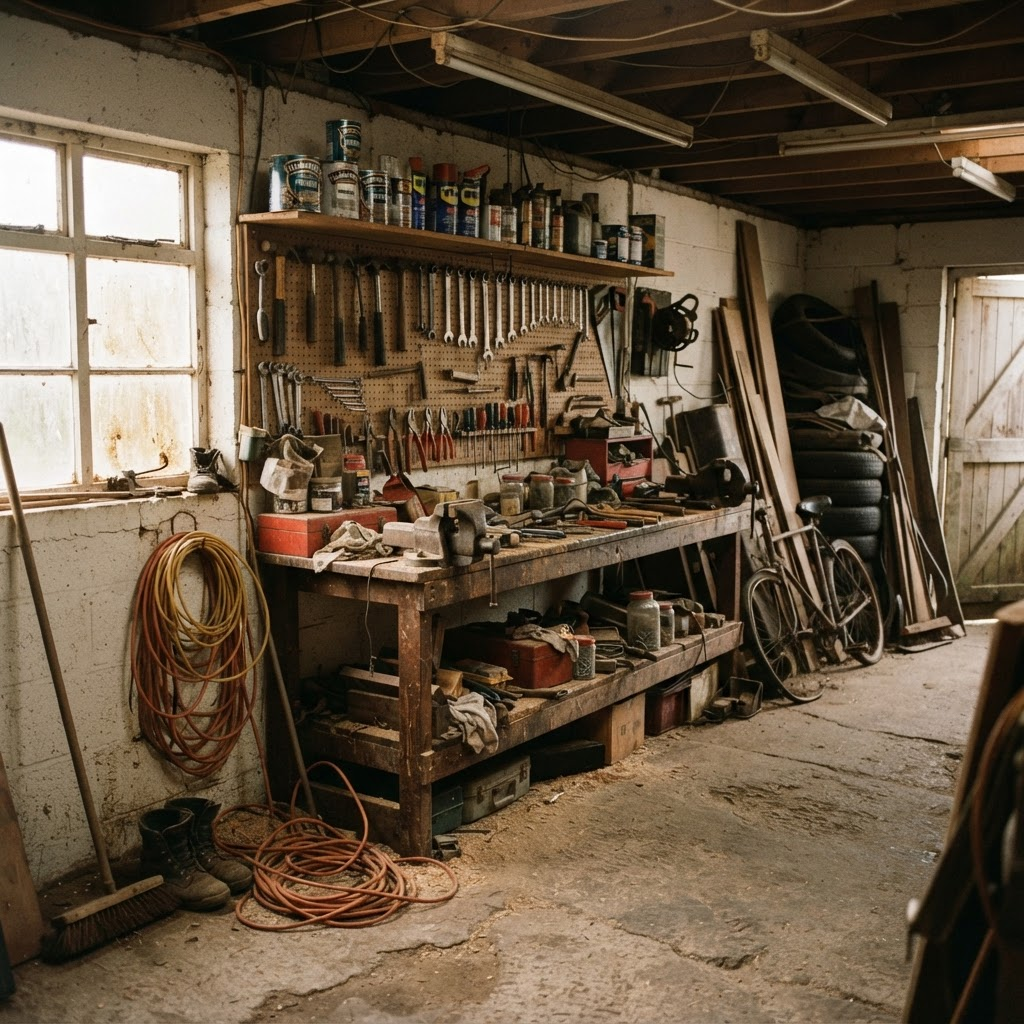
A first-person view of a controlled training setting representative of simulated, non-clinical hospital task capture.
Capture happens only in training environments with simulated patients — never with real patient footage.

Constraints

What makes healthcare capture different from other industry settings?

01

Simulated patients only, no exceptions

Capture for this setting happens only in training environments with simulated patients. Real patient footage is never captured, under any circumstance, regardless of what a spec requests. That constraint is fixed before any other scoping conversation happens.

02

Thin coverage means a longer first batch

Clinical and care settings are one of the thinner-coverage environments on this site, alongside construction, agriculture, and hospitality. Vetting operators for a hospital-adjacent training environment is the bottleneck, which is why a first validated batch here typically takes three to four weeks rather than the faster turnaround available in deeper-coverage settings.

03

The task set is deliberately non-clinical

What gets captured is the kind of work that happens around patient care rather than clinical treatment itself — tasks a robot or AI system needs to learn in a controlled, simulated setting before any later-stage clinical validation, which this site does not perform or claim to perform.

04

The same written-spec process, not a special one

Beyond the simulated-patient boundary, a healthcare collection runs through the identical process used for every custom collection on this site — a written skill spec, paid and consented contributors, synchronized sensor streams, per-batch QA, and licensed delivery.

Definition

What is egocentric healthcare and hospital data?

Egocentric healthcare and hospital data is first-person video of hospital-adjacent task work — recorded from a camera near the worker’s own point of view, a chest mount, head rig, or wrist camera, rather than a fixed overhead or side-angle camera. What makes this setting different from every other industry page on this site is a hard constraint on where capture can happen: only in training environments with simulated patients, never with real patient footage.

The underlying capture, labeling, QA, and licensing process is the same one used across every custom collection on this site: a written skill spec describing the task and setting, paid and consented contributors performing the work, synchronized sensor streams recorded alongside the video, and per-batch QA before delivery. What changes for this setting is the simulated-patient-only boundary applied before any capture begins.

Fit

Which hospital tasks are a good fit for capture?

A good fit is non-clinical hospital-adjacent work — the kind of task that happens in and around a hospital without involving direct clinical treatment of a real patient. Because capture only happens in a simulated-patient training environment, a spec names the specific non-clinical task, the controlled setting it will be performed in, and the simulated-patient arrangement used, rather than describing a live ward or clinic.

Tasks that require a real patient, a live clinical environment, or any patient-identifying footage are not a fit for this program and are not captured here under any spec. If your training pipeline needs that kind of data, it falls outside what this site captures and should be sourced through a dedicated clinical-research or medical-device data provider instead.

This page is about the healthcare and hospital setting specifically. For a broader workplace task framing that is not hospital-specific, see this site’s general workplace task data page; for a procedure-structure framing that applies across industries, see the procedural task video data page.

From task to spec

How is a hospital task written into a skill spec?

A healthcare collection starts the same way any custom collection on this site does: you describe the non-clinical task your training pipeline needs covered, the controlled training environment it will be captured in, and the simulated-patient setup, if any, involved. That becomes a written skill spec naming the task, setting, participant mix, capture tier, annotation depth, and accept criteria — quoted for reach, timeline, and price before any capture begins.

Because clinical and care settings are thin coverage on this site, the spec conversation also covers operator vetting up front, since that vetting — not contributor demand — is the actual bottleneck to a first batch in this environment.

Many programs start with a Spec Pilot, a small, fast first batch that proves the spec and accept criteria on a limited task set before scaling to full volume. That lets a buyer confirm the simulated-patient setup and label quality before committing to capture across a larger program.

Capture setup

What does the capture setup look like in a hospital-adjacent setting?

Capture uses the same stream menu available across every custom collection — head and wrist RGB, depth, IMU, and 3D hand pose — recorded inside the controlled training environment named in the spec, with simulated patients standing in for any patient-facing element of the task. The specific stream set is chosen to fit the task, the same way it is for any other industry on this site.

As with every custom collection, the setting, participant mix, and simulated-patient arrangement are all named explicitly in the written spec before capture begins, rather than left to be decided on the day of a shoot.

Labeling

How are task steps labeled and segmented?

Captured footage is broken into the same labeled structure used across every collection on this site: action segments marking the start and end of each discrete step, episodes grouping a full task attempt, and hand pose carrying fine manipulation detail. Failure and recovery cases — a dropped item, a misstep, a correction — are captured and labeled as part of the same structure rather than treated as an error to discard.

Where a task has a defined step order — a setup-then-operate-then-reset sequence, for example — that order is written into the spec and carried through into how the action segments are labeled, the same way it is for any procedural task on this site.

Privacy

How are staff, patients, and bystanders protected during capture?

The governing rule for this setting is that capture happens only with simulated patients in a training environment — real patients are never captured, which removes the patient-privacy question that a live clinical setting would raise. For everyone who is captured, including contributors and any bystander in frame, faces and screens are detected and irreversibly blurred at ingest, with a reviewer confirming the result before anything is delivered.

Every episode is linked to a signed contributor release under a documented consent chain, the same requirement applied to every custom collection on this site. Any clip that cannot be reliably de-identified is discarded rather than shipped with a caveat.

Rights

Who owns the data and how is it licensed?

The buyer. Every custom collection, including a healthcare program, is delivered under a perpetual, non-exclusive commercial license by default, with exclusivity available, so the finished dataset can be trained on and productized without a research-only or unstated licensing arrangement.

Delivery is billed and licensed against the accept criteria named in the written spec, with rejected items recaptured at no cost to the buyer before anything ships. Pricing is quoted per spec rather than published as a flat rate; see the pricing page for how a quote is built.

Delivery formats

What formats does the data ship in?

Healthcare data ships in the same formats available for any custom collection on this site: RLDS, LeRobot, and WebDataset, plus HDF5, zarr, and Rerun .rrd, or raw streams with metadata if your pipeline needs the unprocessed form. Readable converter source ships alongside the data, so the schema can be retargeted to your own loader.

Getting started

How do you start a healthcare data collection?

Describe the non-clinical task, the controlled training environment it happens in, and the simulated-patient setup your training pipeline needs. That becomes a written spec covering the task, setting, participant mix, capture tier, annotation depth, and accept criteria, quoted for reach, timeline, and price before capture begins.

Because this is a thin-coverage setting, expect the spec conversation to also cover operator vetting timelines — typically three to four weeks to a first validated batch — up front. From there the program runs through the same end-to-end pipeline as every Firsthand collection: contributor recruiting, capture against the spec, per-batch QA, anonymization, and licensed delivery.

At a glance

What you get.

Starting point
Written skill spec naming the non-clinical task, setting, and simulated-patient constraint
Setting
Training environment with simulated patients only — never a live clinical setting with real patients
Streams
Head/wrist RGB, depth, IMU, 3D hand pose, action segments, as specced
Privacy
Faces and screens blurred at ingest; undeidentifiable clips discarded
QA
Calibration, sync, and label review before delivery
License
Perpetual, non-exclusive, buyer-owned by default
Formats
RLDS, LeRobot, WebDataset, HDF5/zarr, Rerun RRD

Every collection runs through the same seven-stage end-to-end custom collection pipeline. End-to-end custom data collection is a managed service that takes an AI data need from problem to owned dataset in a single accountable pipeline.

Task families

Hospital task family × typical steps × what the delivered data contains

Non-clinical hospital-adjacent task families, their typical steps, and what the delivered data captures for each — all captured only in simulated-patient training environments.
Hospital task familyTypical stepsWhat the delivered data contains
Equipment handlingRetrieve, check, stage, return equipmentSkill spec, action segments, episodes, hand pose
Supply and cart handlingRestock, organize, transport supply cartsSkill spec, action segments, episodes
Room turnoverReset, clean-adjacent prep, restage a simulated roomSkill spec, action segments, episodes, completion check
Patient-adjacent logistics (simulated)Transport or handoff tasks performed with a simulated patient stand-inSkill spec, action segments, episodes, hand pose, failure/recovery label

Capture constraints

Capture concern × how the process handles it

Constraints specific to capturing in a hospital-adjacent setting, and how the written-spec, labeling, and privacy process addresses each.
Capture concernHow the process handles it
Risk of real patient involvementCapture restricted by policy to training environments with simulated patients only; real patient footage is never captured
People in frameFaces and screens blurred at ingest; undeidentifiable clips discarded rather than shipped
Operator vetting for a sensitive settingTreated as thin coverage; first batch typically takes three to four weeks because vetting is the bottleneck
Consistency across contributors and batchesSame written spec and accept criteria govern every batch; QA checks labels against those definitions before delivery

FAQ

Healthcare egocentric data, answered.

Do you ever capture real patients or live clinical settings?
No. Capture for this setting happens only in training environments with simulated patients. Real patient footage is never captured, under any circumstance.
What is egocentric healthcare and hospital data?
First-person video and synchronized sensor data of non-clinical hospital tasks, captured only with simulated patients in a controlled training environment, labeled into action segments, episodes, and hand pose.
Why is this a thin-coverage setting?
Clinical and care settings are one of the thinner-coverage environments on this site, alongside construction, agriculture, and hospitality, because vetting operators for this setting is the bottleneck rather than contributor demand.
How long does a first batch take in this setting?
Typically three to four weeks from a signed spec, longer than the faster turnaround available in deeper-coverage settings, because operator vetting for a sensitive environment takes longer to arrange.
How is this different from the egocentric workplace task data page?
That page covers general workplace task data across settings. This page applies the same process specifically to the healthcare and hospital setting, with the added simulated-patient-only constraint that this setting requires.
How are staff and any bystanders protected during capture?
Faces and screens are detected and irreversibly blurred at ingest, with a reviewer confirming the result before delivery, and every episode is linked to a signed contributor release under a documented consent chain.
Who owns data captured this way, and how is it licensed?
The buyer. Delivered data carries a perpetual, non-exclusive, buyer-owned commercial license by default, with exclusivity available, the same as any other custom collection on this site.
How do you start a healthcare data collection?
Describe the non-clinical task, the training environment, and the simulated-patient setup your training pipeline needs. That becomes a written spec quoted for reach, timeline, and price, typically starting with a Spec Pilot before scaling to full volume.
Sources

Where are these delivery formats documented?

Need a custom healthcare dataset?

Tell us the non-clinical task and the simulated-patient training setting your pipeline needs covered. We will turn it into a written skill spec and run a Spec Pilot before scaling to a full collection.